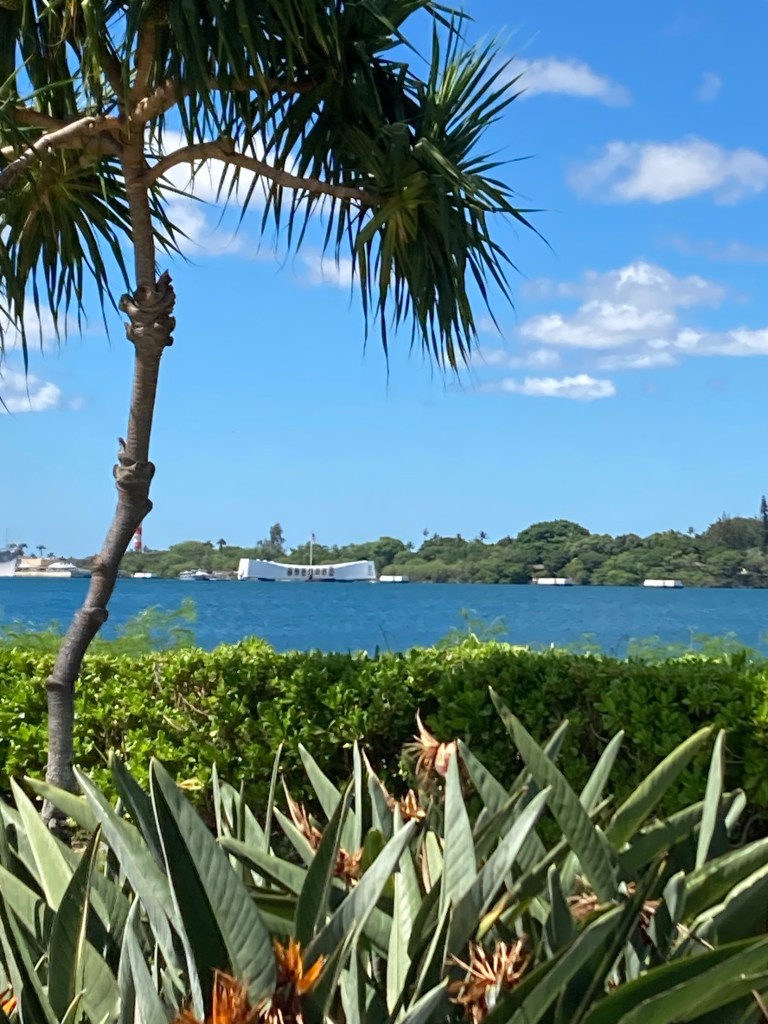
My ticket to visit the USS Arizona Memorial was timed for the 12:00 noon visit. Pearl Harbor is 20 minutes by car from Honolulu’s cruise port, so I headed out about 10:30 via Uber. I wanted to arrive early enough to check my backpack (a requirement) and to get my bearings. I learned that the Pearl Harbor National Monument complex is a hodge podge of the National Park Service and several non- profit organizations that separately run each of the many museums in the complex. The NPS maintains and operates only the Visitor Center, its grounds, and the actual USS Arizona Memorial. Each museum is governed by a separate non-profit board, ie The Submarine Museum, the USS Missouri (Mighty MO), The Museum of Pacific Battles, etc. There are no free museums. Admission to each is in the $30-$40 range, includes a guided tour and takes 2 – 4 hours to appreciate. My original plan was to visit the submarine museum after lunch.
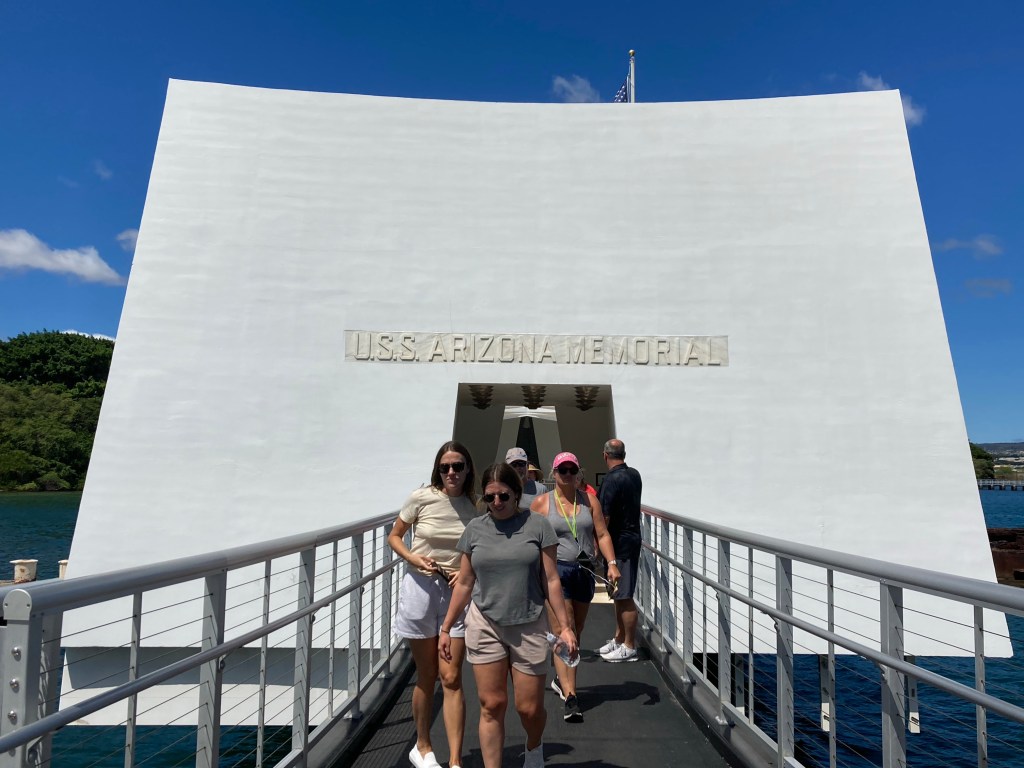
The queue for each boat over to the USS Arizona Memorial begins forming about 15 minutes prior to ticket time. Exactly at noon, we were ushered into an auditorium, and a Park Ranger gave us a solemn welcome and a grisly 10-minute overview of the events leading to the creation of the memorial. I was surprised to learn that the USS Arizona is STILL in commission with an active crew. The boats used to ferry visitors over to the memorial are US Navy tender boats, and they are manned by current members of the USS Arizona’s crew.
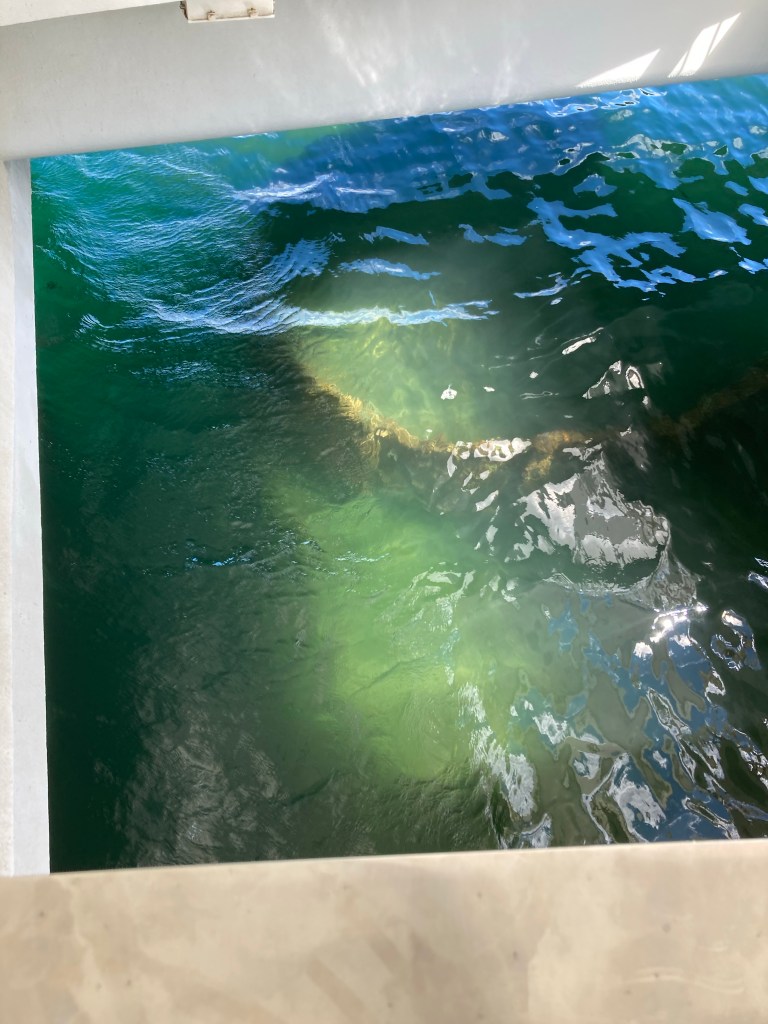
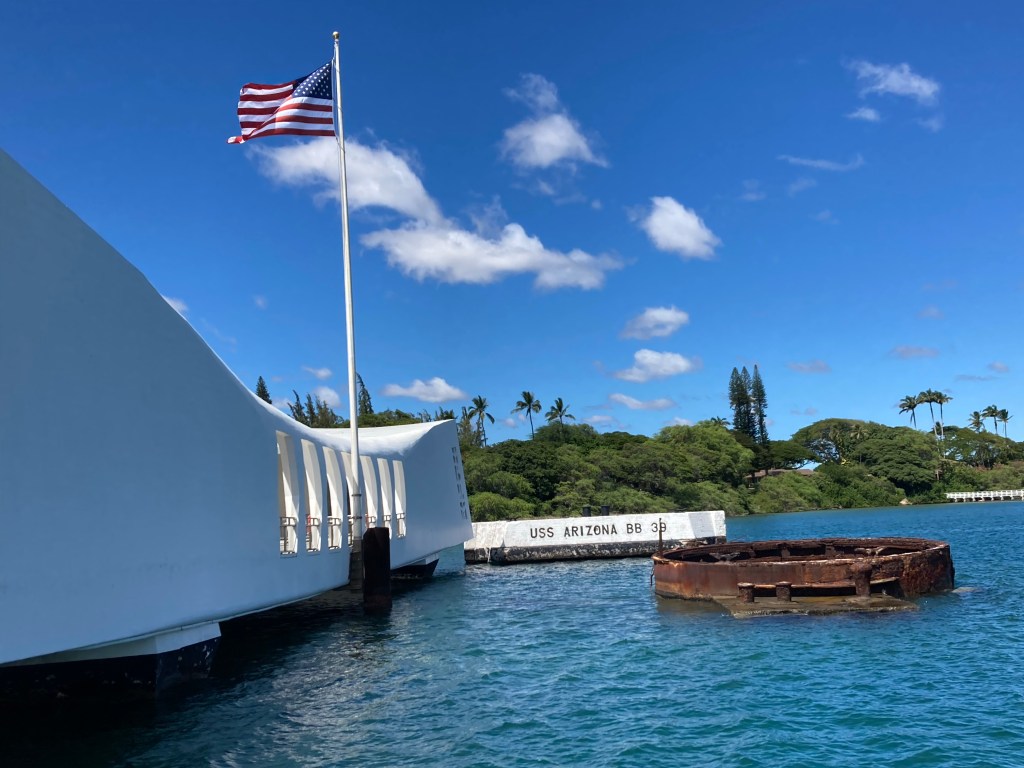
When Pearl Harbor was bombed, a one-ton armor piercing device landed on the USS Arizona’s top deck and penetrated 5 decks before detonating in the armament hold where 850,000 pounds of munitions were stored. The explosion blew the entire vessel 30 feet out of the water, and the demolished ship burned for 2 1⁄2 days at temperatures of 7,000 – 9,000 F. Roughly 900 of the 1,100 seamen assigned to the ship died instantly. (Roughly 200 were off the ship or on shore leave when the attack occurred.) The sinking of the USS Arizona would be the greatest loss of life to any US vessel in the Pacific campaign of WW II.
Like most who come here, the purpose of my visit was to pay respect and give homage to the sailors who died that cataclysmic day on the USS Arizona. As well as ALL soldiers and sailors who have given their lives over the years for our American republic. In particular, there was one sailor I wanted to hold in thought and honor: my paternal grandfather, Coley Blease Gibson Sr. I never knew him, and my father barely knew him, as Coley Sr died when Coley Jr was only 3. And in most of those 3 years, my grandfather was away in the Navy, out fighting WW II, assigned to a mine sweeper in the Pacific. He died doing his job while clearing mines from Tokyo Bay a few weeks after Emperor Hirohito had surrendered and the war had ended.
On a visit to Tokyo several years ago, I spent time along the city’s modern waterfront looking out over the vast bay from which he never returned. I found no memorial there for the US war dead for whom the bay became a watery grave. And the visit felt incomplete. I decided afterwards that I would make the USS Arizona Memorial a surrogate memorial for my unknown grandfather as well. The symmetry felt appropriate: a great loss of life before the war that touches collectively, and a single loss of life after the war that touches a single family.
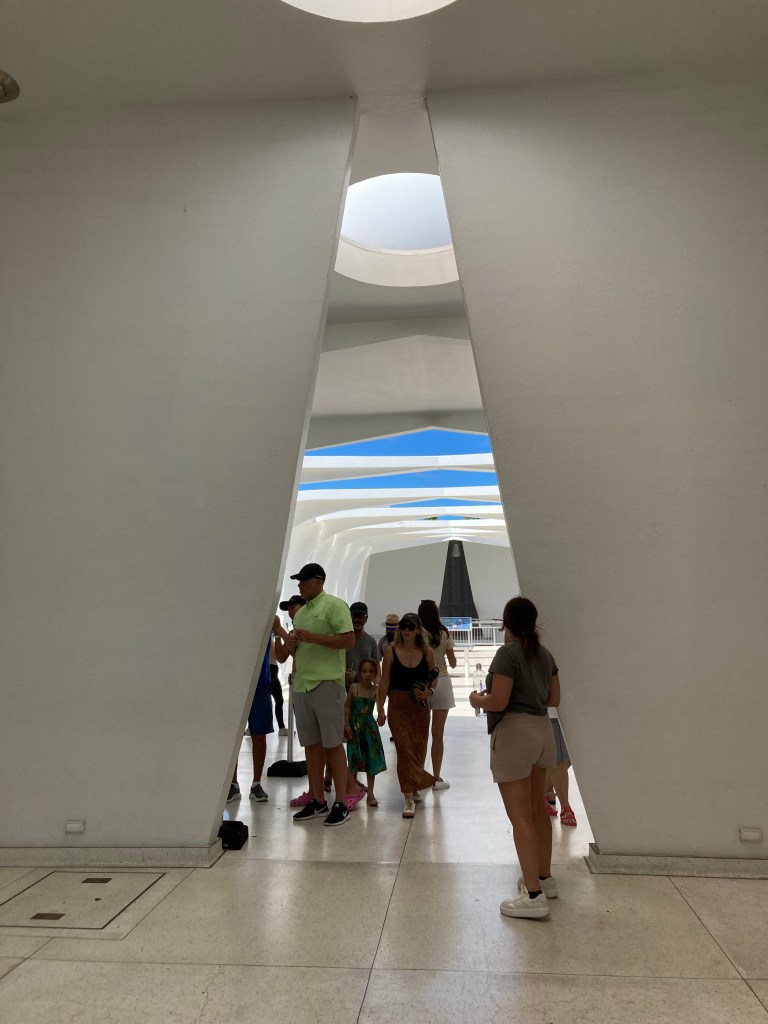
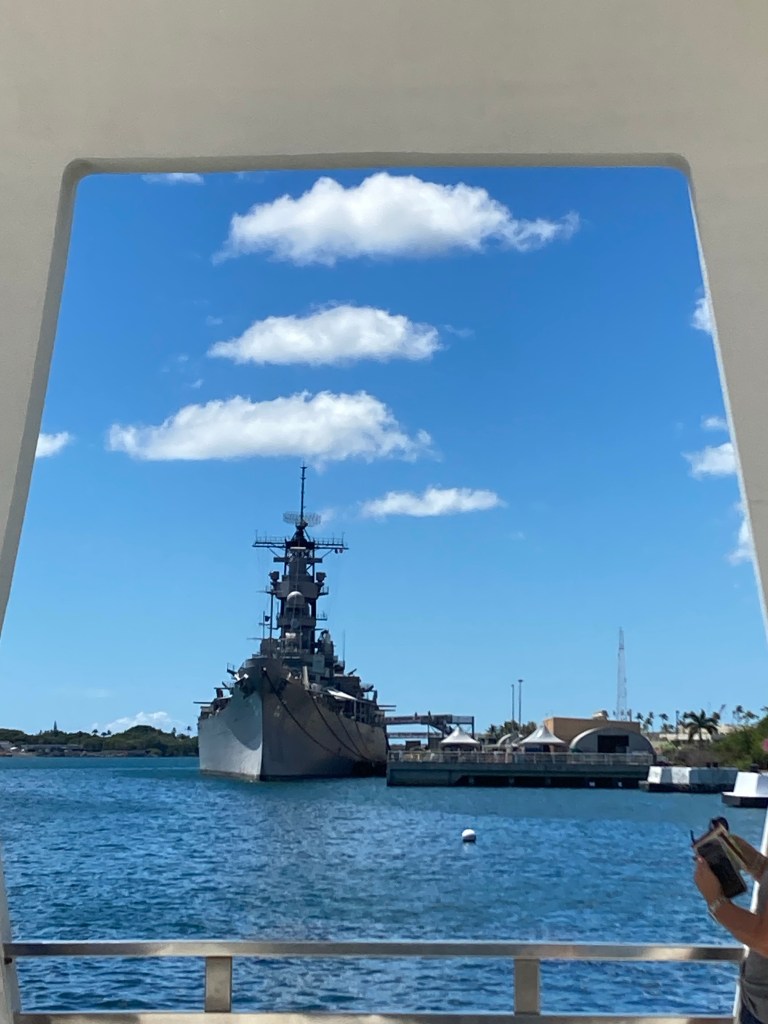
Being at the memorial was a profound experience. As a sign of honor, the memorial was designed and built to touch no part of the sunken ship; it is suspended mid-ship over the sunken vessel. The form of the structure is as much open space as it is solid, a metaphor of many windows to the imagined lives that could have been lived by those who rest below. The Stars and Stripes is visible at almost all times, its rallying cry never having been felt so acutely or so soberingly. Would that the eyes of Congress meet with such respect and shared consciousness as those of mine and my fellow pilgrims. I think that might be the simple solution to putting our country back on the path to fulfilling its great potential.
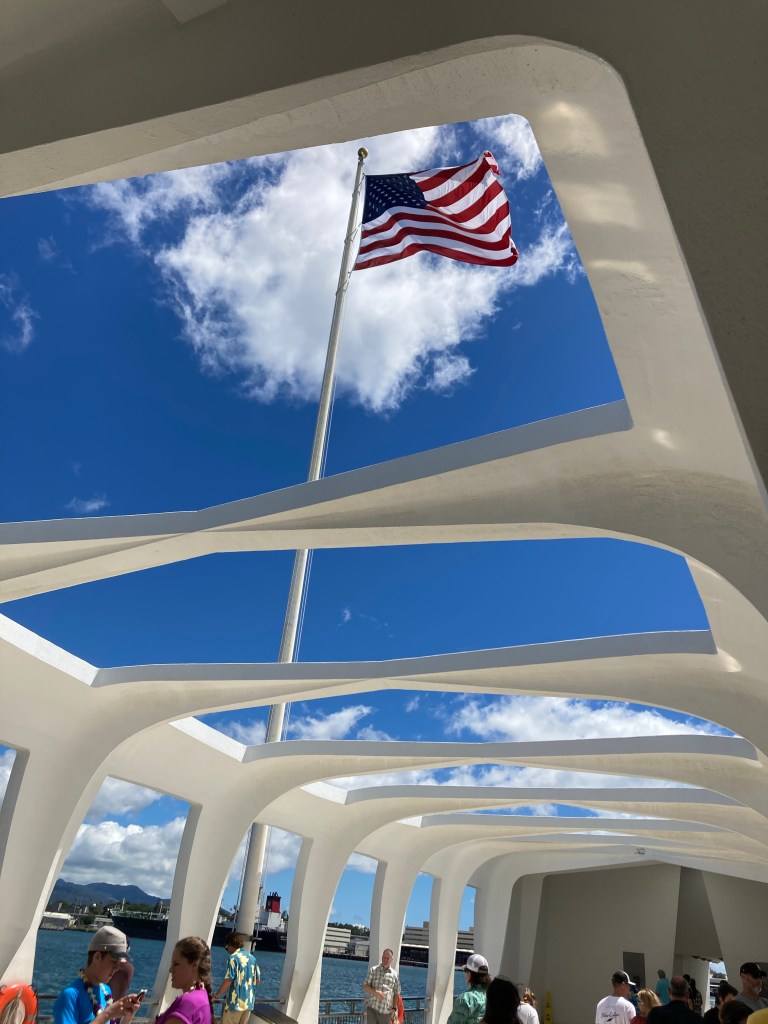
I went to Pearl Harbor with no more expectations than to give respect, which I did quietly and humbly. I returned having given respect but also having received a great wonderful gift: A sense of completion. Of the closing of a gap. Of having made a connection with a noble birthright, one I can carry forward proudly.
After the silent return tender from the memorial to the Visitor Center, I was spent, physically, as well as emotionally, so I chose to return directly to the Volendam.
I had a quiet lunch in the Lido, with the place almost to myself as everyone was out scampering across Oahu.
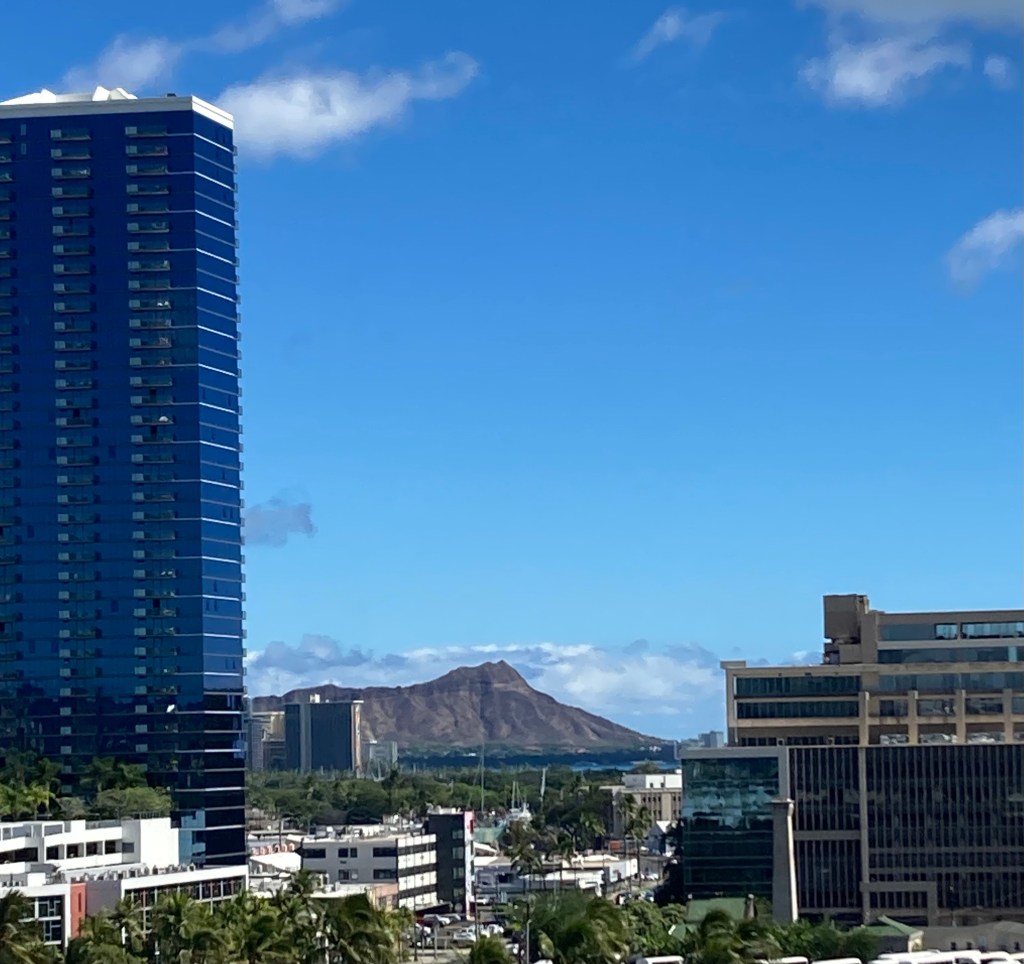
Then I spent most of the afternoon in bed, napping. I didn’t have the energy to dress and join friends in the dining room, but my stewards kindly brought a tray for me to pick at instead. Our departure was not until 10:00pm, and as I was feeling a bit rejuvenated, I decided to amble around the Promenade Deck around 9:30. Doing so, I met a Ukrainian American couple getting their steps in as well. We fell into a long conversation about their war, their losses, their patriots. All their children and their grandchildren remain in Ukraine, and all are taking active roles in the country’s mobilization. They expressed great concern about the future of their country. But, for their children and grandchildren, they expressed no fear, only PRIDE!
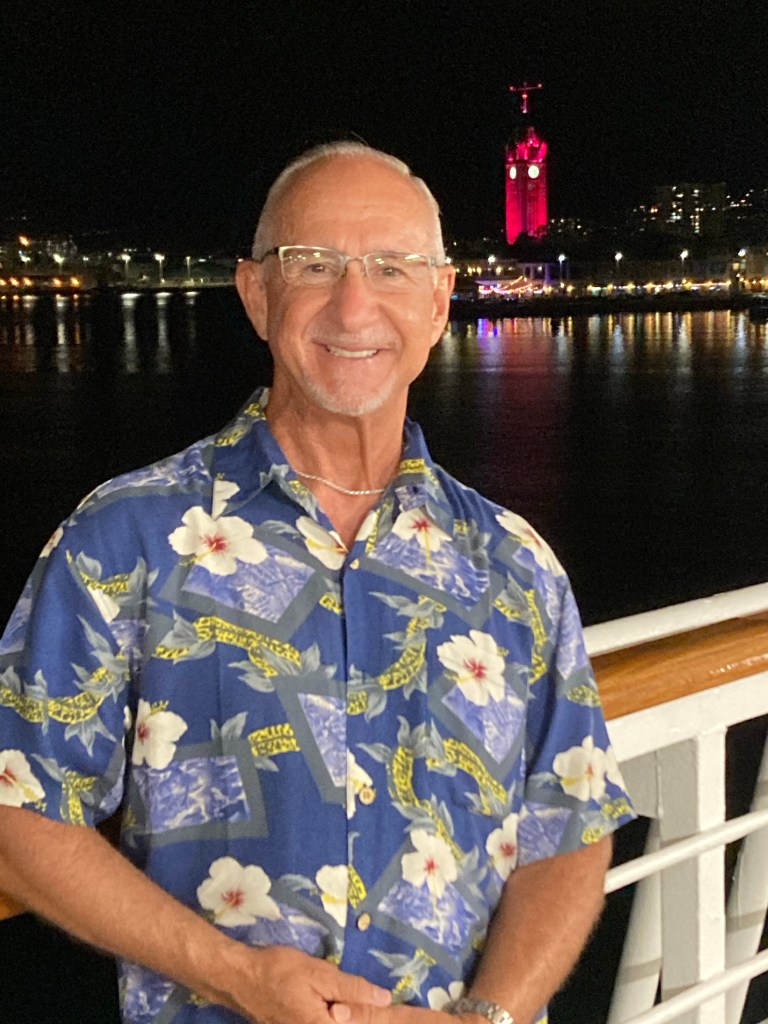
Mahalo and Aloha
 Will Gibson's South Pacific Journal
Leave a comment