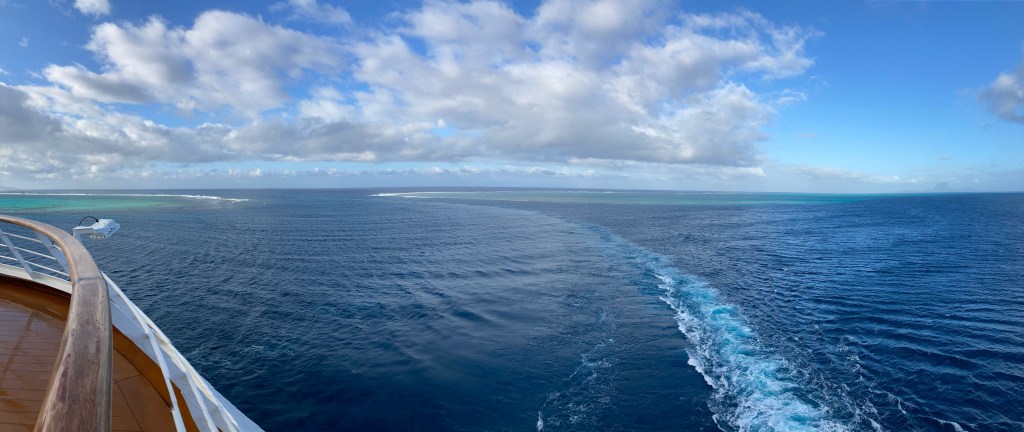
Since we couldn’t make the stop in Rarotonga on November 5, we got a day’s start on our 600nm course to French Polynesia, which lies north-east of the Cook Islands. The captain chose a course due-east, then north, to minimize the “roll” of the ship. On the 6th, Kainoa, the native Hawaiian guide and lecturer who has been with us since Hilo, gave a great lecture on Captain James Cook. The story of Captain Cook’s life is fascinating. He was a boy genius who turned down an opportunity to helm a commercial brigantine in order join the Royal Navy where he felt the voyages would be more “exotic.” And indeed, they were. Much of his detailed cartography of the South Pacific informed the work of Charles Darwin and the theory of evolution. The legend that Cook was eaten by Hawaiians on his third expedition to the South Pacific is totally false. He was indeed killed during a skirmish, but the King, knowing of Cook’s importance, commanded that his remains be treated as Hawaiian royalty and as such, receive their funerary rites. The end result is that there were only bones remaining when the Hawaiians returned Cook’s remains to his crew for Christian burial. Kainoa recommends Alistair MacLean’s biography of Cook for those who want to learn more about the life and death of this great explorer.
Uturoa, Raiatea: Nov 7
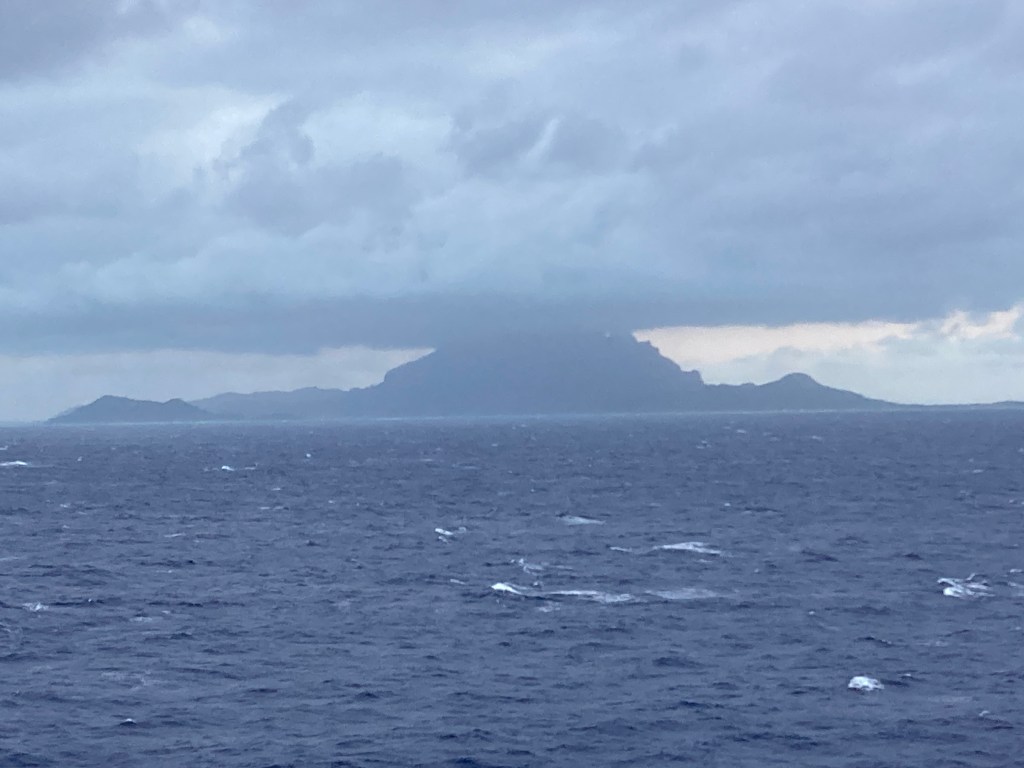
At dawn on November 7, we cruised past Bora Bora to our port side. We did not visit it because new laws were passed in 2021 restricting the size of ships that may call on it. The law is based on the number of passenger berths the ship has, NOT how many passengers are onboard. The new limit is 1,200 berths, and Volendam has 1,230! So sail on we did to beautiful Raiatea, the second largest of the French Polynesian islands after Tahiti.
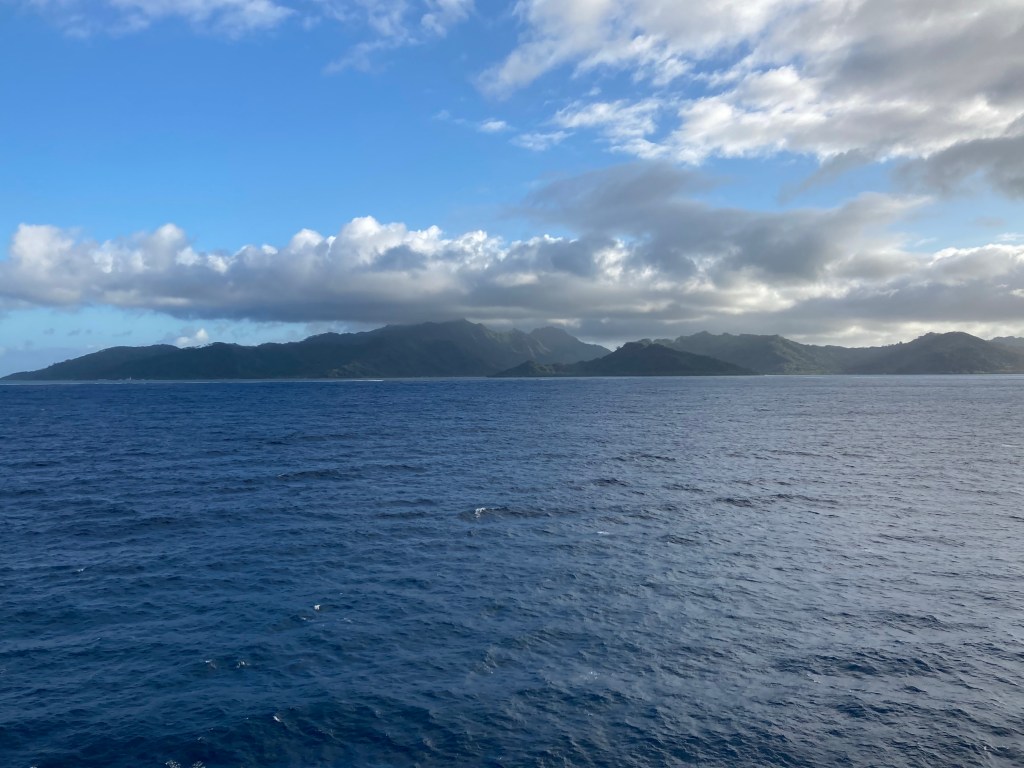
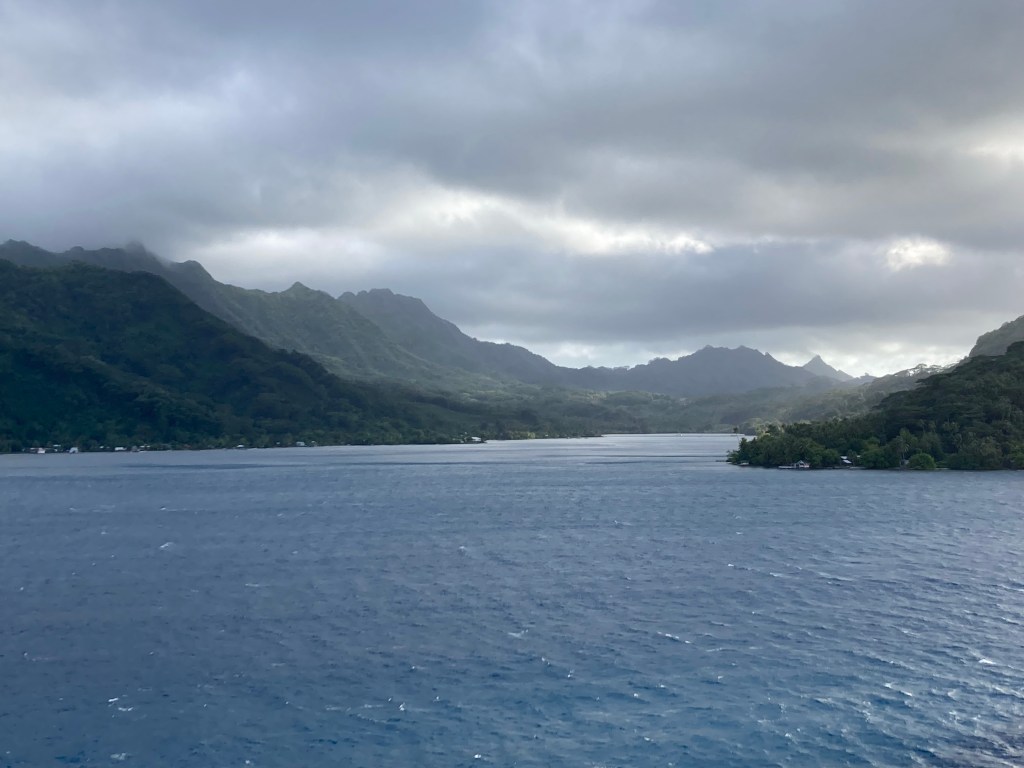
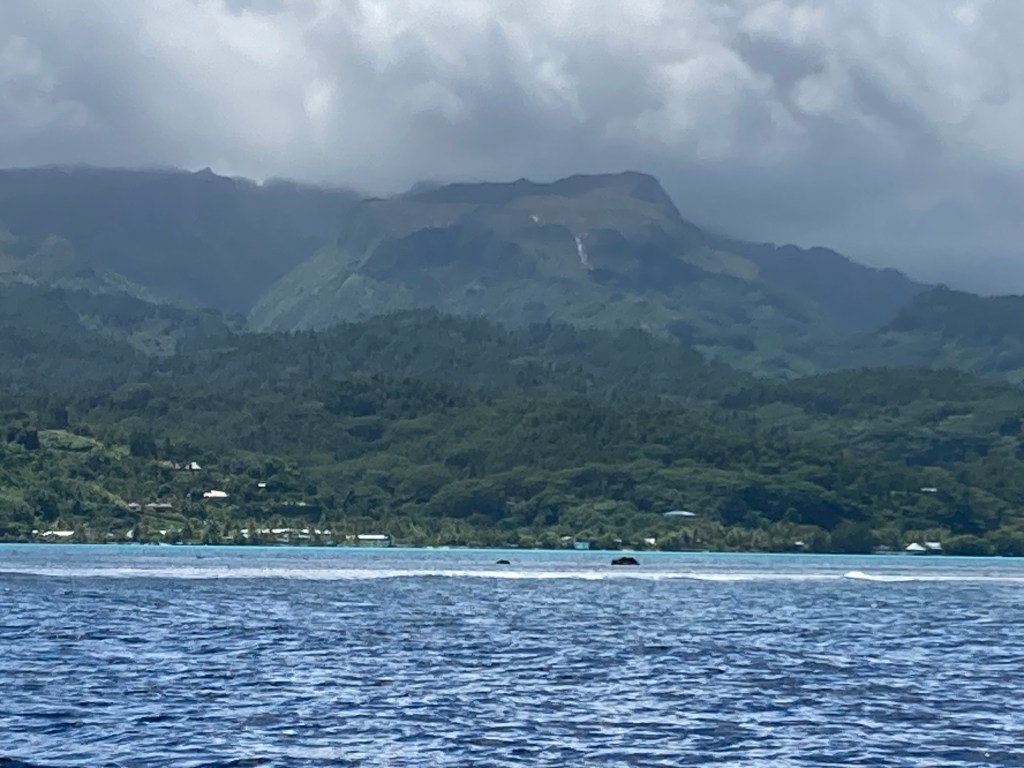
The approach to Raiatea is via a winding channel separating Raiatea and its neighboring island to the north Taha’a. For Polynesians, Raiatea was considered the most sacred of all the islands.
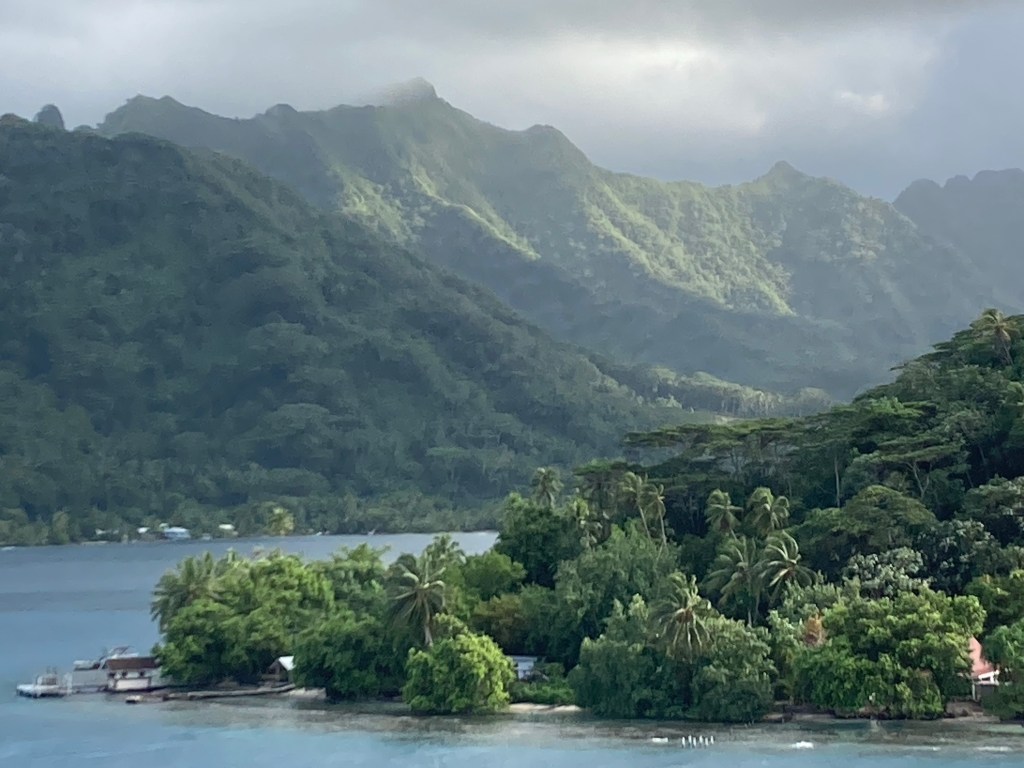
It was from Raiatea that the great expeditions of sea-going double-hull vessels departed to colonize New Zealand, Hawaii, and many other islands throughout the Pacific.
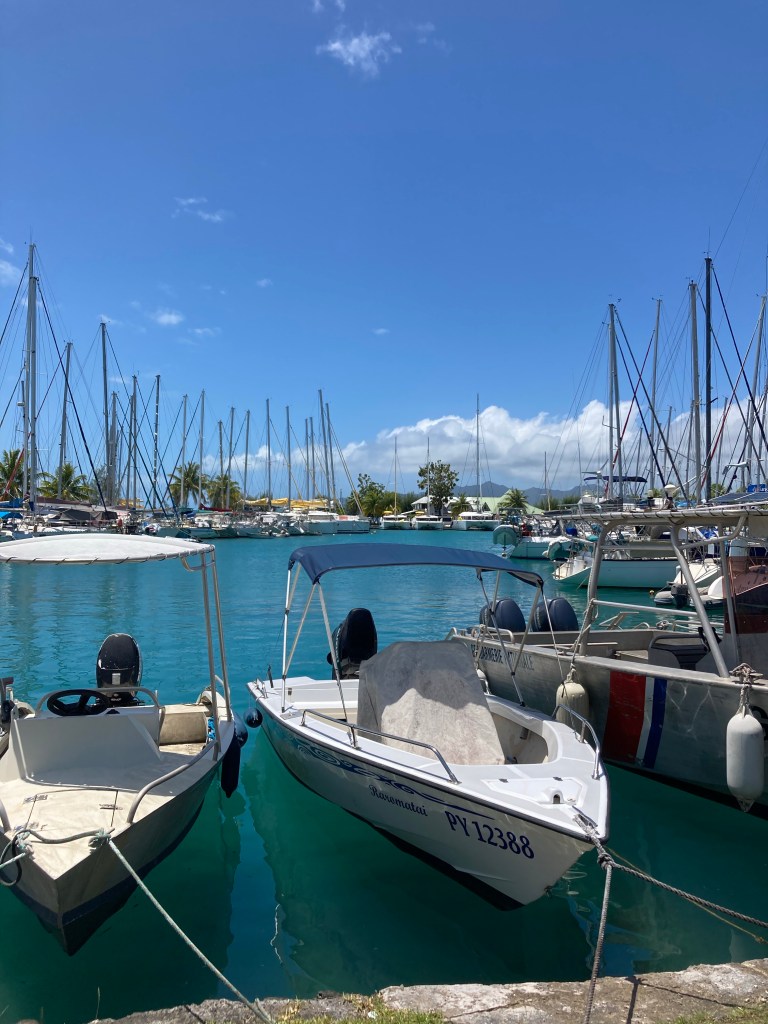
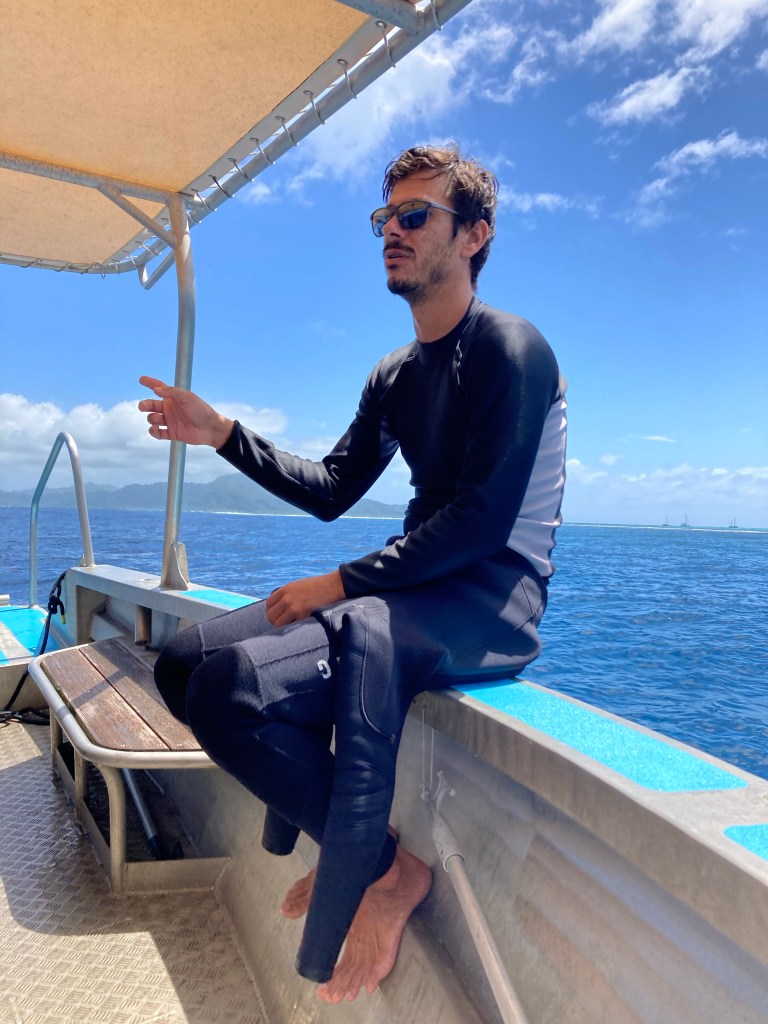
The dive shop owner met me and another diver aboard the Zolendam on the pier as soon as we docked in Uturoa, capital of Raiatea. He whisked us off to a marina on the island’s west side where his dive shop, Hemisphere Sub, is located.
We had two dives on the outside of the reef at Miri-Miri.
Dive #1 was swim against current to furthest point and drift back; Dive #2 was drift to furthest point and swim back against current. We saw several white tip and black tip sharks on both dives. On dive # 2, we saw a large nurse shark asleep on the sandy sea floor, only the head and mouth poking out of a coral crevice.
We also saw three baby sharks hanging out under a coral shelf. They were frightened by us and darted into the shelf’s recess only to pop their heads out a few seconds later to see if we were still there. This happened several times in a row, and we all got a kick out of how cute it they were. We also saw a large school of red snapper – all plate size.
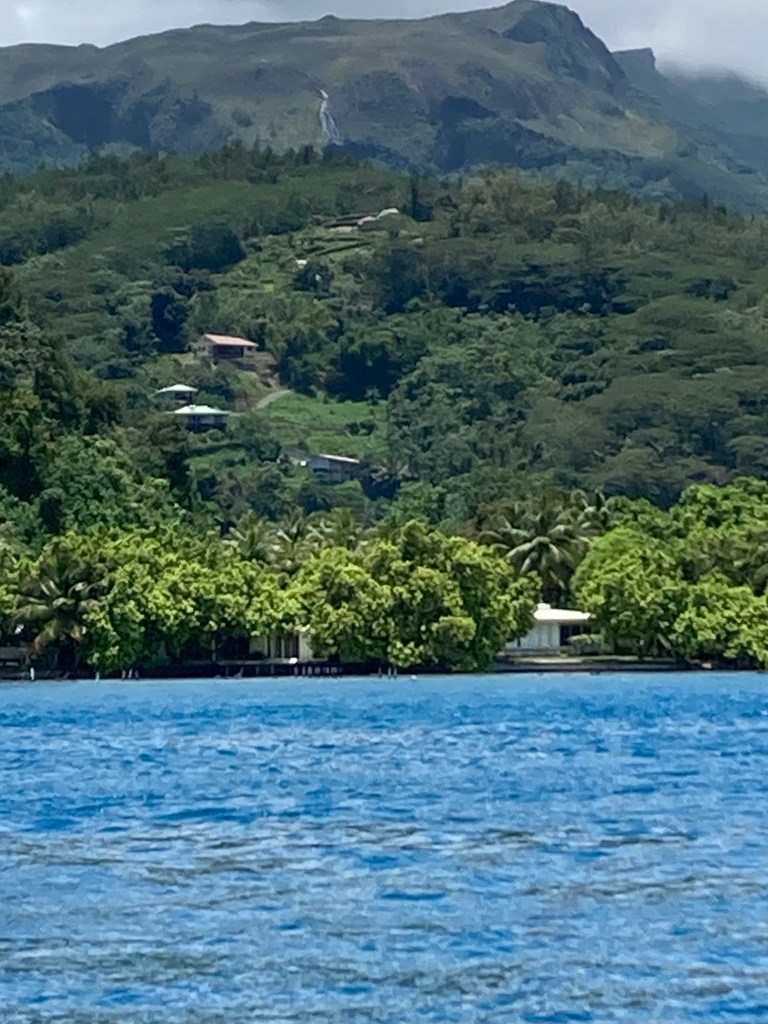
After returning to the marina, the dive shop owner gave us a ride back into Uturoa. Once there, I walked around town a bit on my way to the market. Along the way, I found:
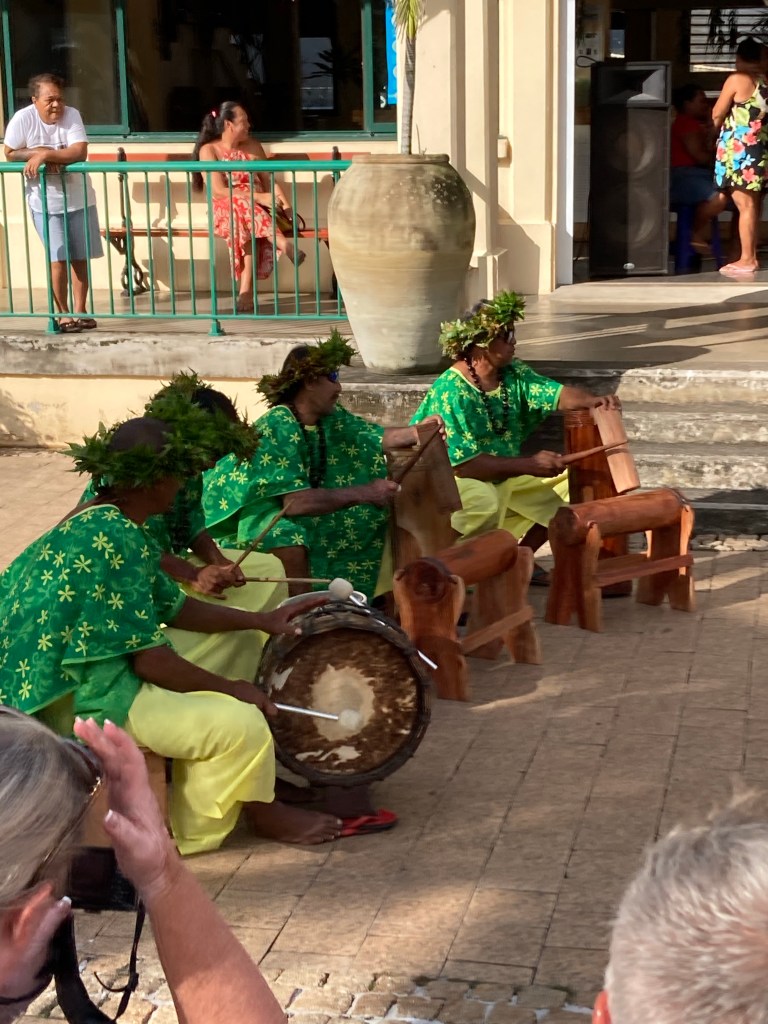
a drum troupe drumming and chanting traditional Polynesian folk songs
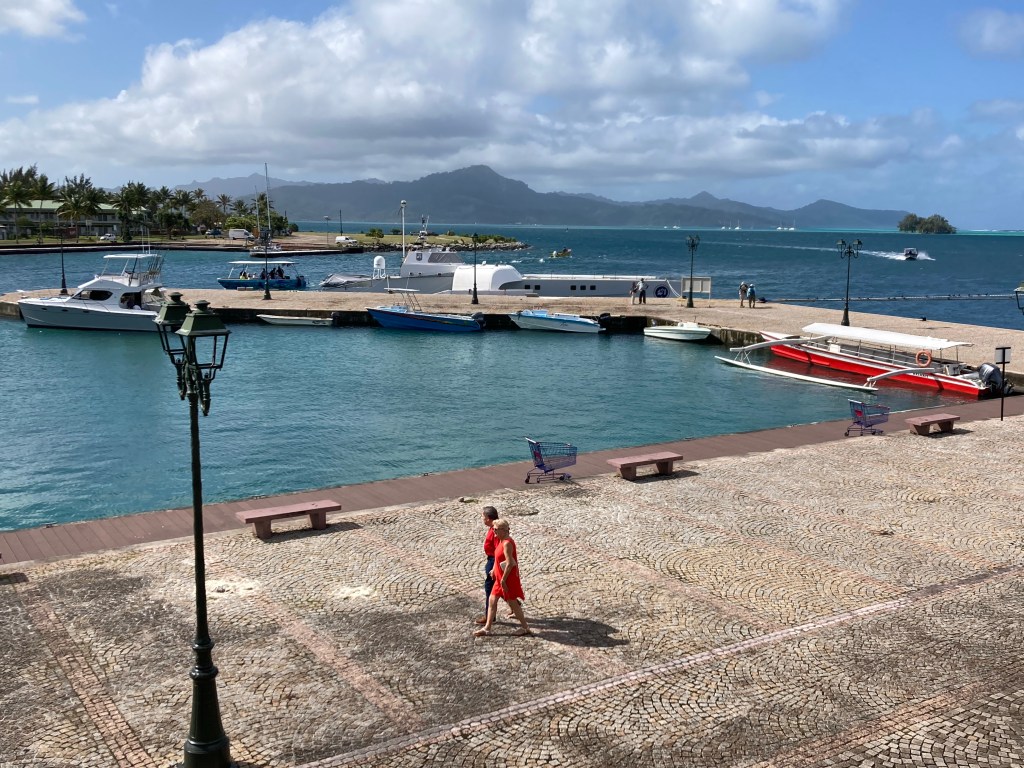
a chic, cobblestone paved inner harbor
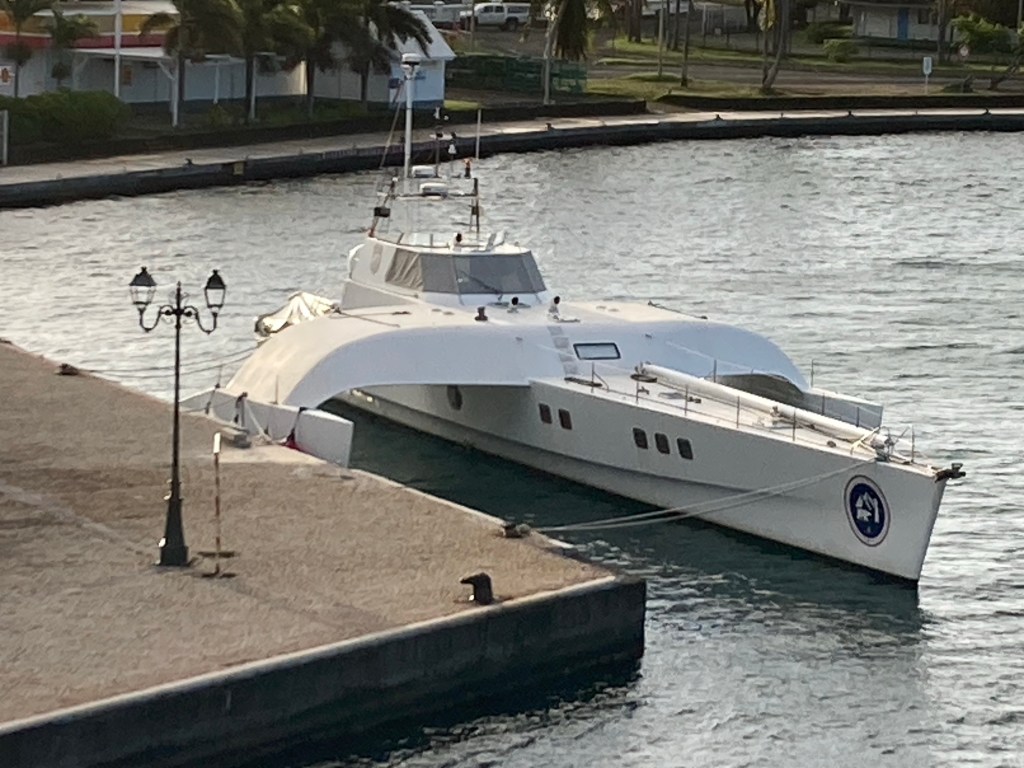
a sleek expedition-class trimaran
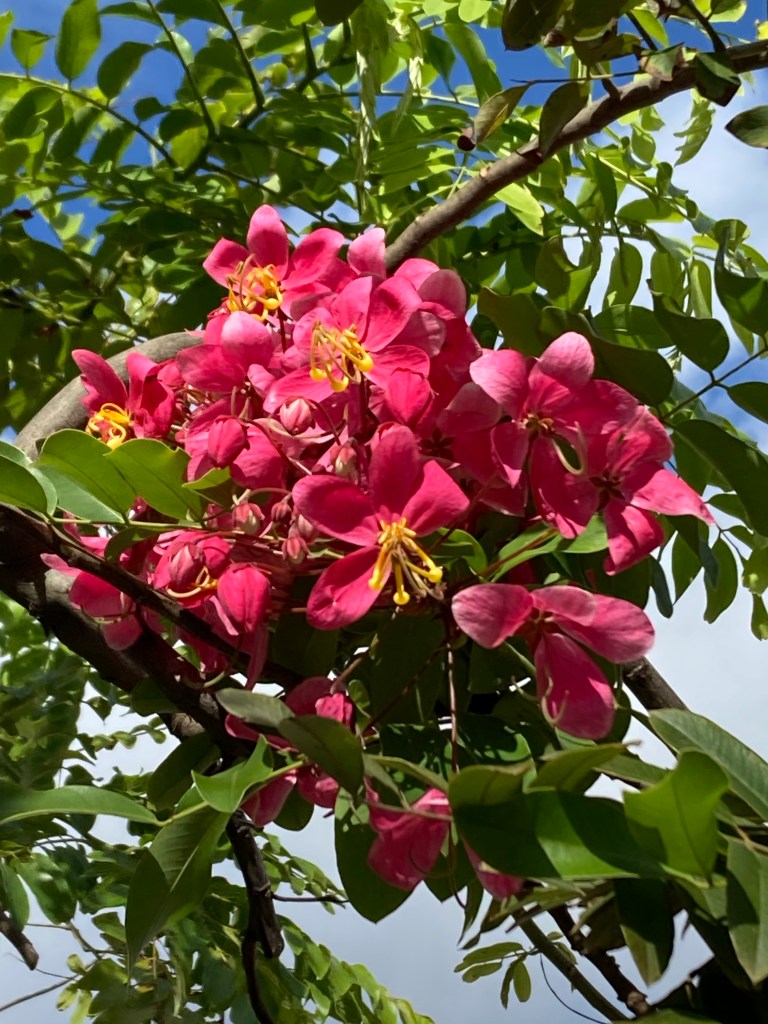
beautiful trees in bloom
And finally, the market where I scored a few bottles of excellent Saint-Victoire rose and two freshly baked baguettes to be shared at table that night.
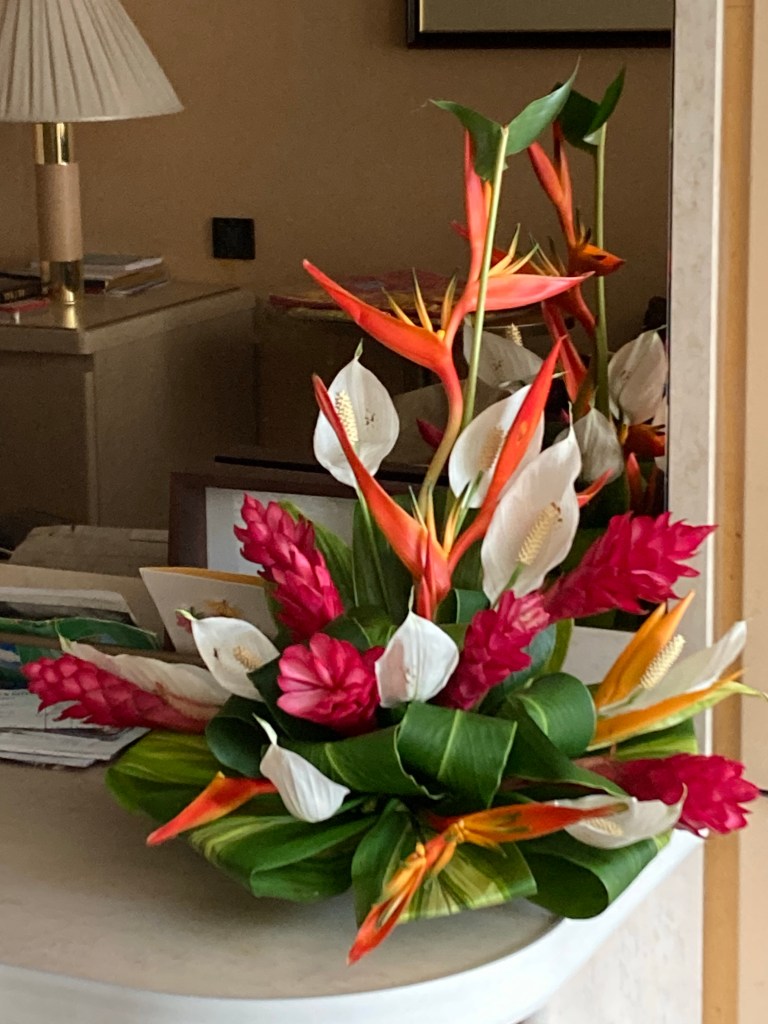
I passed the local farmers market on my return to the ship and picked up a beautiful tropical flower arrangement for just $10 US.
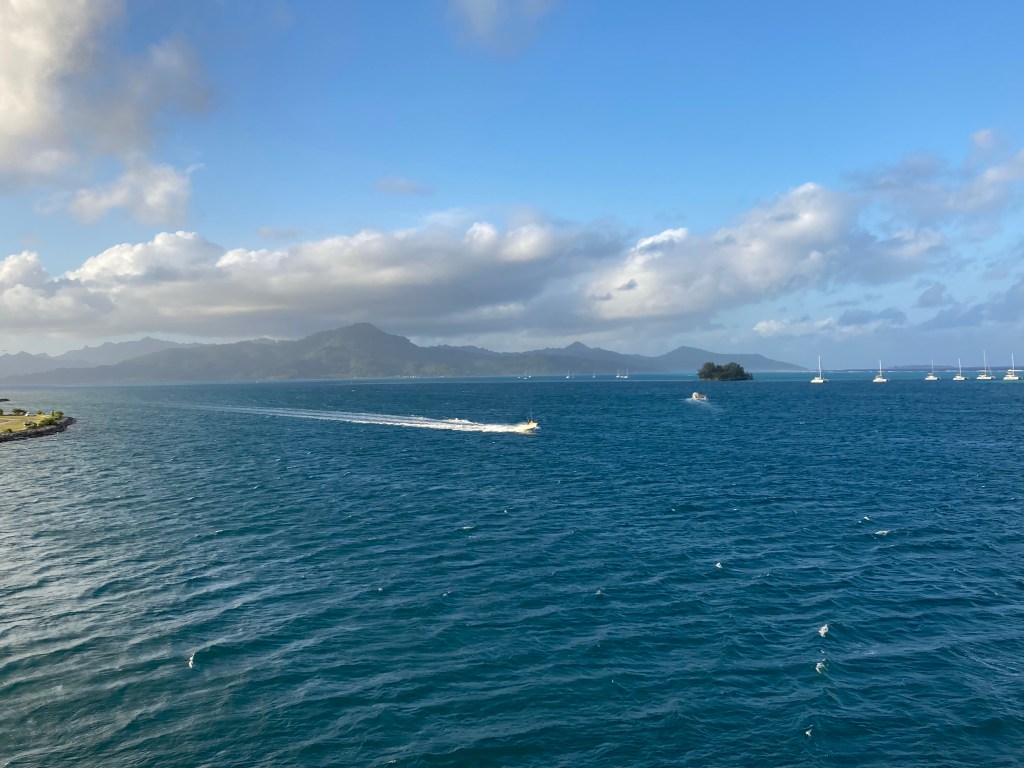
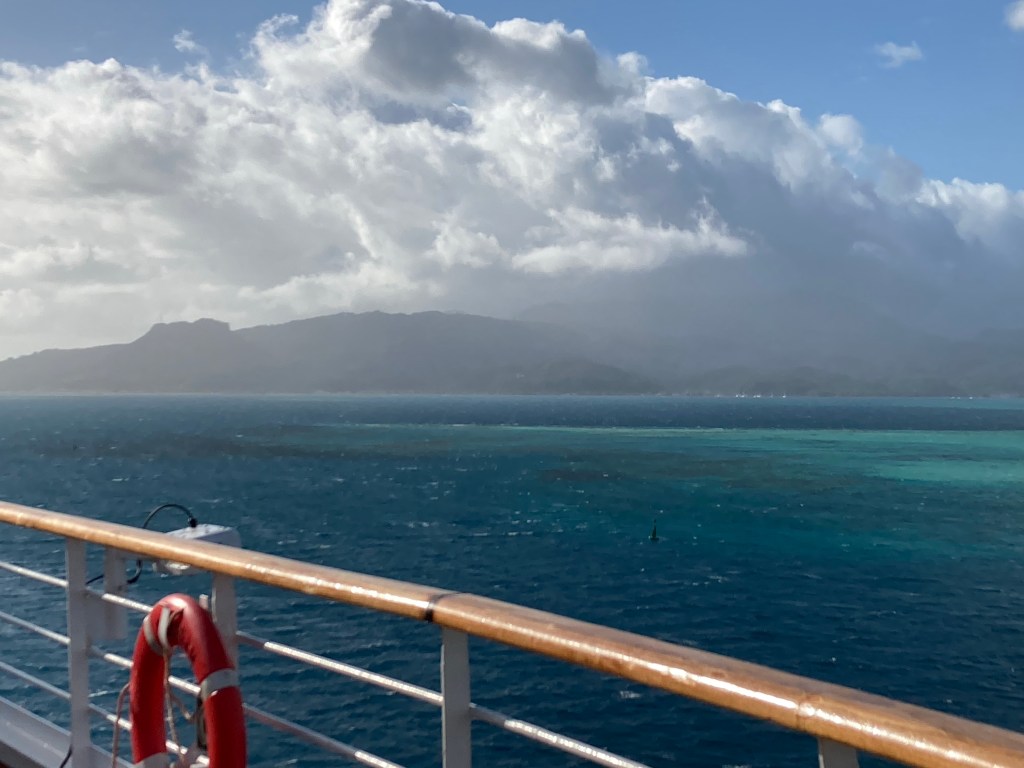
Sail away at 5:00 provided yet again a glorious spectacle. Zoom in on the photo above, and you will see dark blue water in the foreground, which is the channel, the light blue water in the middle which is the lagoon, and a reef line beyond marked by breakers with more dark blue water beyond which is the open ocean. I hope this photo will give you an idea of the scale and beauty of Raiatea.
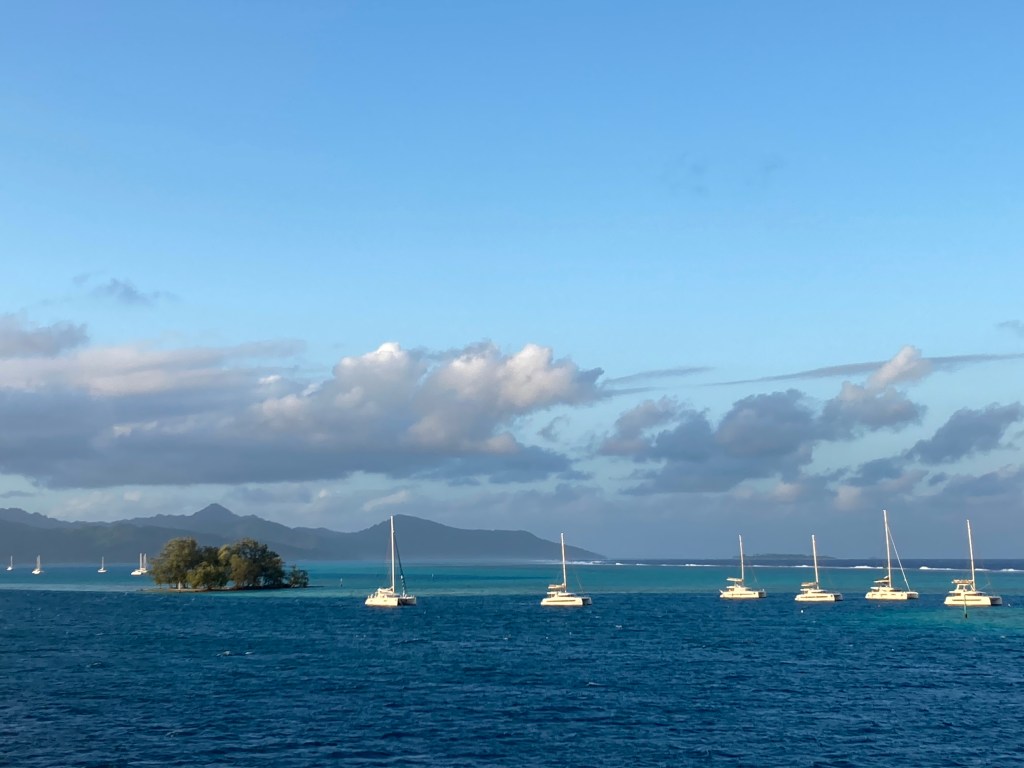
And another for more detail.
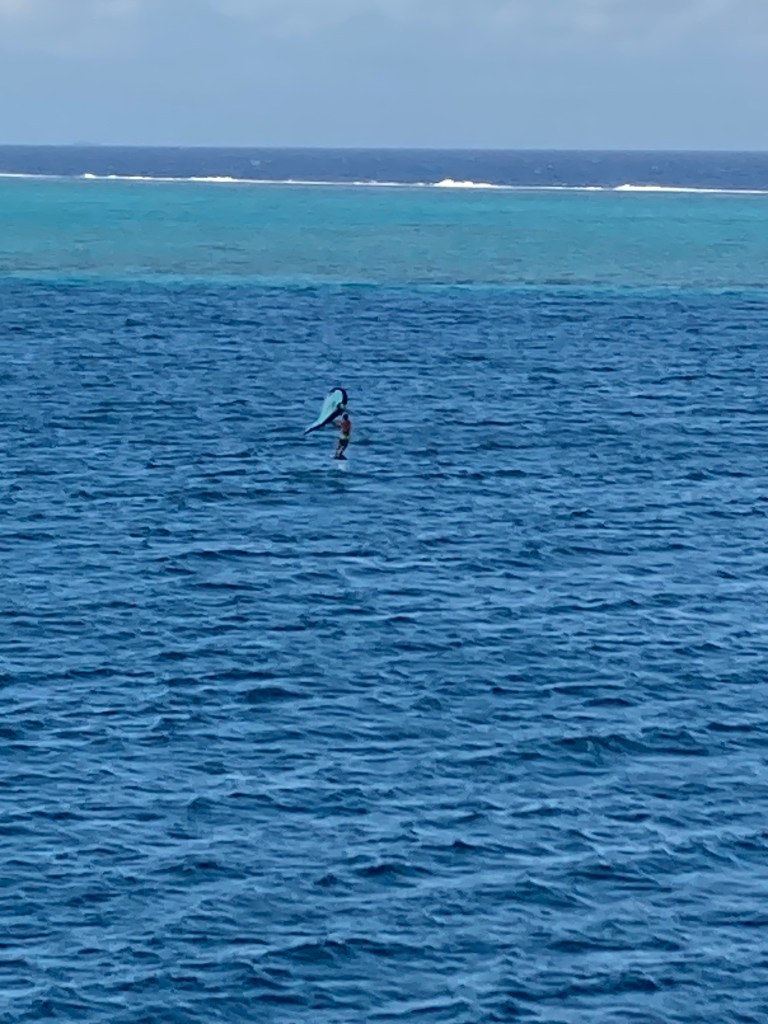
A new watersport was spotted while sailing out of the harbor: wing surfing. Fascinating!
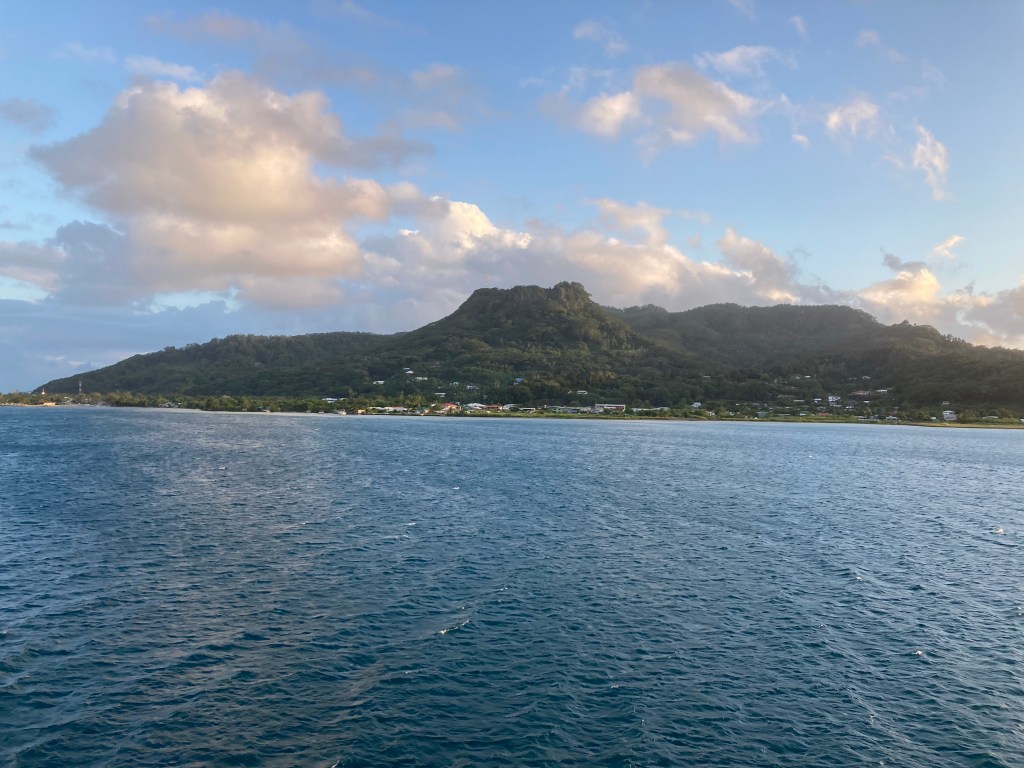
Raiatea slipping away behind us. Notice the “flat” volcanic crater.
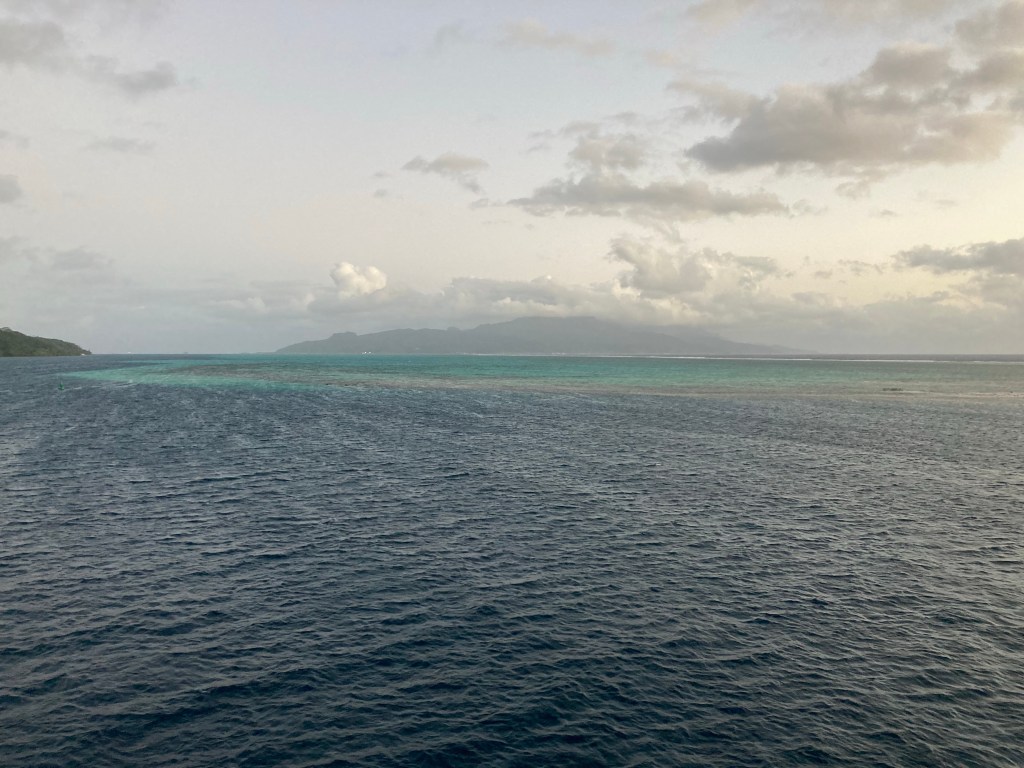
The westernmost point of the reef where we turned south and headed to Moorea. Zoom in and you can see the flat top crater of Raiatea in the far distance, the zig-zag channel we had just exited and the southeastern tip of Taha’a in the foreground.
Bahia d’Opunohu, Moorea: Nov 8, Nov 9
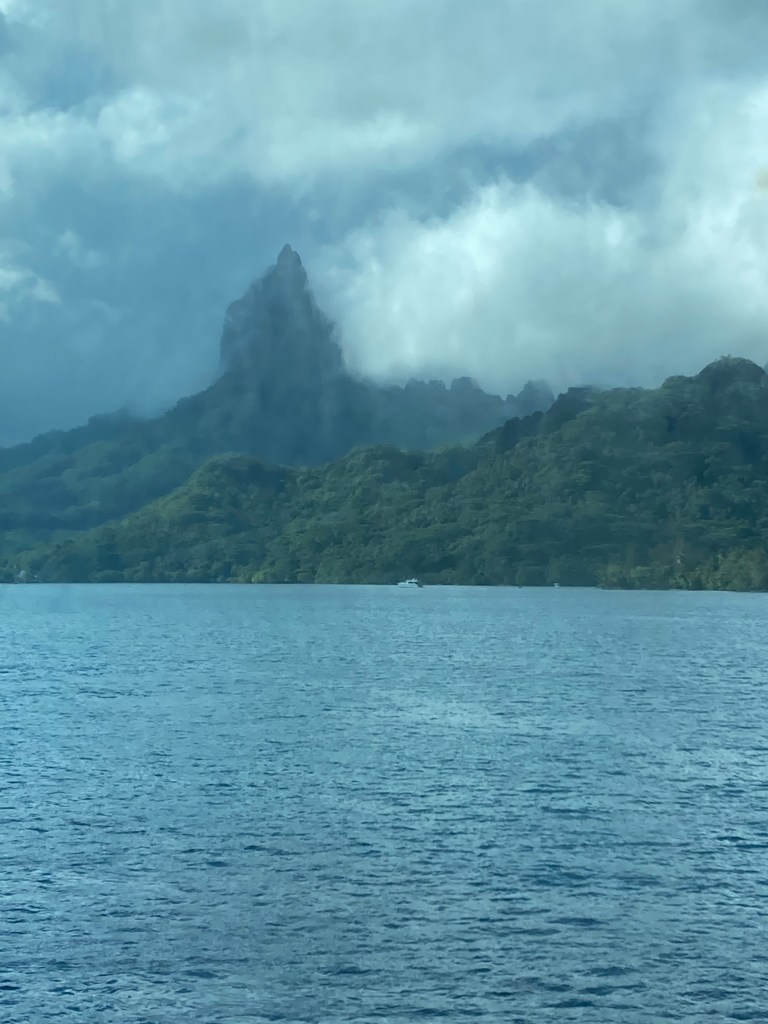
Misty clouds were drifting over the volcanic peaks of Moorea on Wednesday , November 8 when we cruised into fantastic Opunohu Bay and dropped anchor over 800 feet below. The clouds would burn off quickly but return intermittently throughout our two-day stay. The anchor, on the other hand, remained steadfast.
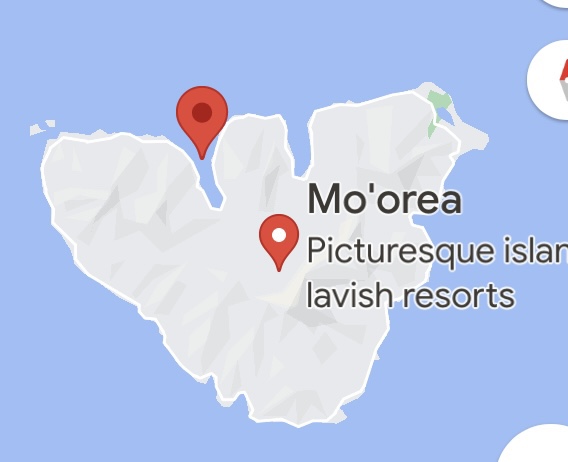
Moorea is shaped a bit like a “W.” Our anchorage point, as shown by the solid red pin on the map, was in the western bay: Opunohu Bay. A mammoth volcanic abutment separates Opunohu Bay from Cook’s Bay to the east. The entire north coast is fringed with upscale resorts, several of which offer the over water bungalows that, for better or for worse, have come to define French Polynesia for several generations.
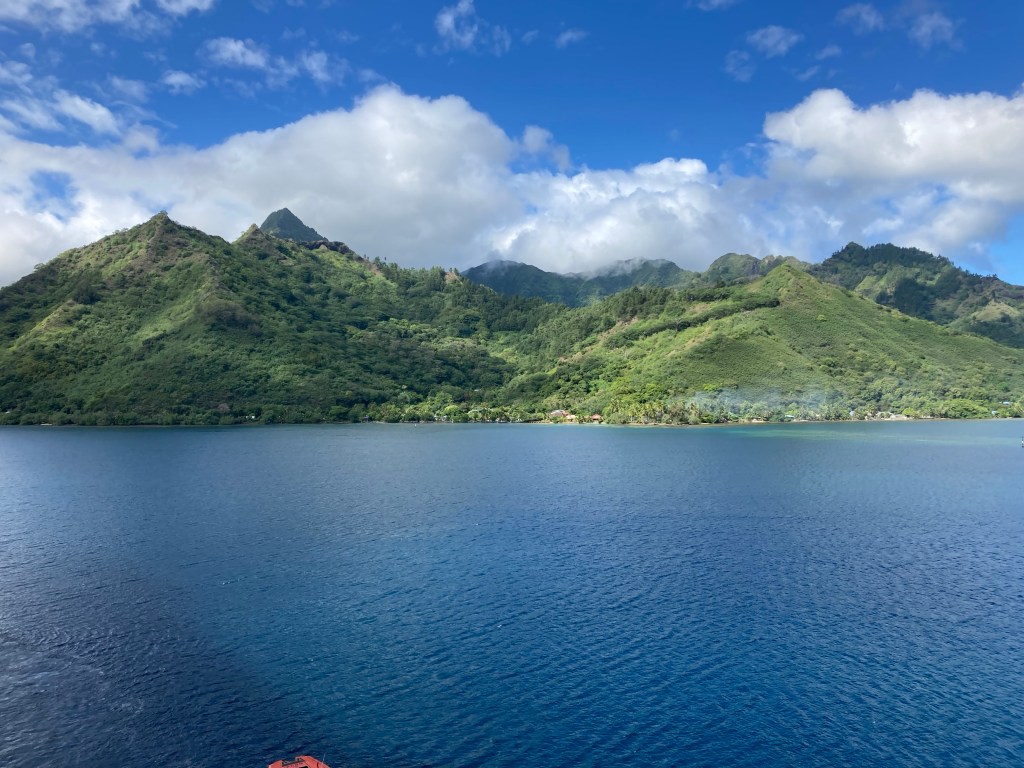
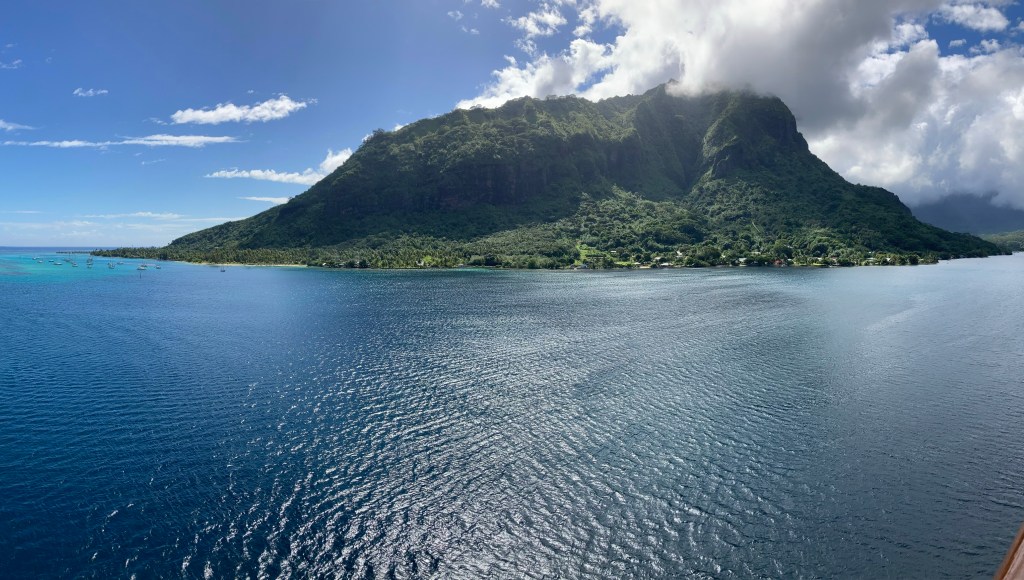
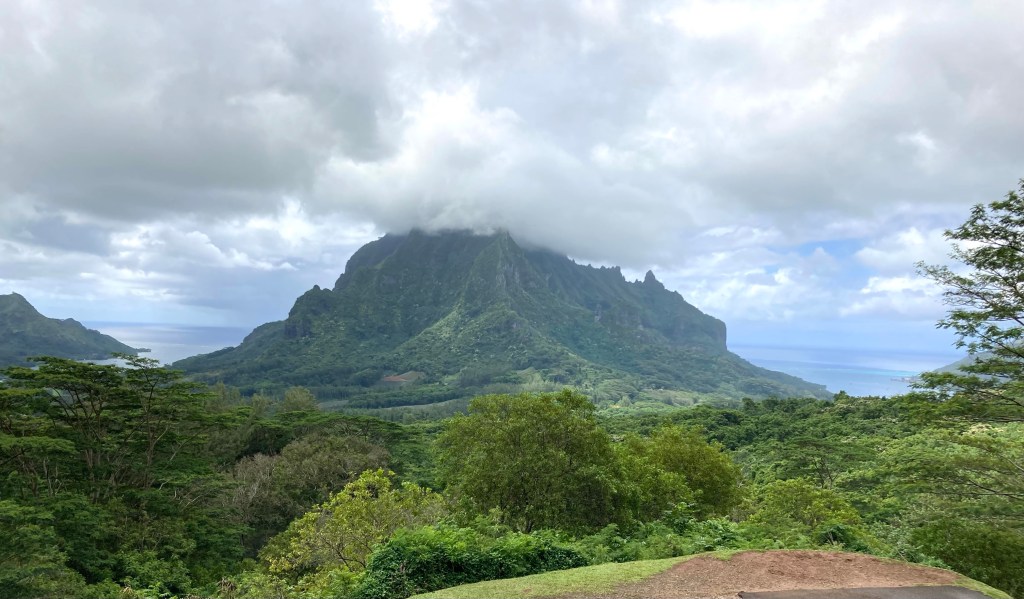
From our anchorage point, we had wonderful views of both long arms of the embracing bay.
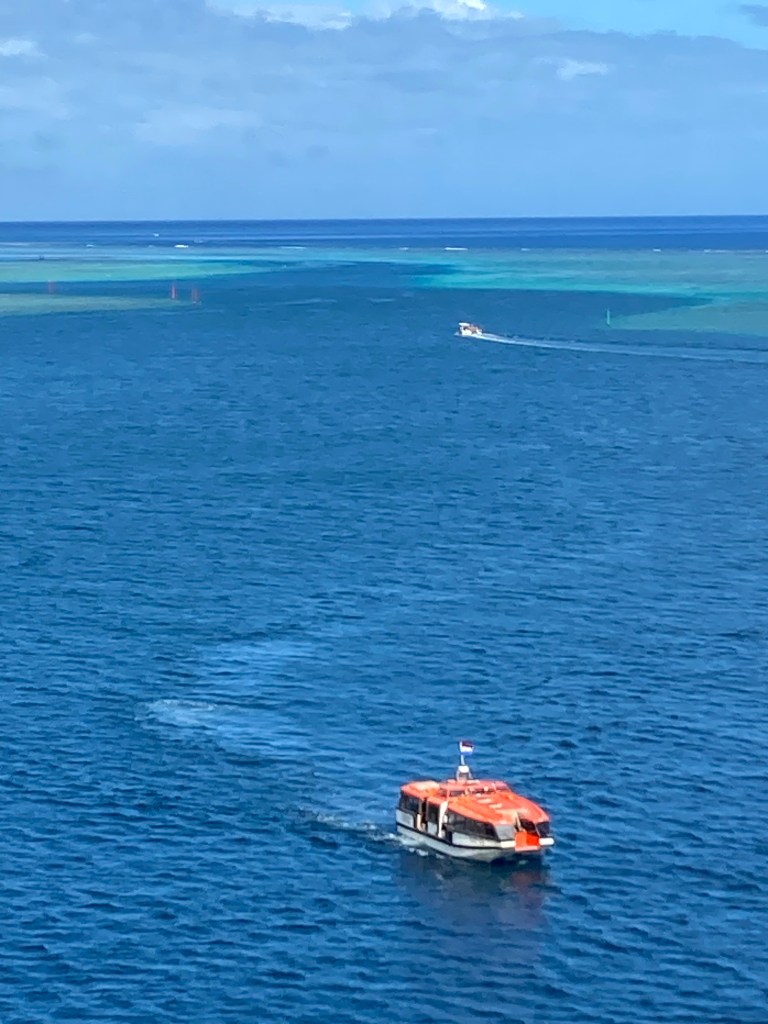
The tender channel into the tiny pier at Papeto’ai was a zig-zag of turquoise and deep blue. Tender boarding was by group number, and numbers were available beginning at 8:00 am. When I went up at 8:00 to collect a group number, the line extended almost the entire length of deck 5!! I was tender group 23!! My shore excursion didn’t leave the pier until 12:30 so I was fine with waiting several hours for my tender number to be called.
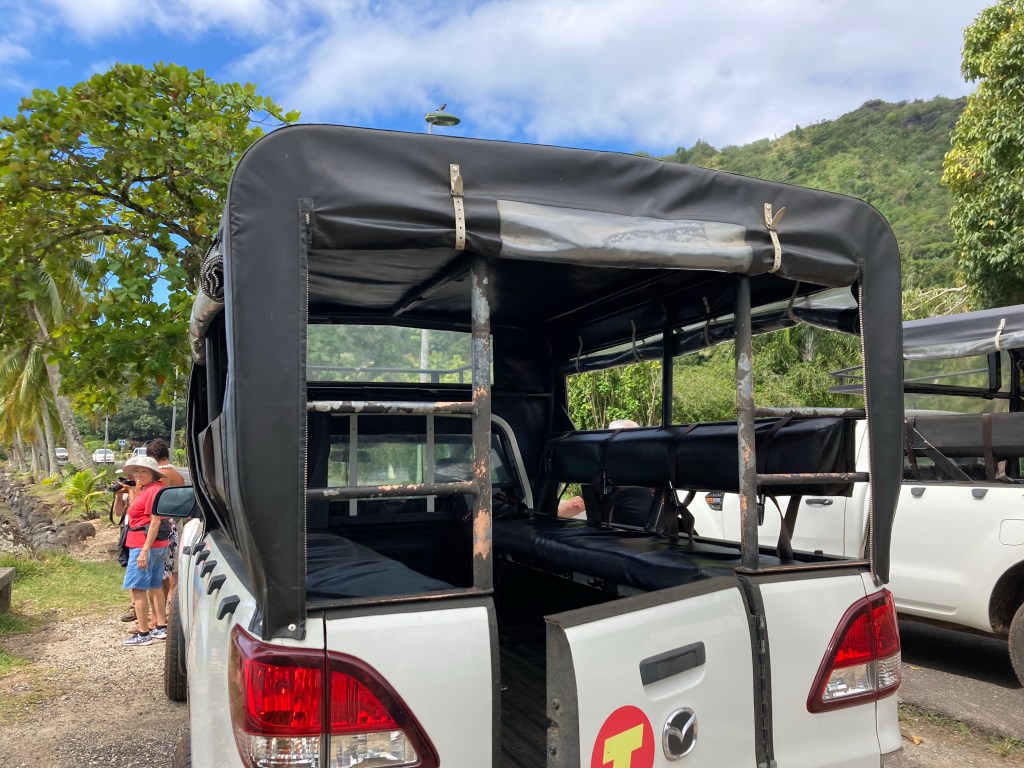
The excursion was a “safari ride” into the interior of the island, i.e. we sat on bench seats in the bed of a 4WD pick-up truck.
Our guide was a native of Moorea who had BS and MS degrees in biology from University of Hawaii. He really knew his stuff, so we had a great tour. We started with a stop at the base of Opunoha Bay for a great photo op and an overview of the tour.
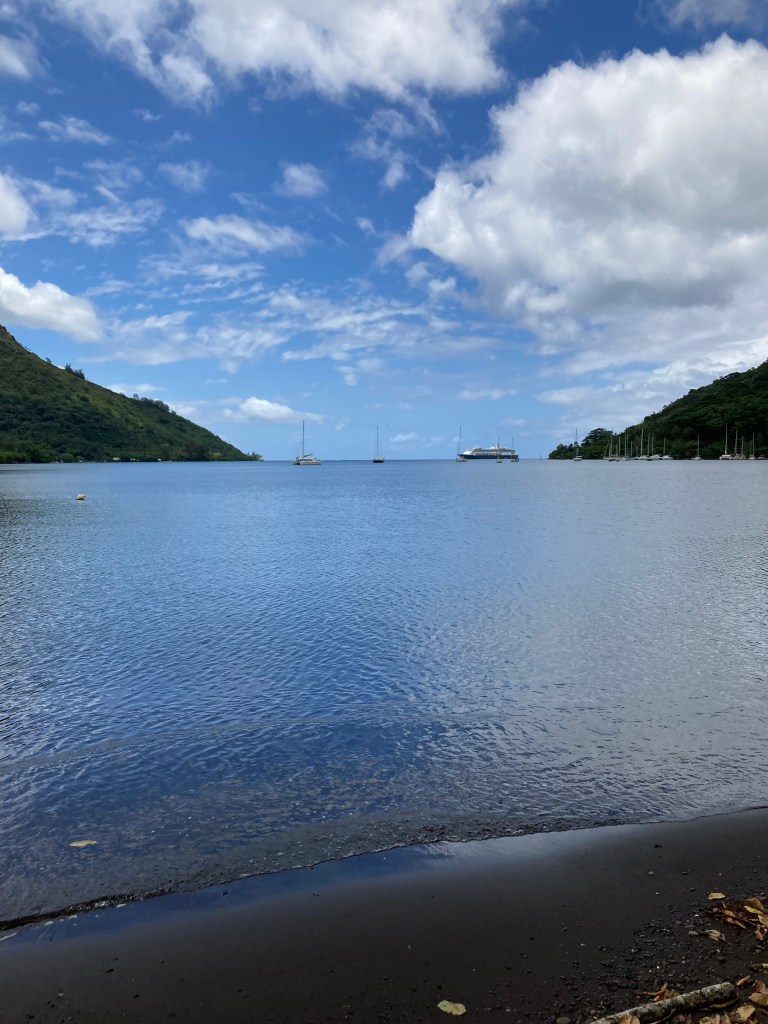
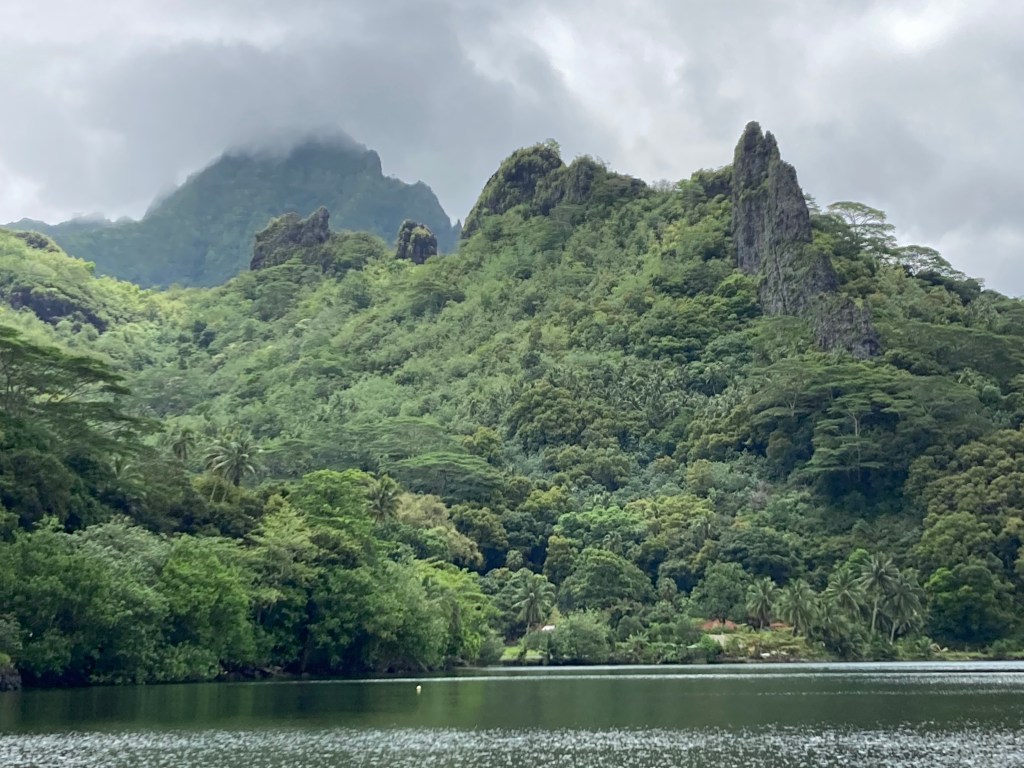
Next up was a stop at an inland river to see the famed blue-eyed fresh-water eels.
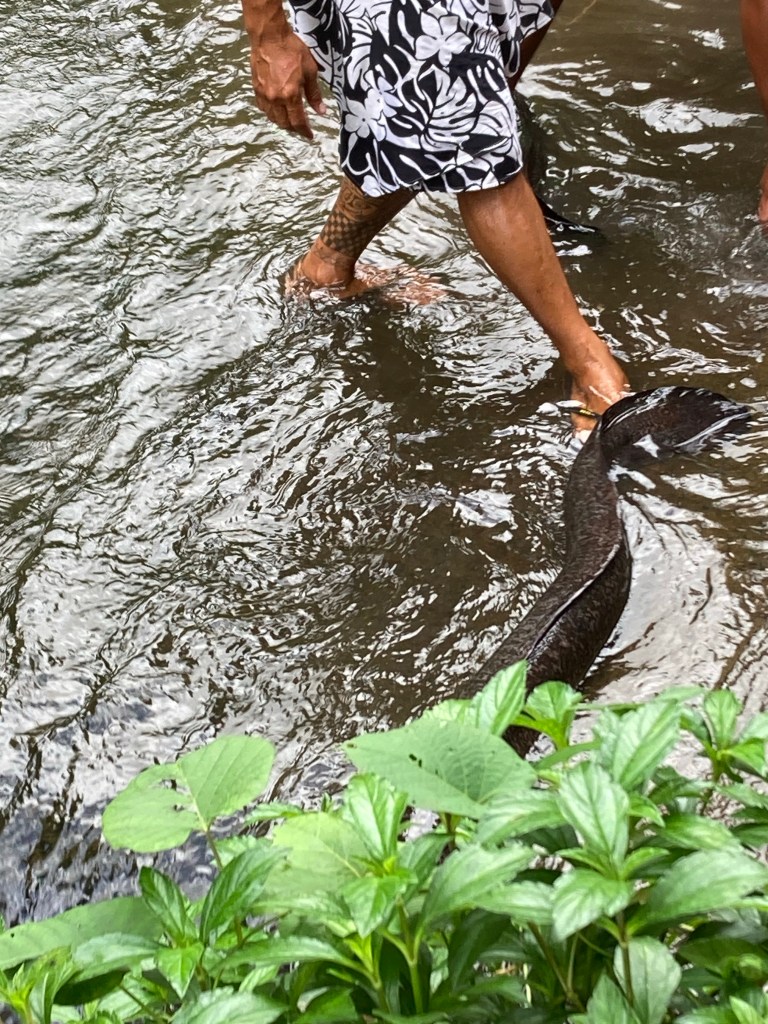
There were about 20 living in this stretch of the waterway.
As you can see from the photos and videos, they are big (some over 5 feet long) and slippery as mercury. They can bite you, but if they do, it doesn’t hurt because their teeth are far down their throats! The Tahitians revered these animals. Eating them was kapu, i.e. forbidden.
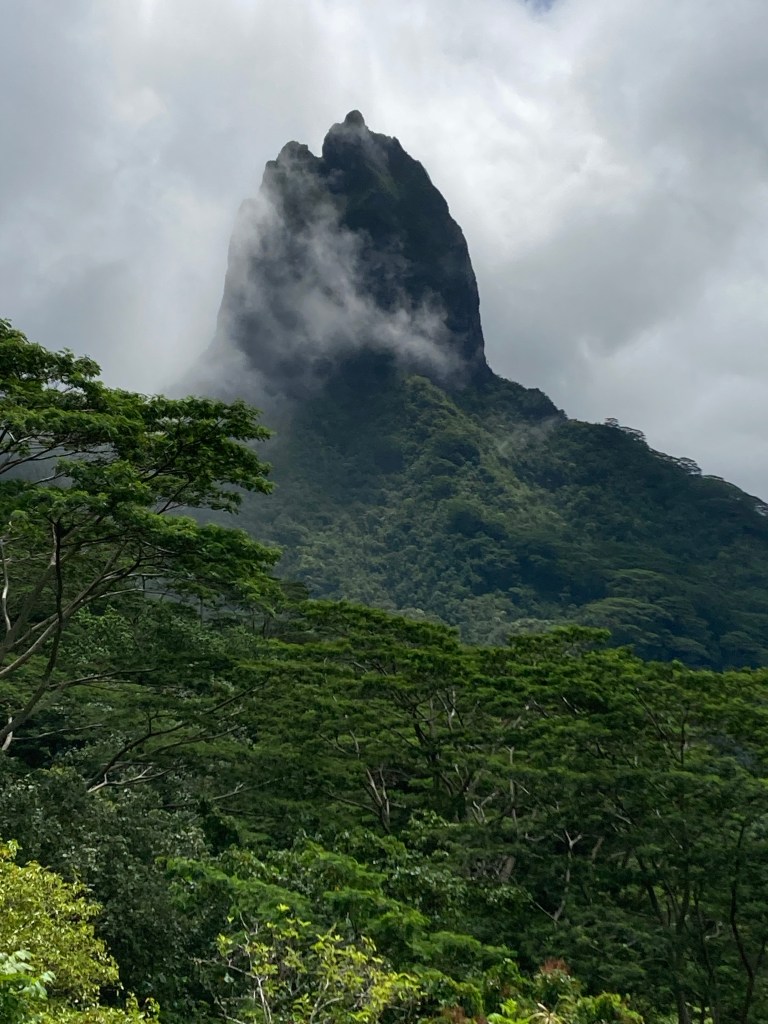
We then drove a long stretch inland, almost all uphill and then via a series of switchbacks, up a mountainside. All around we could see profiles of grotesquely-shaped eroded lava formations on the summits of surrounding hills and waterfalls cascading thousands of feet down sheer cliff faces.
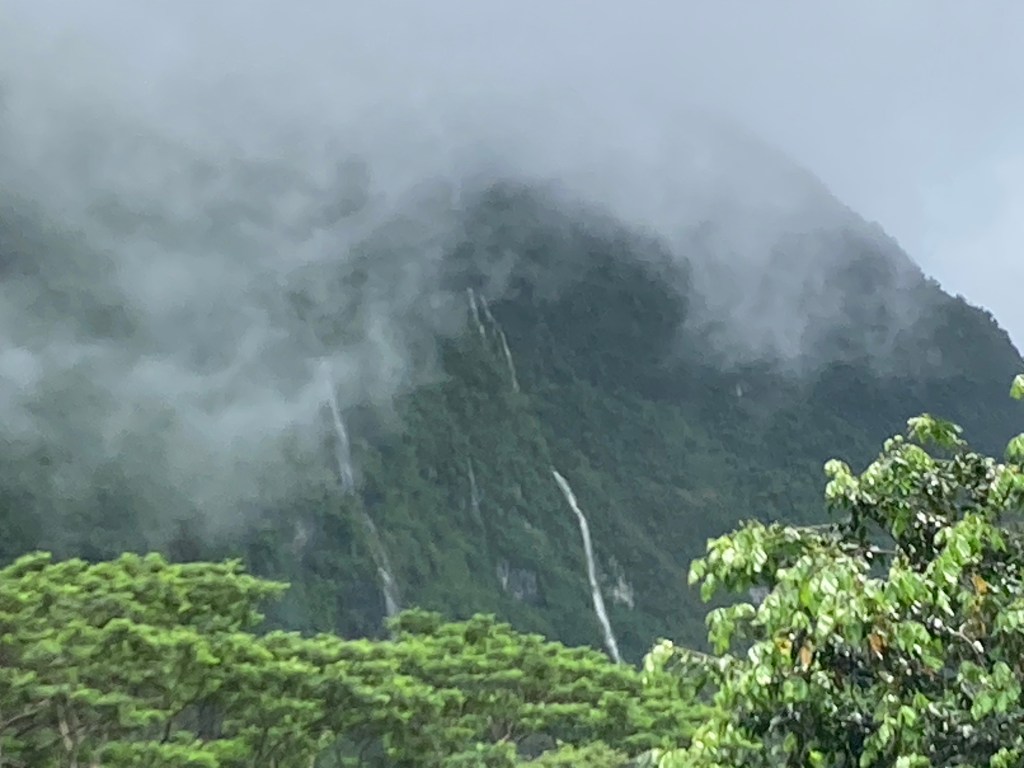
Eventually we arrived at Belvedere de Opunohu, an enchanted aerie from which one can see both Opunohu Bay and Cook’s Bay simultaneously.
Our next stop was an ancient complex of temples (marae) a little further down the hill. There was not a lot to see other than acres of lava rock walls. Archeologists have unearthed over 30 temples in the immediate vicinity, so its apparent that this spot held a special place in the hearts and minds of the Polynesian people. We didn’t stay long because the mosquitos were rampant.
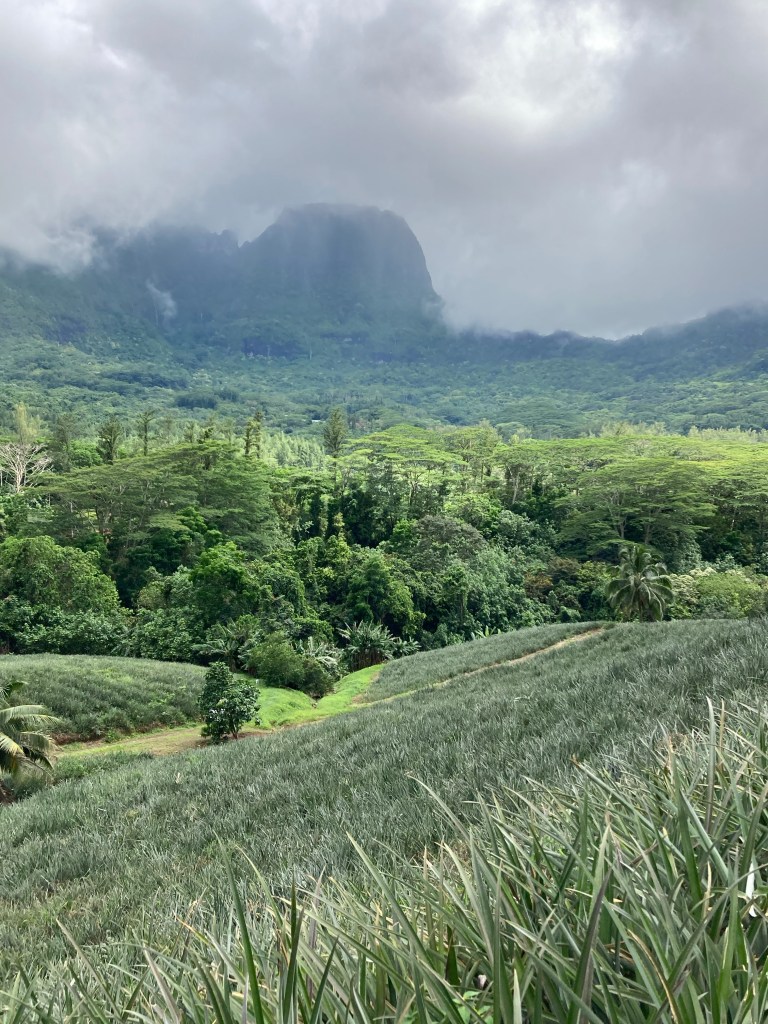
We then descended a little further to a lush valley filled with pineapple fields. Our trucks had to ford a deep, wide stream to get to the plantations.
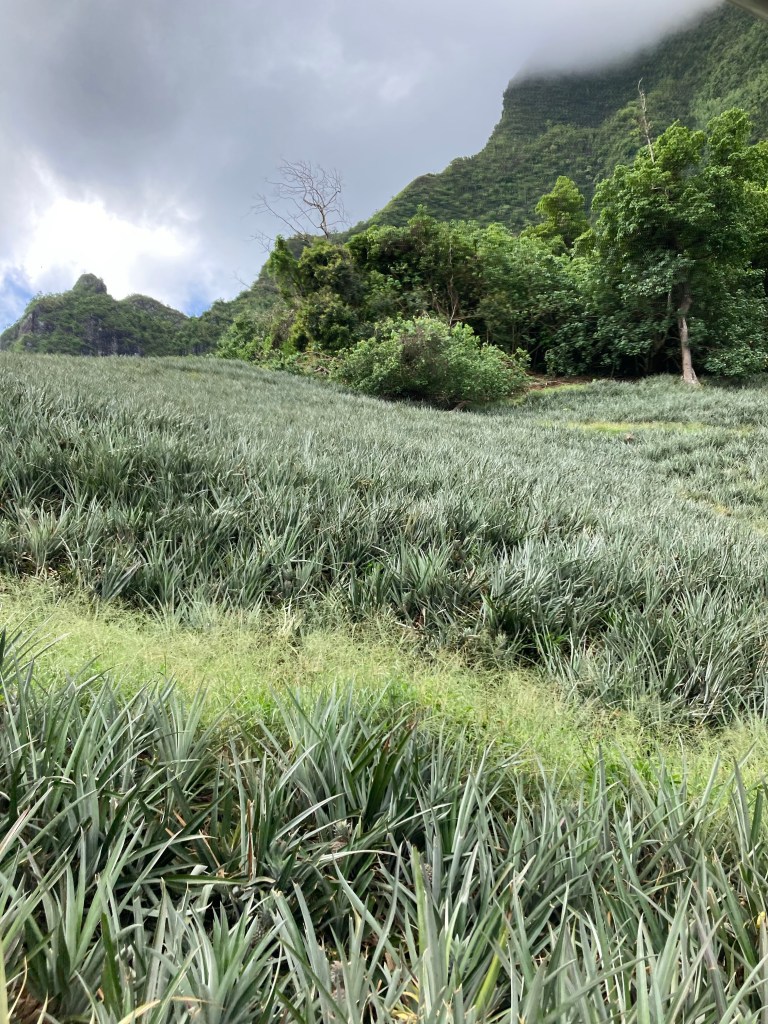
Volcanic soil is rich, and when properly watered, pineapples thrive in it to the degree that there are two harvests per year. Moorea doesn’t export any pineapple, but grows enough on the island for it to be self-sufficient. Apparently, they eat A LOT of pineapple.
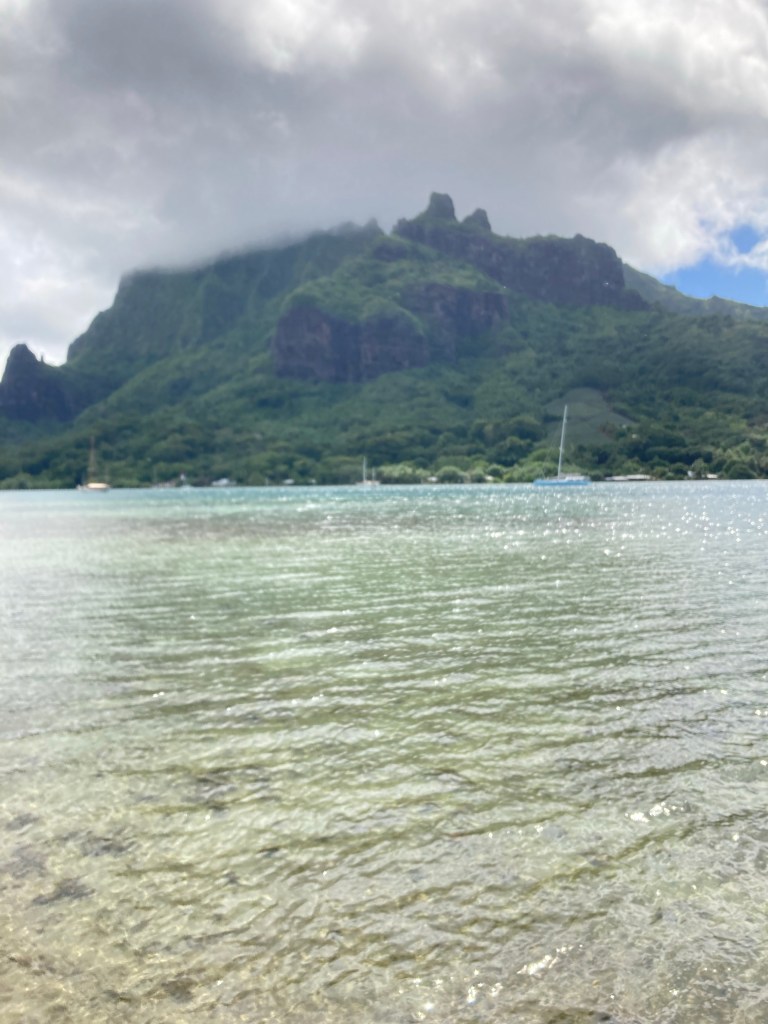
We finished our descent to sea level at Cook’s Bay whose namesake first visited the bay in 1777 on his 3rd trip to the South Pacific. Its much more populated and commercial than Opunohu Bay where the Volendam anchored. While at Cook’s Bay, we visited Hina Pearls, a Tahitian pearl shop with a wide range of pearl jewelry at all price points.
On the way back to Opunohu Bay, we stopped for a tasting session at a distillery that produces some, how should I put this, unique local products.
Pineapple champagne: NO, just don’t go there. 🤑
Pineapple wine: not great, but the bottle I bought made a nice base for white Sangria.
Vanilla & Coconut Rum: good, but we can get comparable in the US.
Ginger liqueur: a zingy winner! I bought a bottle, and I’m looking forward to using it in all kinds of desserts.
We made it back to the ship around 5:00. I assembled my Scuba gear and an overnight bag and had a rare early dinner in the Lido buffet. I was in a hurry because I was leaving the ship to spend the night at a hotel on the west side of the island. I needed to be at a dive shop there no later than 7:00 the following morning.
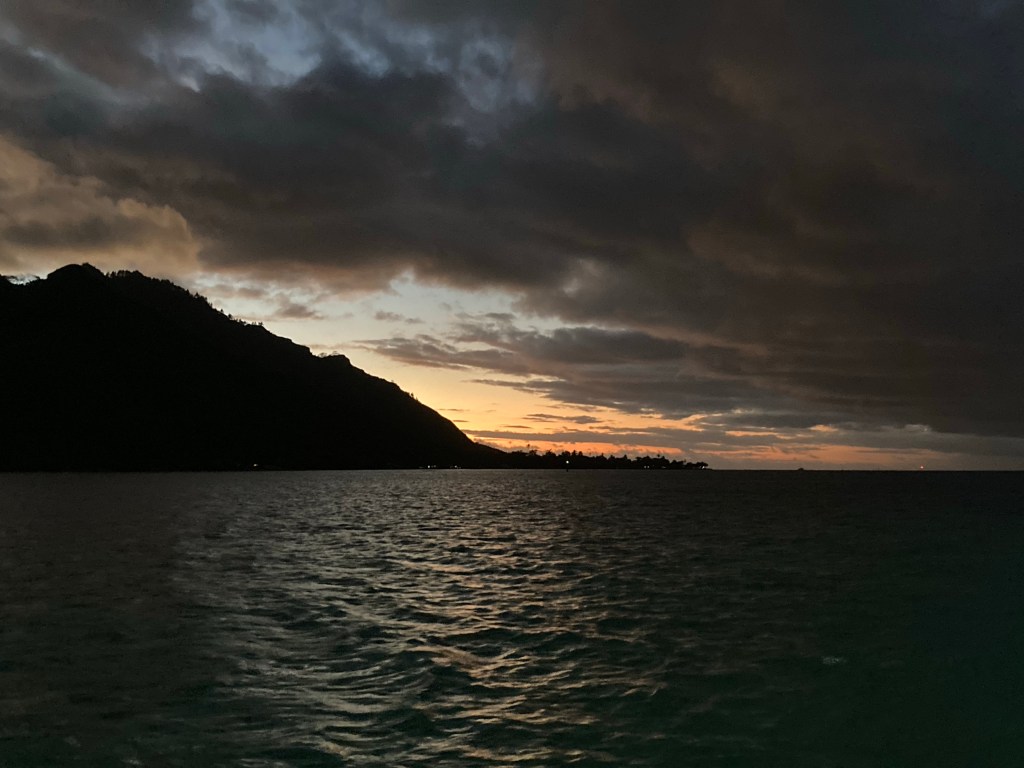
I tendered back to shore as the sun was setting and caught a ride with Paloma, manager of the craft market at the pier, just as she was locking up and, lucky for me, heading west. There were no bungalows available at Tipanier Beach Hotel where the dive shop is located, so I booked one at Hibiscus Hotel, a 15-minute walk beyond the Tipanier. Once I settled in, I enjoyed a fine glass of Cote du Provence rose at the hotel’s seaside bar, then returned to my bungalow and was sound asleep by 10:00. I had a big day ahead and wanted to be well rested. I had no idea how eventful the following day would be.
Stay tuned……………….
Mahalo and Aloha
 Will Gibson's South Pacific Journal
Leave a comment