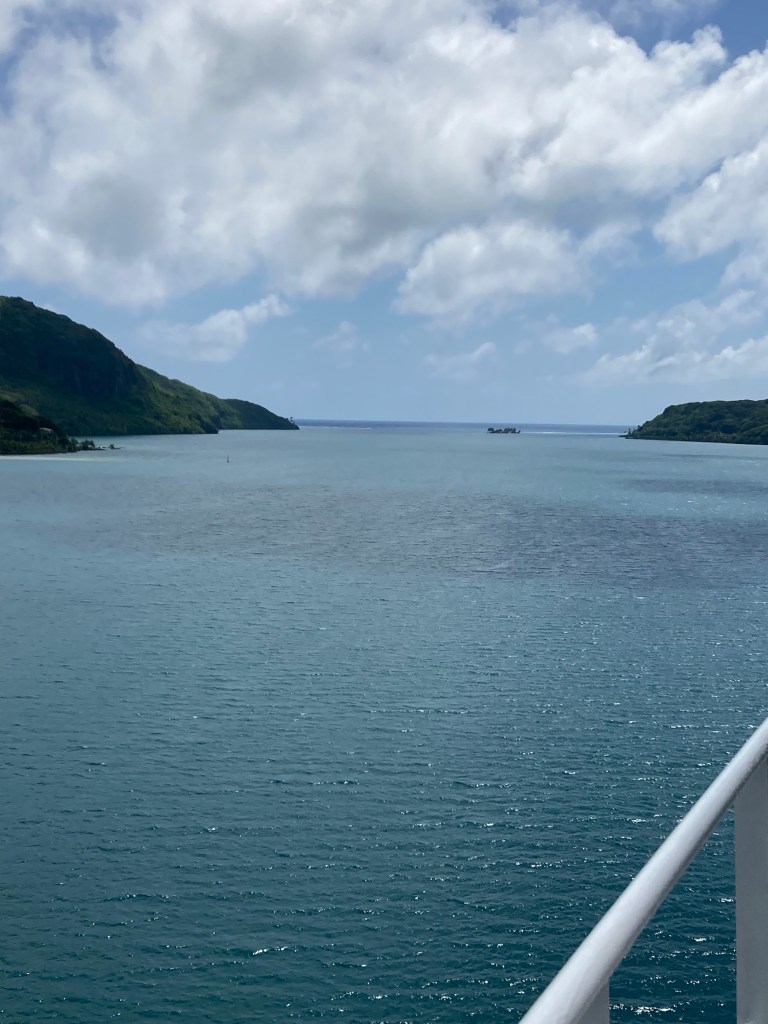
Maroe, Huahine: Nov 10
After leaving Mo’orea we cruised due north overnight to the island of Huahine which is actually two conjoined islands: Huahine Nui and Huahine Iti.
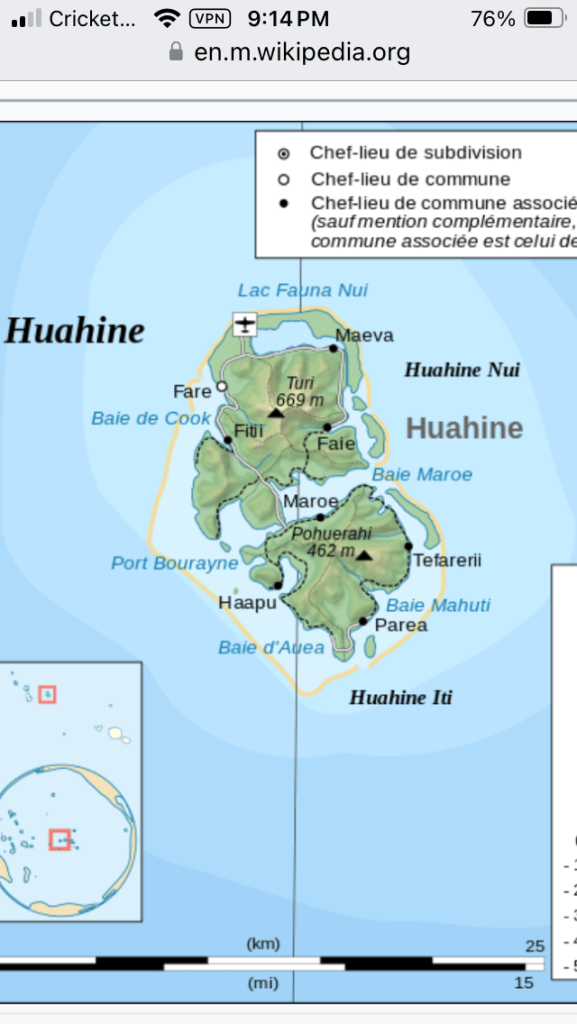
We cruised deep into the bay separating the two islands, as far as the village of Maroe. The captain dropped anchor, as did I. I didn’t leave the ship all day! This was a tender port with few amenities, and I was worn out from the day before. I felt rest and retreat would be best for me.
From what I heard later, the tenders were slow, the dock precarious and finding transportation once ashore was challenging.
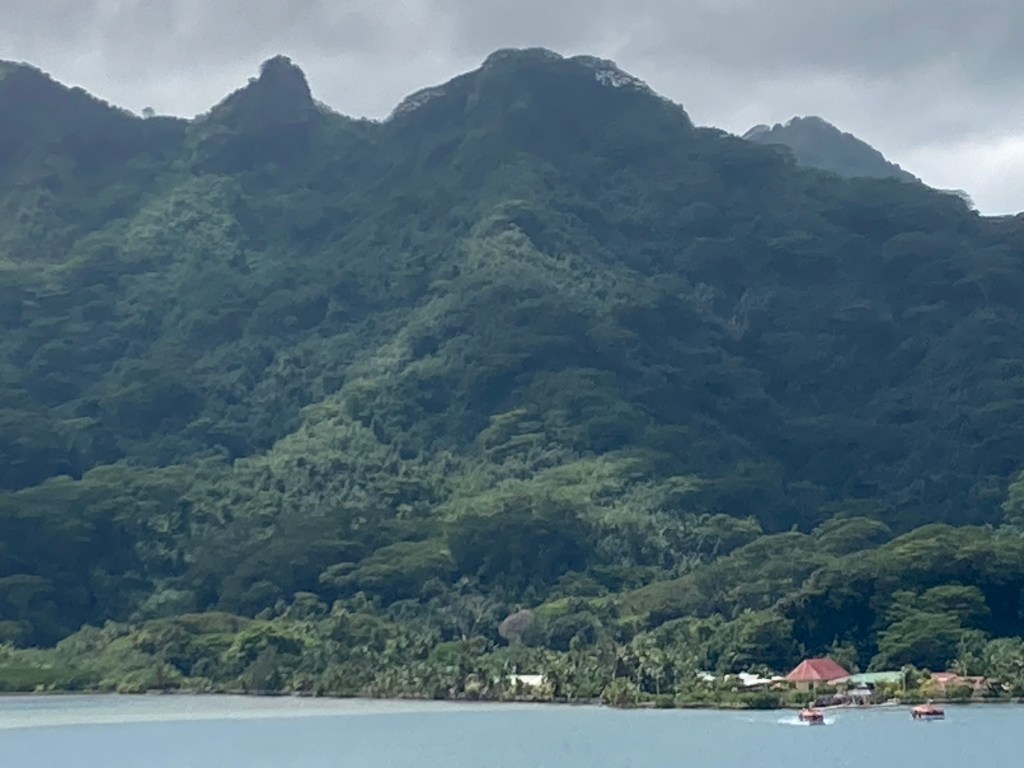
So all I can honestly tell you about the island is that it’s a great place to rest and repair.
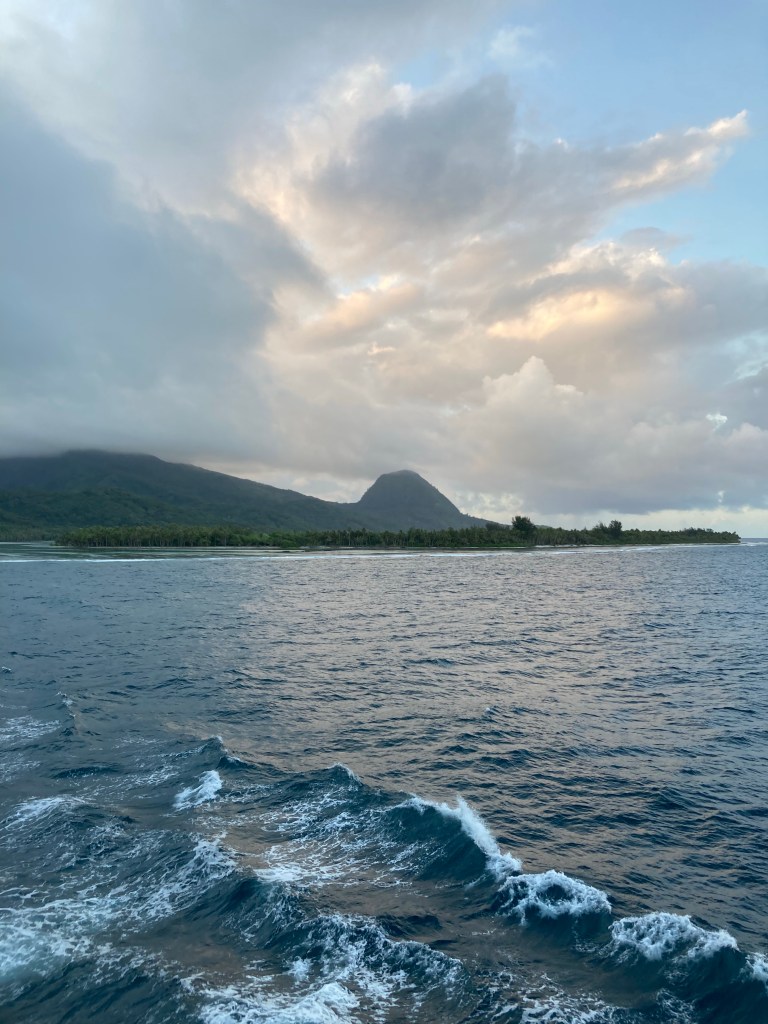
Pape’ete, Tahiti: Nov 11 & 12
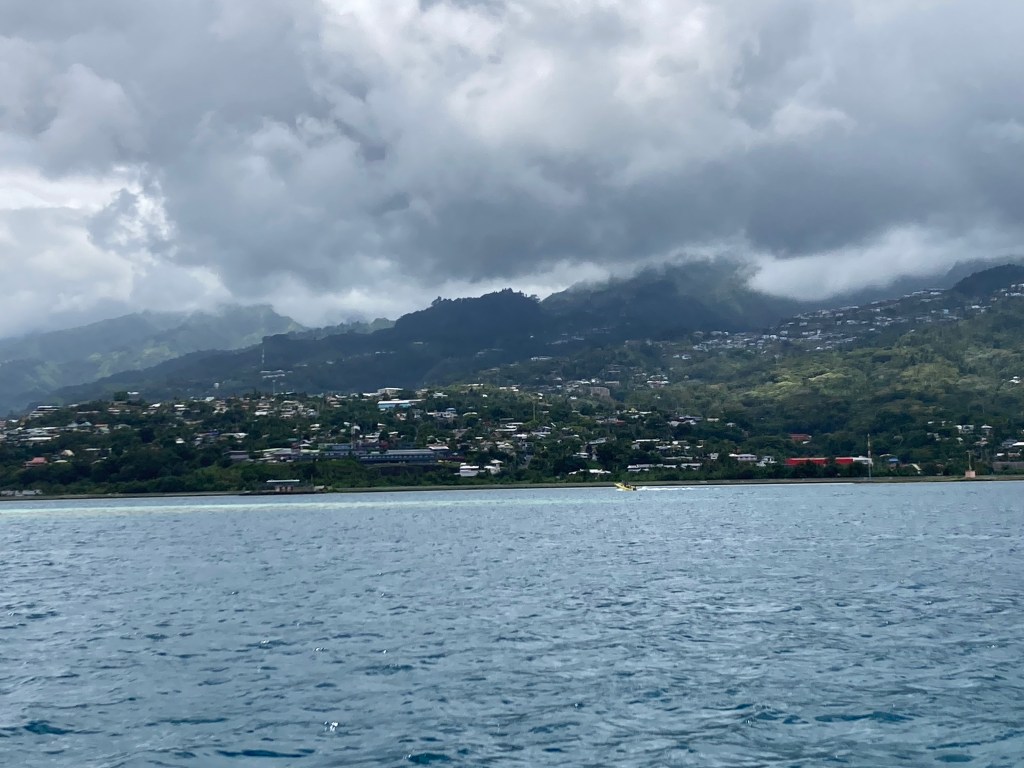
When I awoke, the Volendam was docking in Pape’ete, largest city of both the island of Tahiti and French Polynesia. I had heard that the harbor evokes towns along the southern coast of France, and it certainly did for me, but with lots of coconut trees.
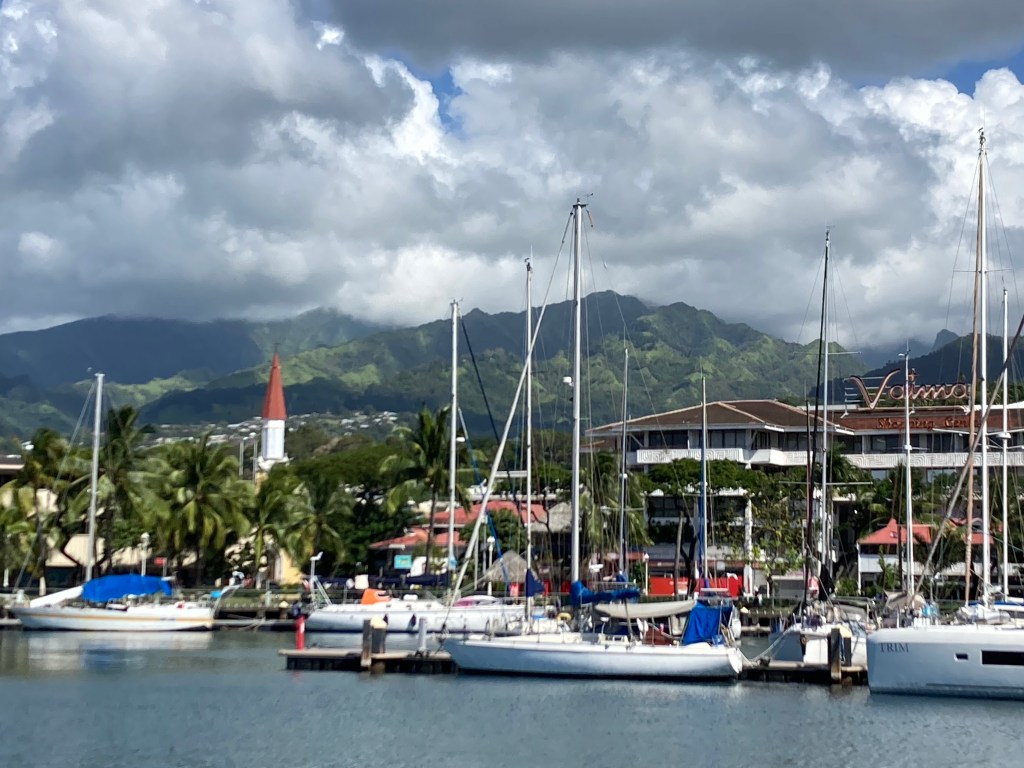
Unfortunately, even though it was Saturday, the town would not be as bustling as normal because it was Remembrance Day, a national holiday in France. Most shops and businesses were closed. I wasn’t perturbed because I had a tour of the island’s western coast scheduled from 8:30 to 12:30.
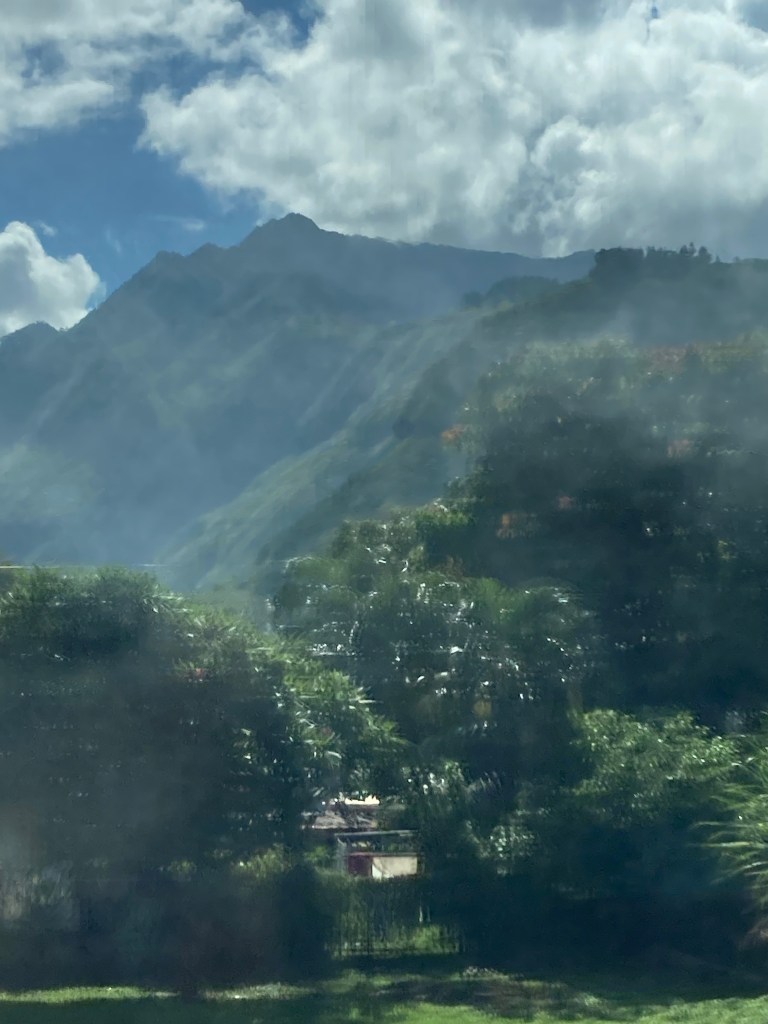
As we drove south, we could look east into the mountainous interior of the island on our left.
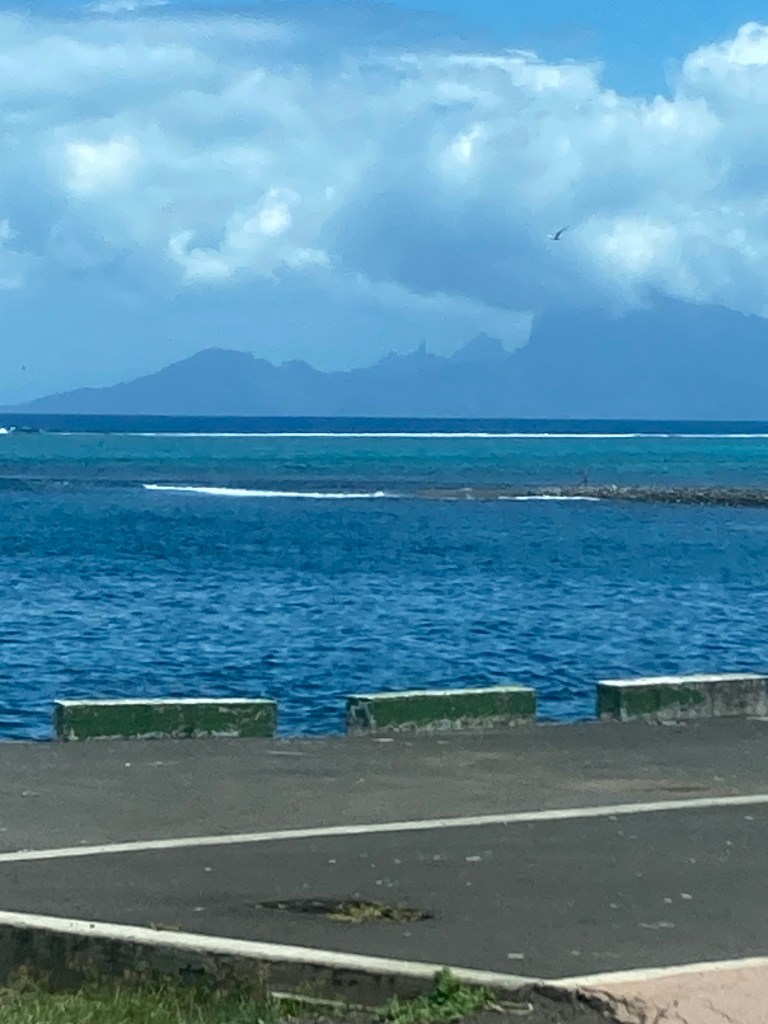
To our right, we could look west and see the craggy peaks of Moorea, just a one-hour ferry ride away.
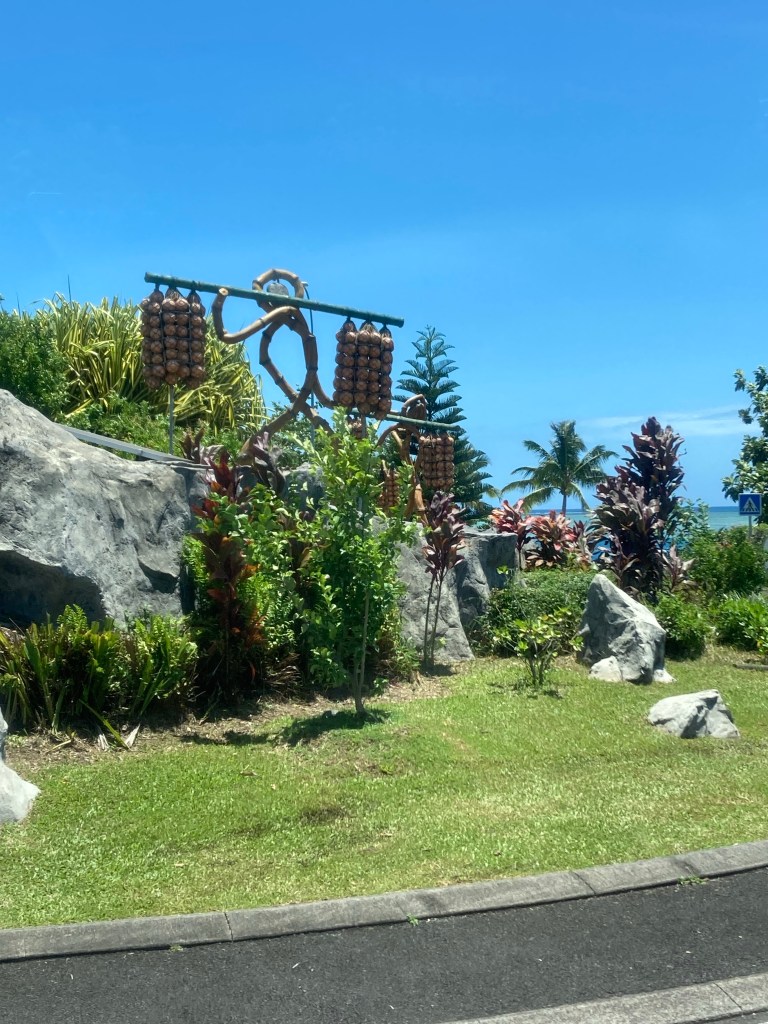
We passed through the town of Punara’a, once the orange growing capital of the WORLD. Before the groves in Florida and California were planted, this is where many in the US came from.
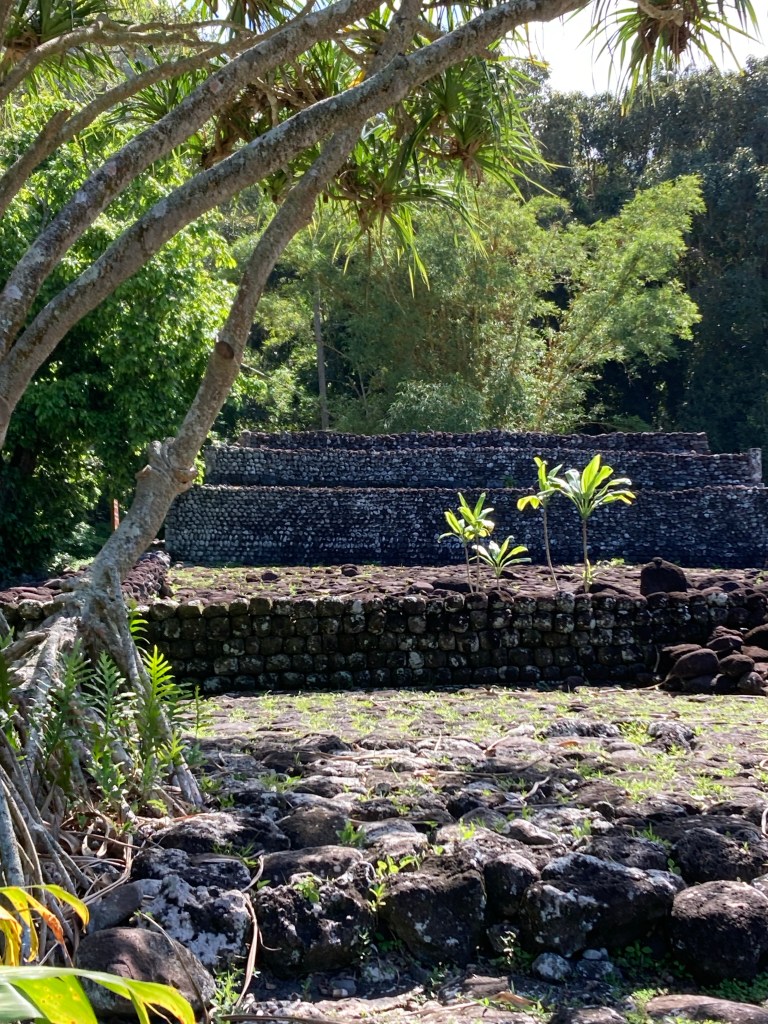
Our first stop was the Arahurahu Marae, a large Polynesian temple restored in 1953. The most interesting thing about it was the Tiki’s on display and the tale of how they got there. Tiki are carved of stone or wood and usually represent deities, which are also family, because the Polynesian religion was one of ancestor worship. As such, they are believed to carry the “ha” or life energy of the ancestor they represent. By tradition, they are kapu (taboo) to touch. As told by our tour guide: In the 1930’s,a British trader absconded with three stone tiki from the Marquesa Islands. Enroute to Tahiti, two of his crew died. When he arrived in Papeete, he put the tiki into storage in a warehouse. The night he sailed from Papeete, his ship sank in a storm. The tiki languished for years in the warehouse. In the 1950’s, when the Museum of Polynesian Culture was restoring the temple, the director wanted to have the tiki moved to the site. No one would touch them. He could find no one on the island to move them. So a call went out far and wide across Polynesia for a crew to move the tiki. Eventually, a crew of three Marquesan’s, thinking they might be blessed by association with the tikis, agreed to do the job. On the day of the move, they rode in the truck with the tiki’s and later, perhaps to enhance their macho cred, bragged that they had abused the tiki’s by kicking and slapping them enroute. All three were dead within a year.
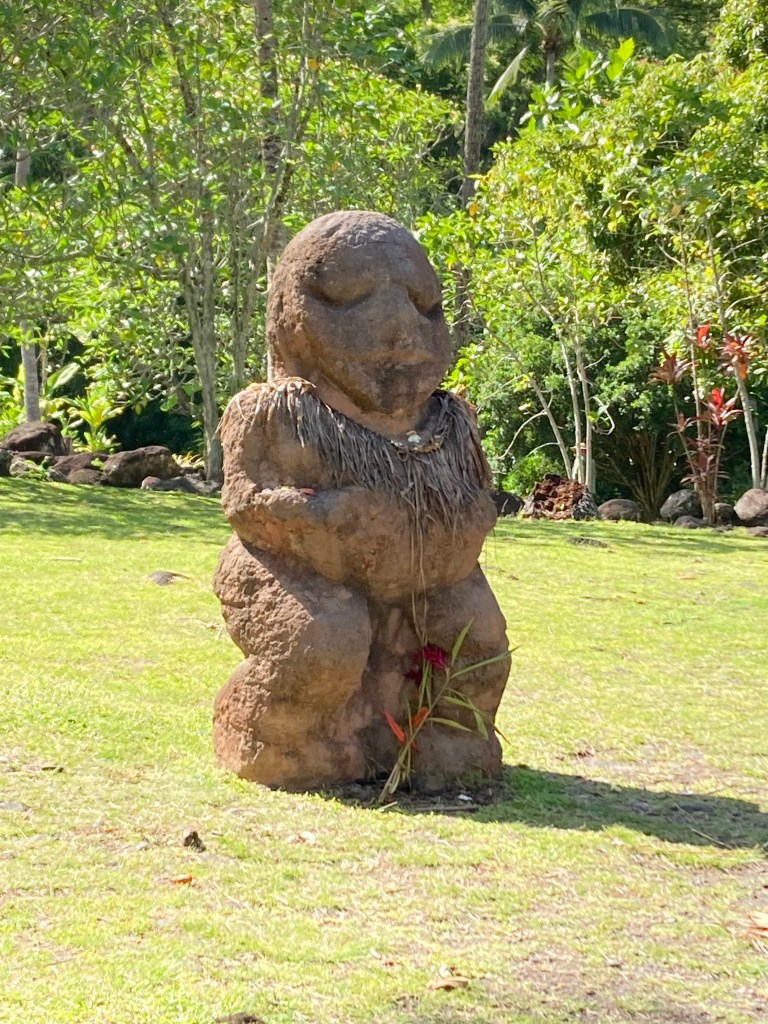
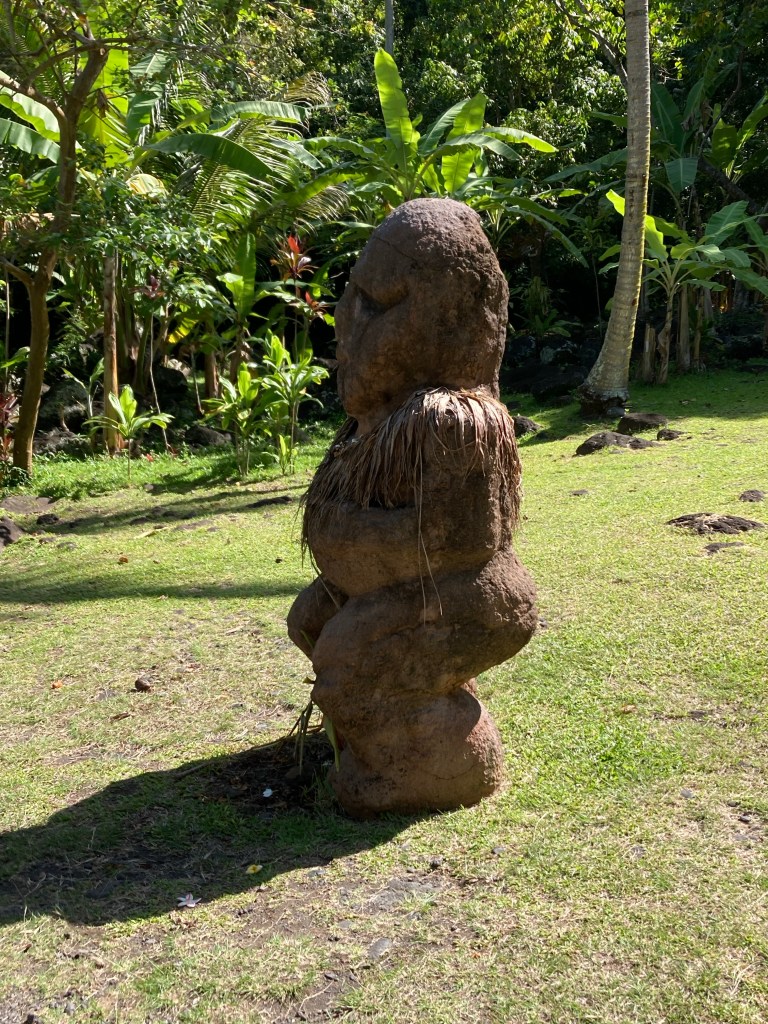
These tiki are indeed imbued with strong spirit; they are spooky. I didn’t get the nerve to photograph them until we were leaving!
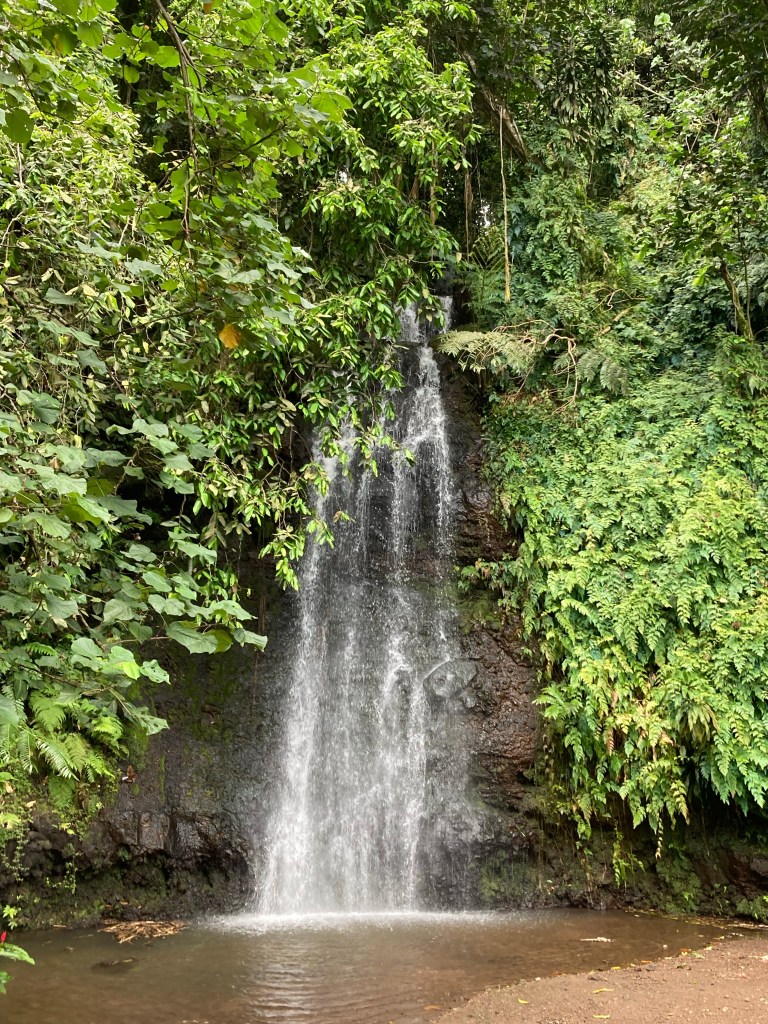
Our next stop would be on the southern end of Tahiti Nui and within view of Tahiti Iti: the Vaipahi Water Gardens. Just when you think Tahiti couldn’t get any more beautiful, they go and build a botanical garden filled with streams and waterfalls that tintinnabulate, not as a call to prayer, but to meditation. Maybe next time. Today, I was on a schedule. Stately Tahitian Chestnut trees and a wide variety of palms marked the path.
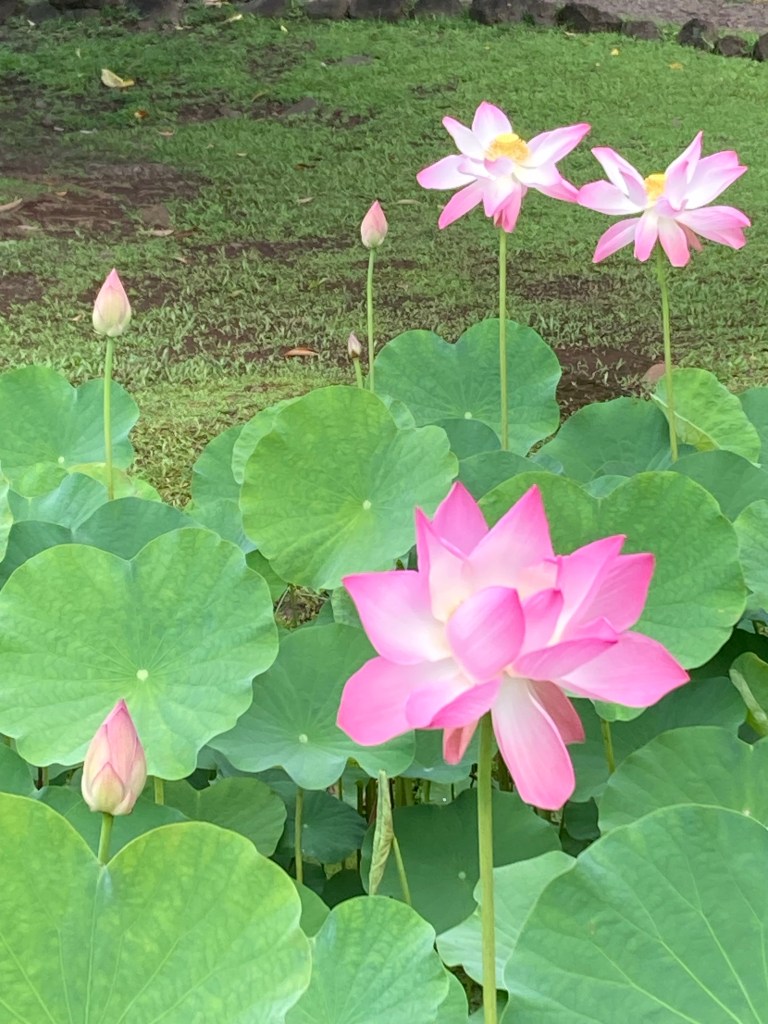
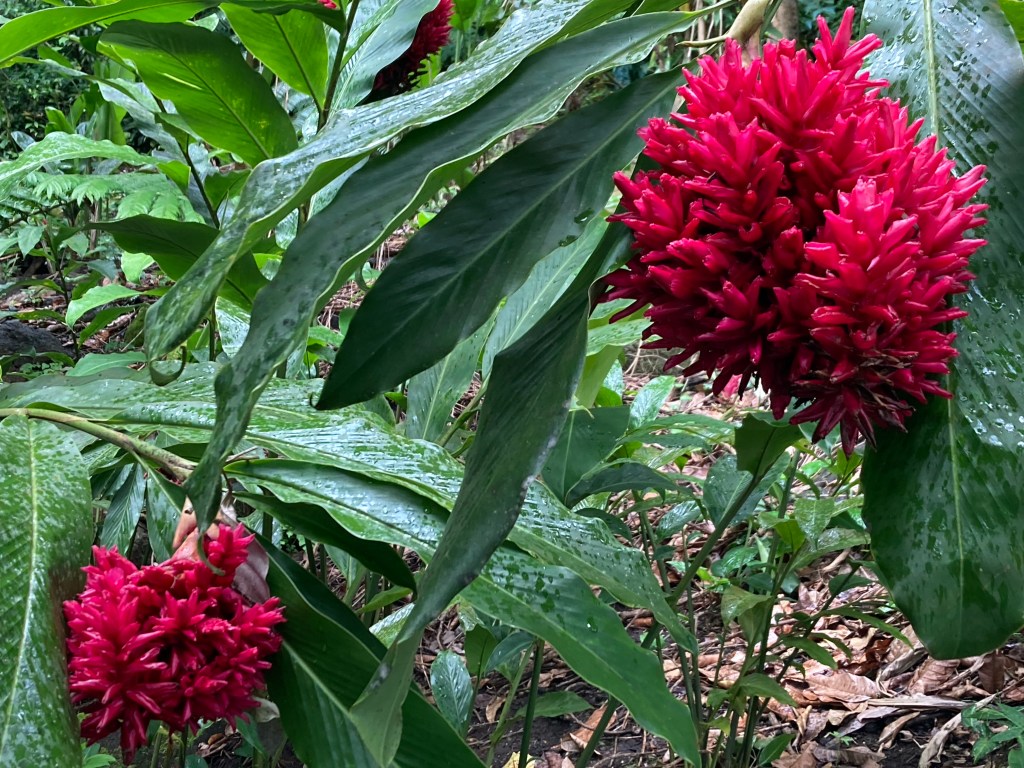
For color: a lovely pond of Sacred Lotus, huge red ginger, and red palm.
At one time, this area was reserved for exclusive use by Polynesian royalty, and it’s easy to see why.
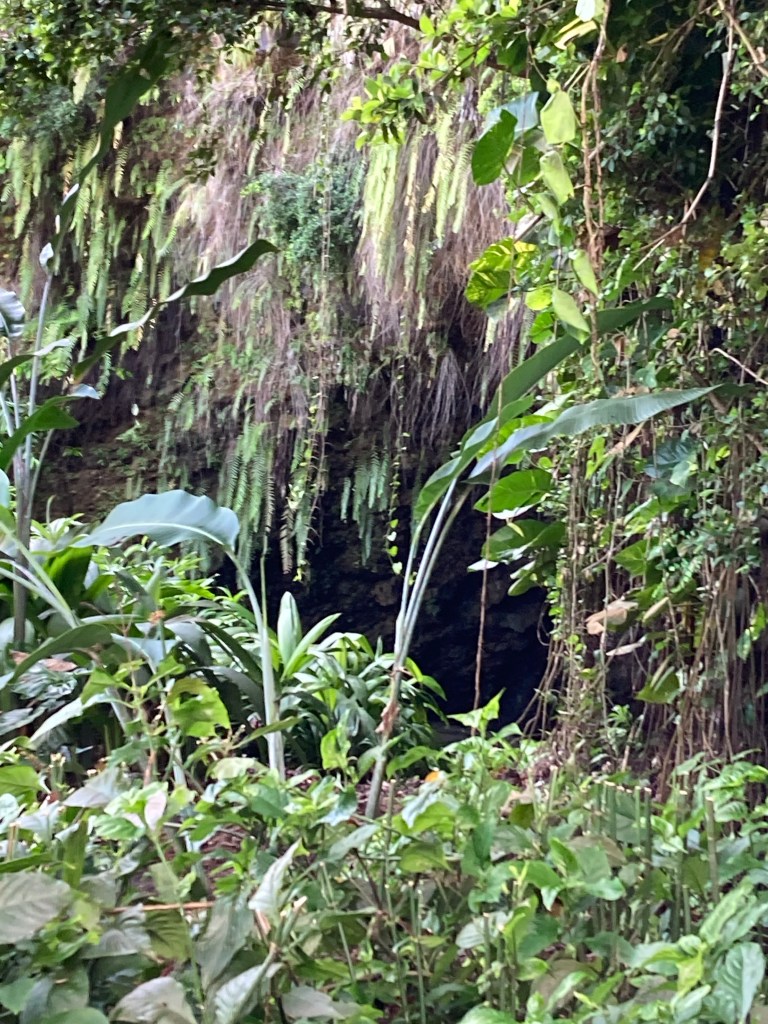
Our third stop was also a water feature, but not one reserved for royalty: The Vaipoiri Grotto. Anyone can use it, and Gauguin often did. In letters, he refers to it as his favorite bathing spot in Tahiti, and it’s easy to understand why.
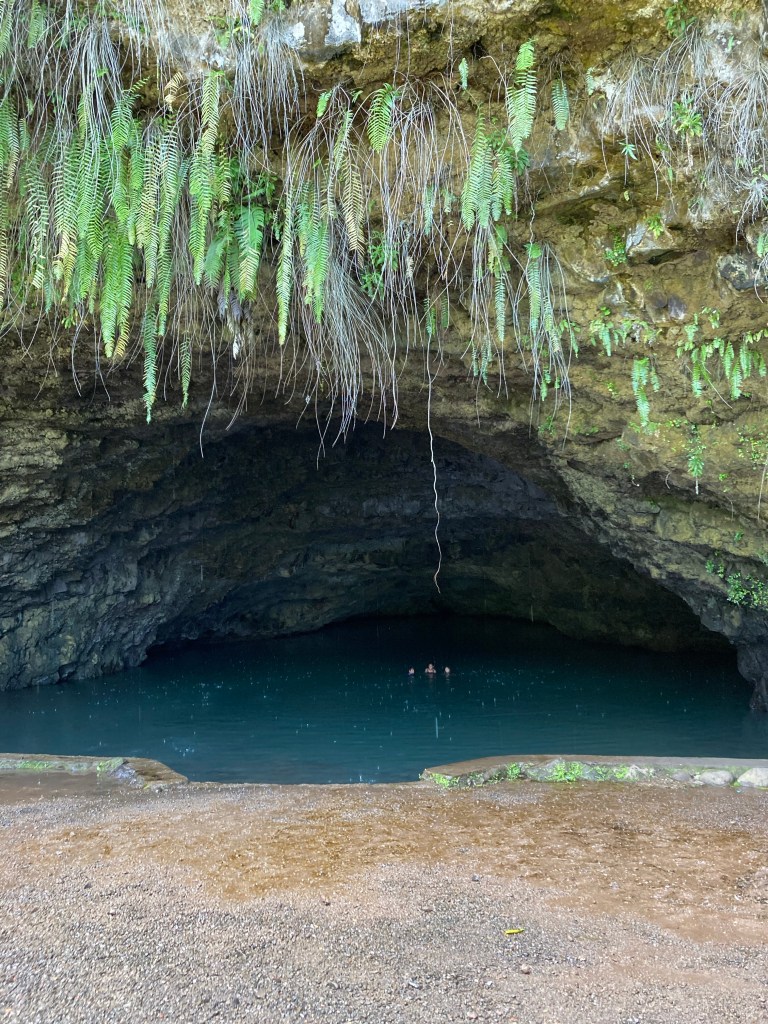
The wide cave is deeply cut into a high, sheer cliff of stone. We were told that on some days, the water cascades down the cliff as many small waterfalls which combine to create a curtain across the cave’s opening. When the volume of water is low, like on today’s visit, the rivulets don’t have sufficient mass to create streams, they simply follow the cliff’s contour from exterior wall to cave ceiling where they well up at random and fall to the ground. When you enter the cave, as I did, it is raining!! Not from the sky, but from the grotto’s ceiling. Magical!
There are several other waterfalls in this park:
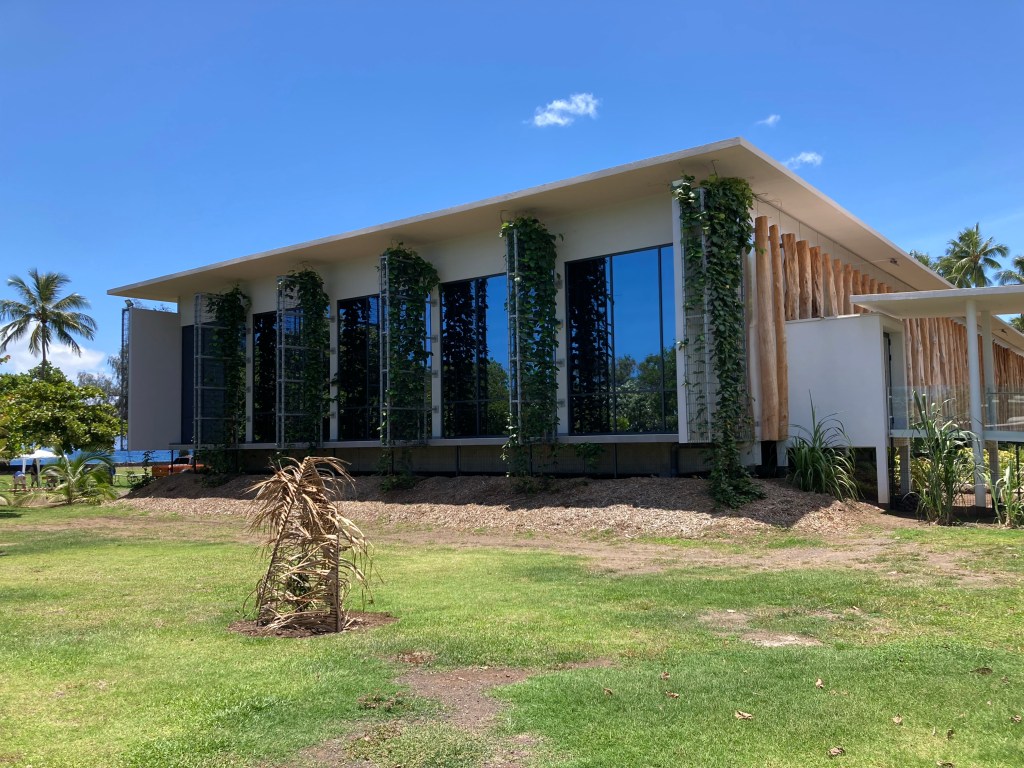
Then we were off to the Museum of Tahiti and the Polynesian Islands. A GREAT MUSEUM! World Class. Unfortunately, we only had one hour. If you are in Tahiti, I recommend it with 5 Stars. Give yourself at least two to three hours to really take it all in.
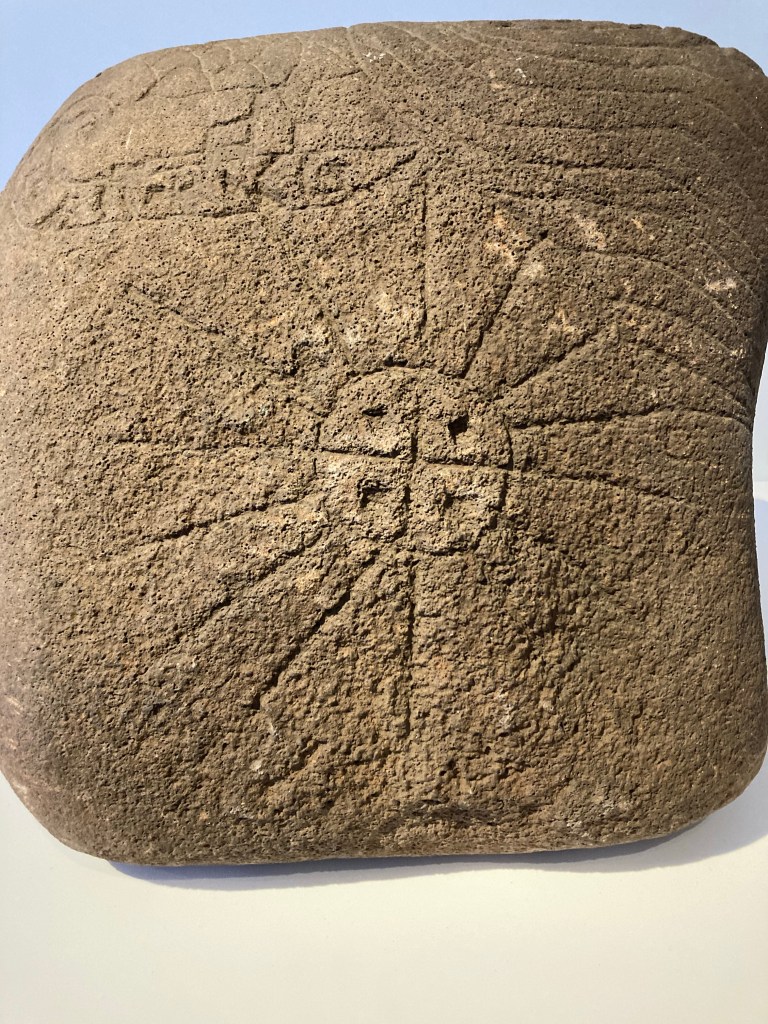
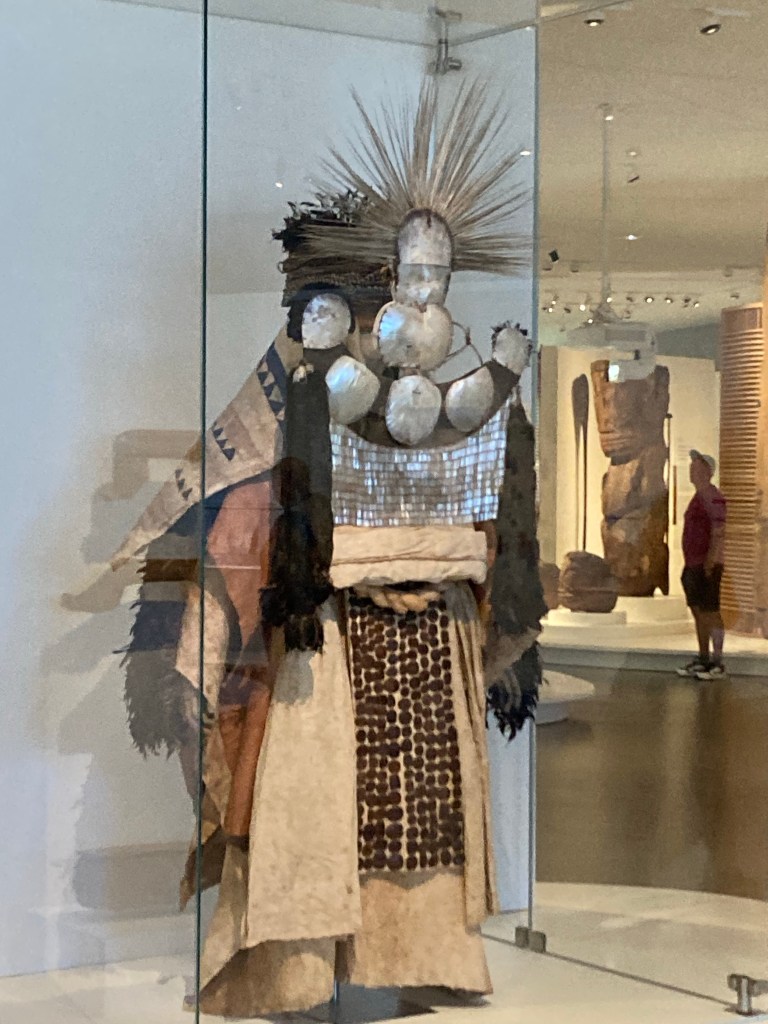
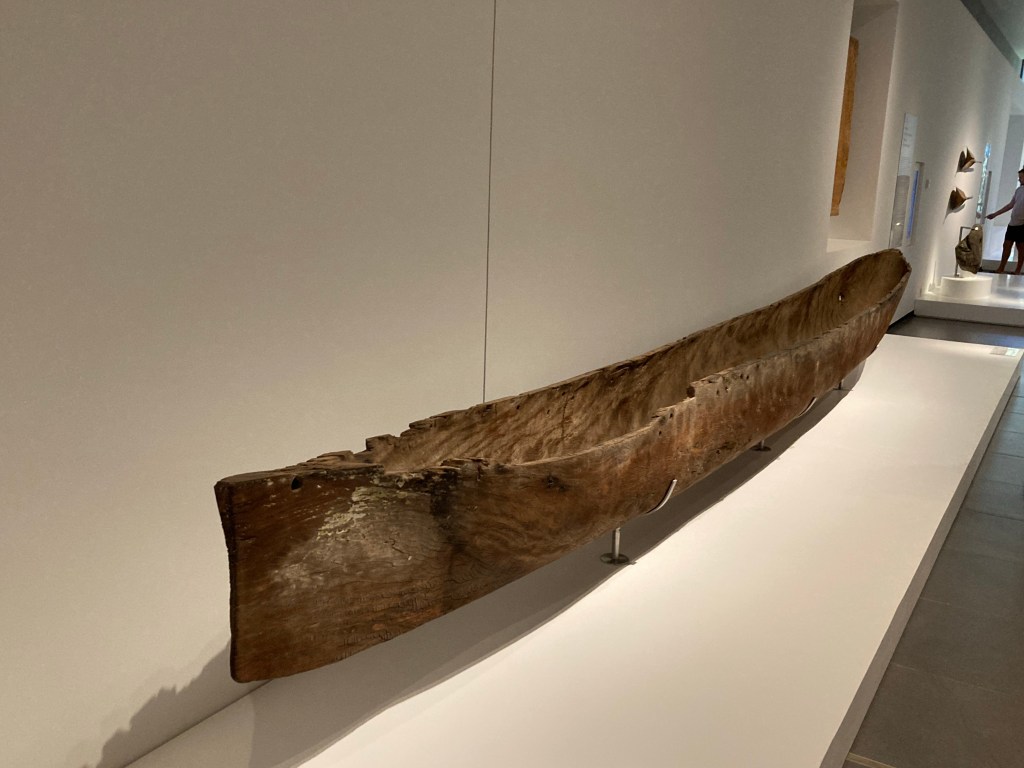
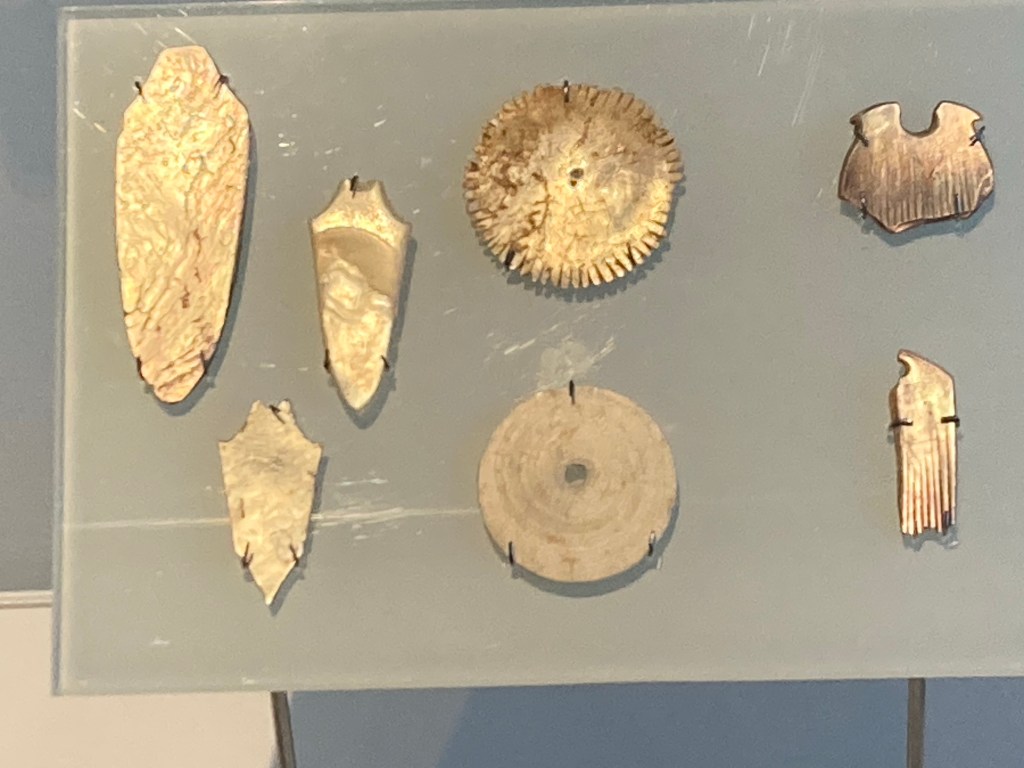
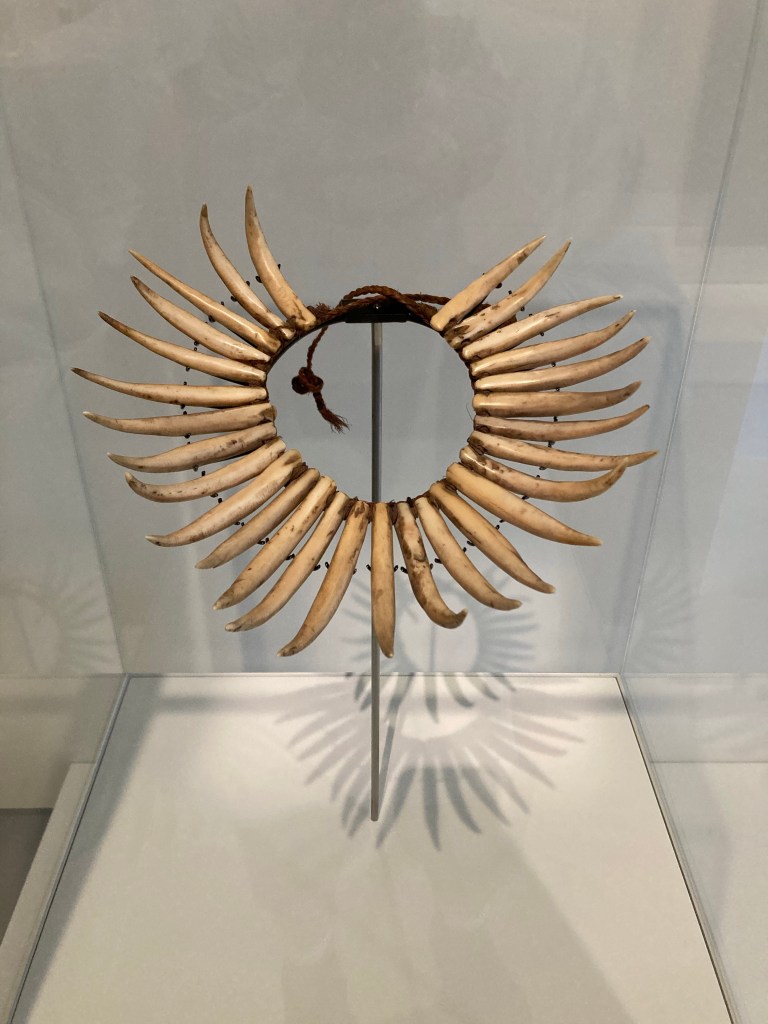
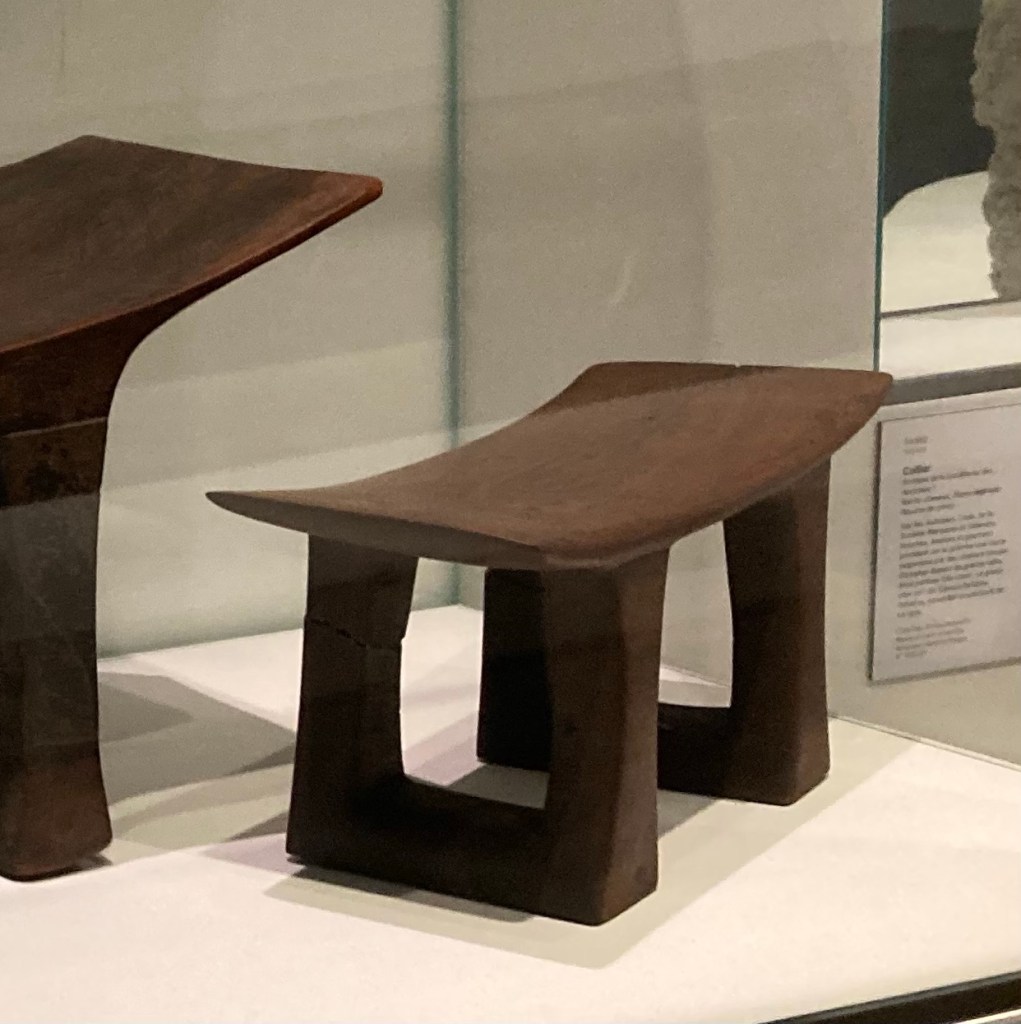
One item really resonated at this point in the trip: a simple wooden chair, carved from a single block of wood. This chair has seen a lot of the world; actually, it’s been all the way around the world! It belonged to Mai, a noble Polynesian born on Raiatea but living on Huahine when Captain Cook called therein 1769. Mai later traveled to London, arriving October 1774, the first Polynesian to visit England. He took his chair with him as you can see in the etching.
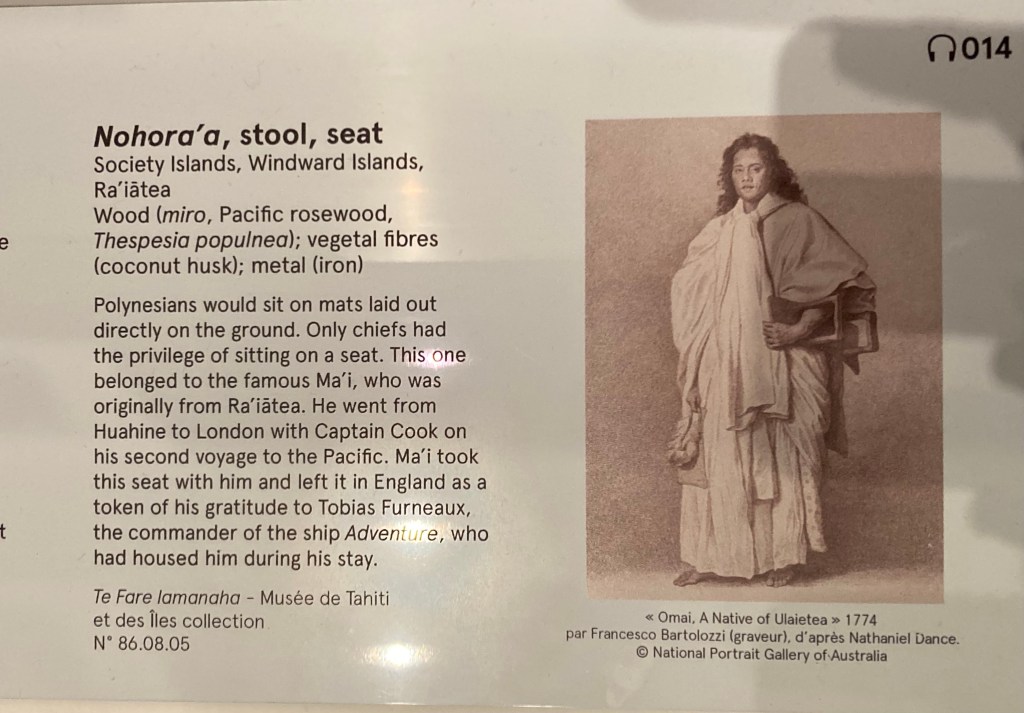
The chair was housed in a museum in Australia for many years but is now back home in Polynesia.
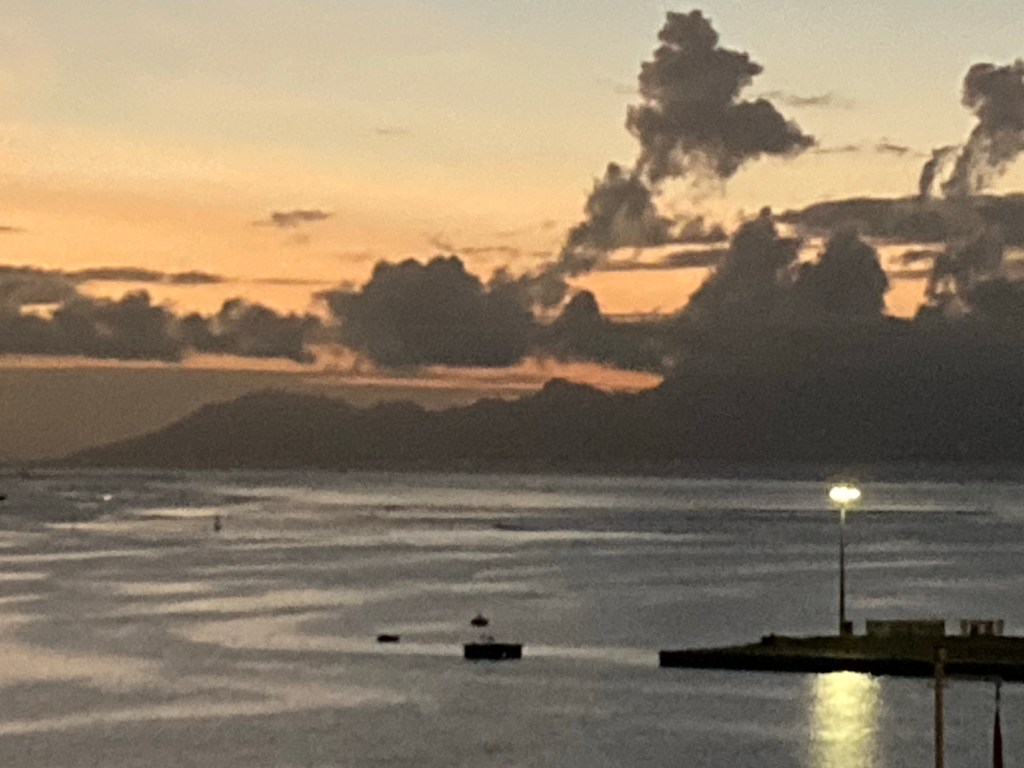
We returned to the harbor promptly at 12:30, plenty of time for a leisurely lunch, a nap and then a walk around the mostly shuttered city. As the sun went down behind Moorea, the city lights began to come on.
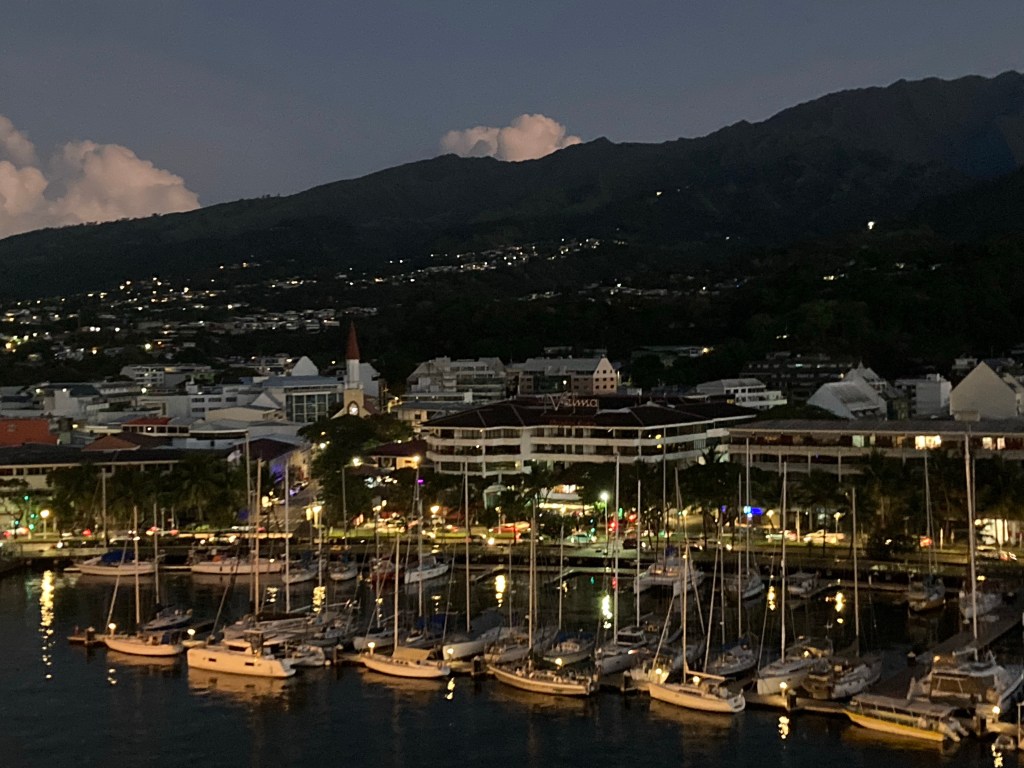
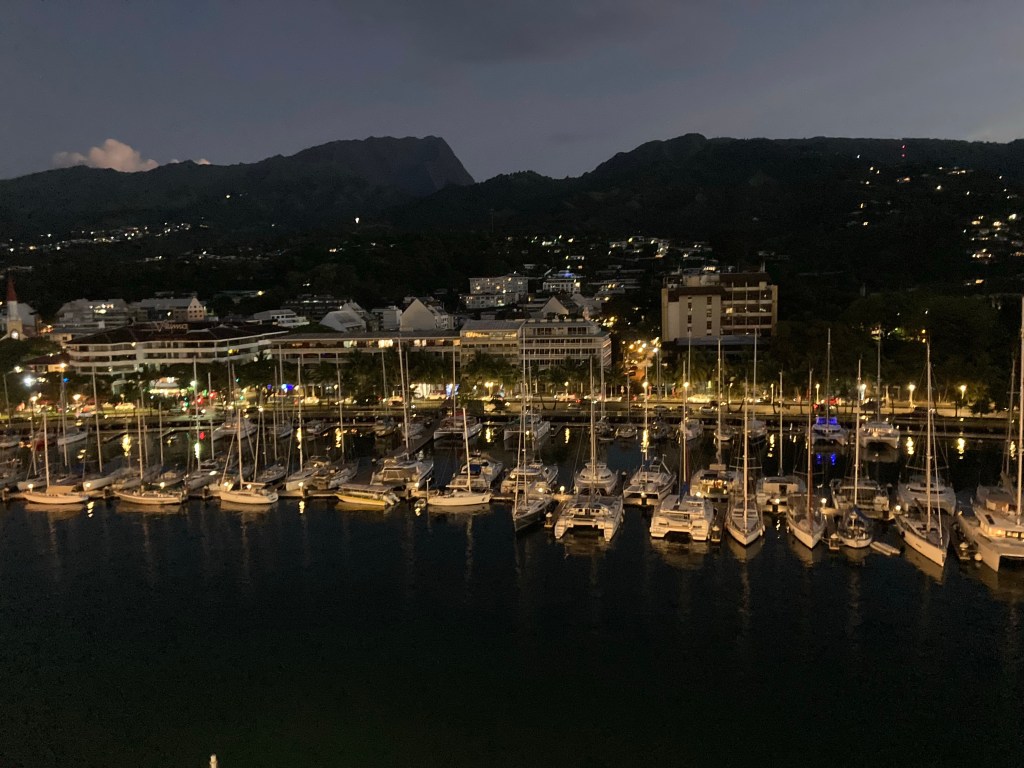
The harbor promenade has recently been redone. It is really lovely, especially at night, but it was missing a band and crowd.
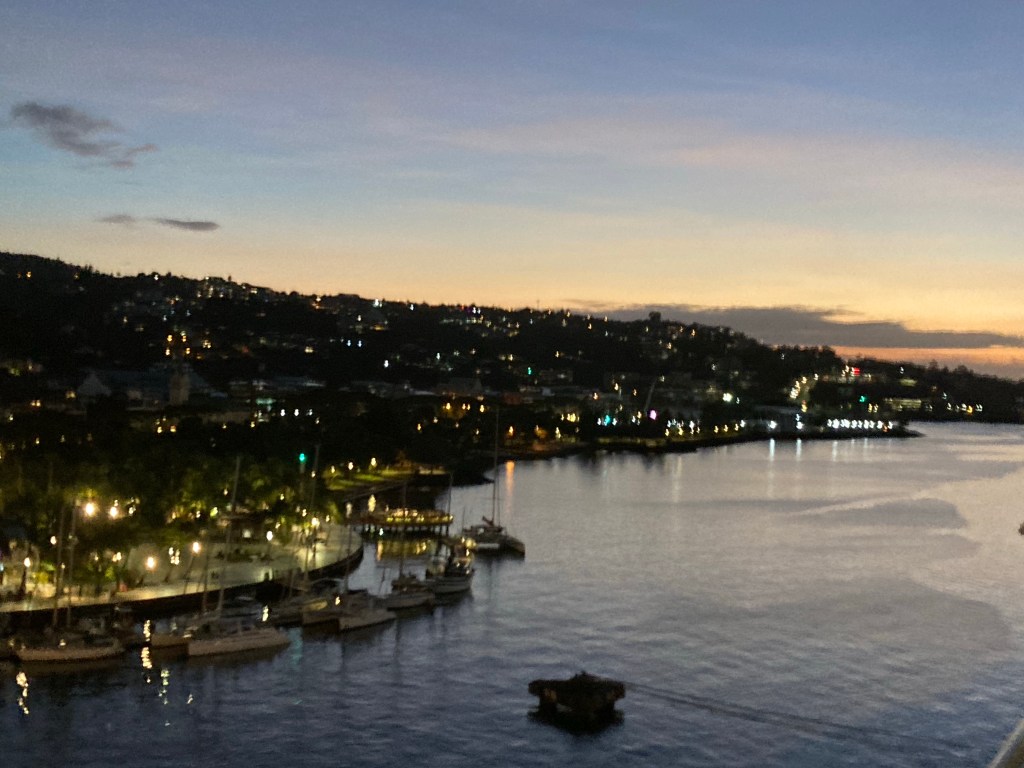
I took the hint and tucked in early. I had to be across the street at the Marche Ferme at 7:15 am the next morning for pickup by the dive shop.
November 12:
I was up and out and searching desperately for the pickup point agreed to by the dive shop at 7:00. The problem was all the signs they told me to use as landmarks in order to find the car were hidden behind the security shutters of the closed city! Sacre bleu! Thank goodness my dive buddy Stephen had the instinct to return to the pier to look for me – with the driver – at the same time I decided to return to the pier! Ca bien.
We drove out to the Inter-Continental Resort south of Pape’ete where the dive shop, Top Dive, is ideally located to get to any of the dive destinations on Tahiti’s west coast.
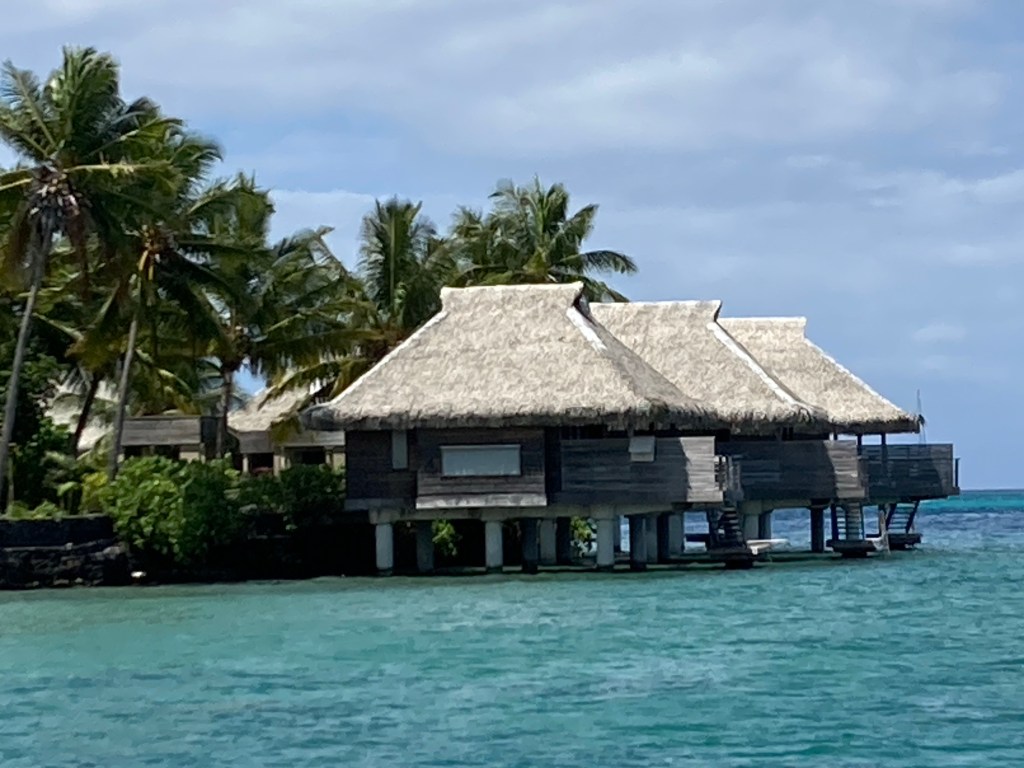
We headed south for the first dive, and I got treated to a 2nd West coast of Tahiti tour, this one from the water.
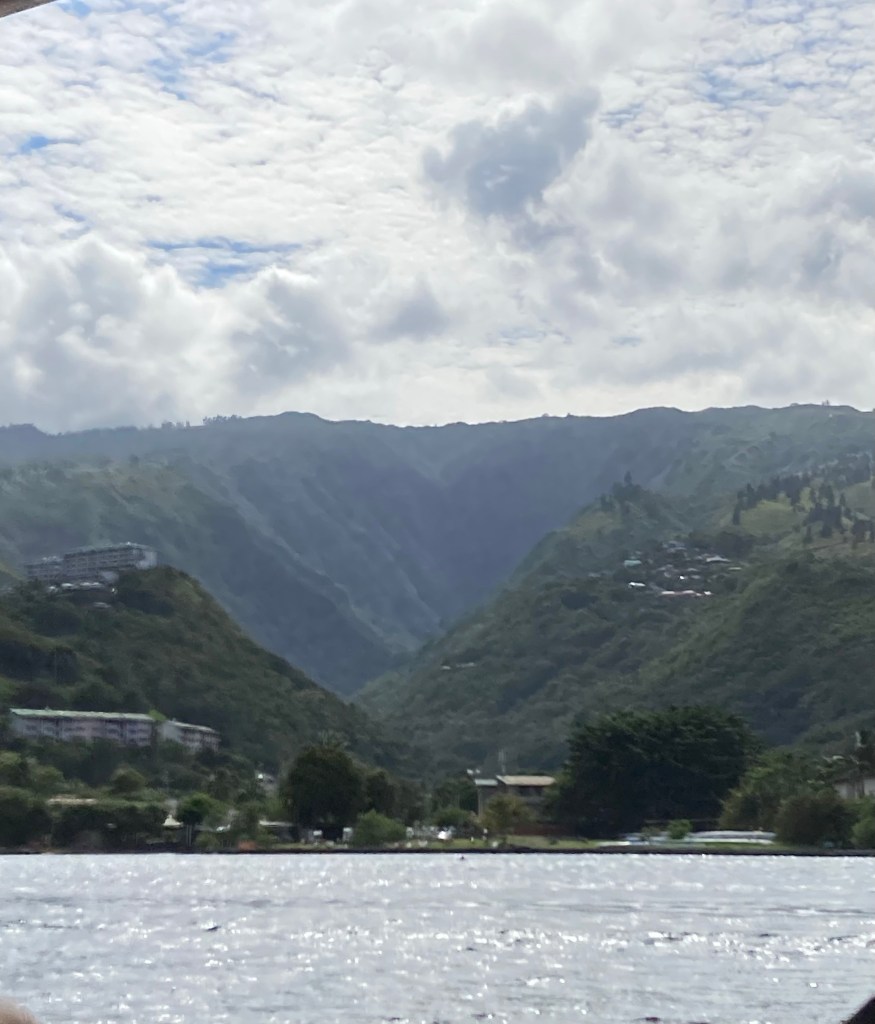
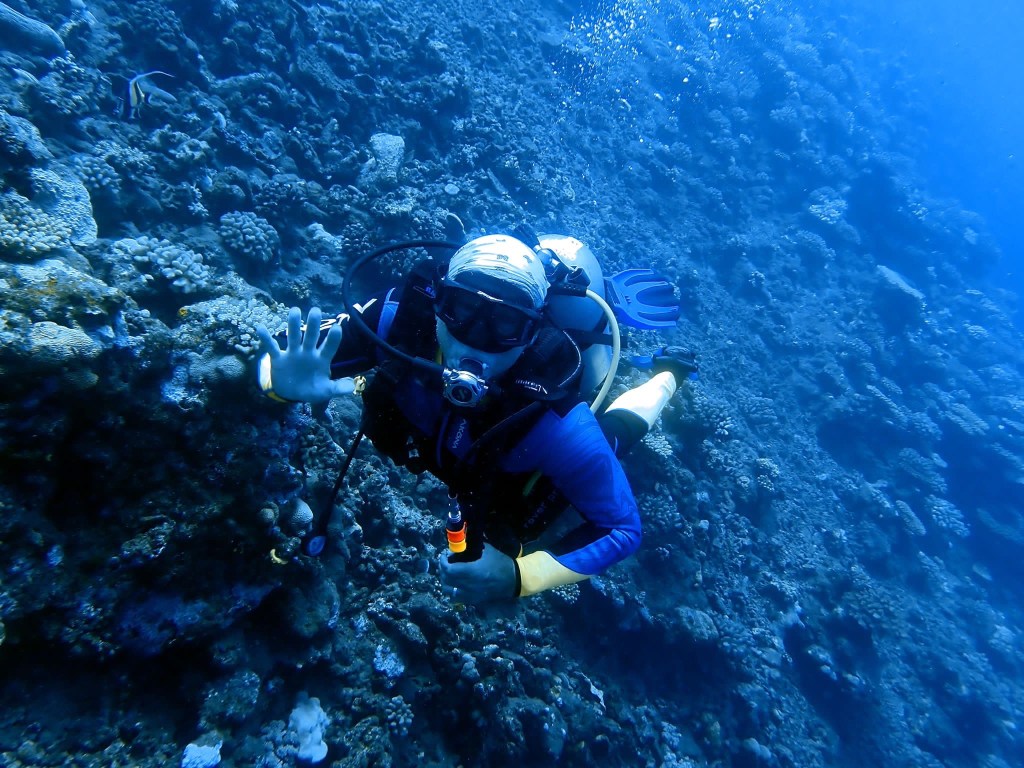
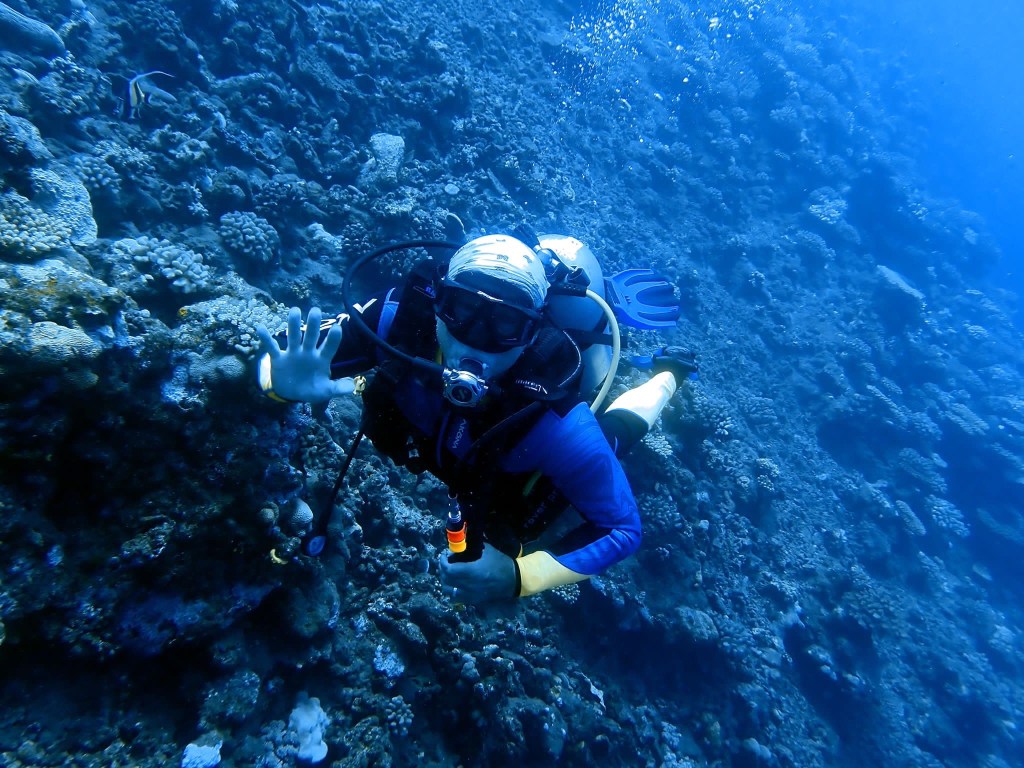
We saw many wonderful seaside homes, and AirBnB fantasies raced through my head as I planned a return. Our first dive site was The Spring (also called Trois Pitons, the Three Mountains). The mountains were, of course, underwater coral hills. Two of them bottomed out at 50 feet while the largest went down to 100 feet. Currents were tricky between and around the two smaller hills; they kept changing. We passed through a zone of rippled distortion due to a great upwelling of fresh COLD water, ie a spring on the ocean floor.
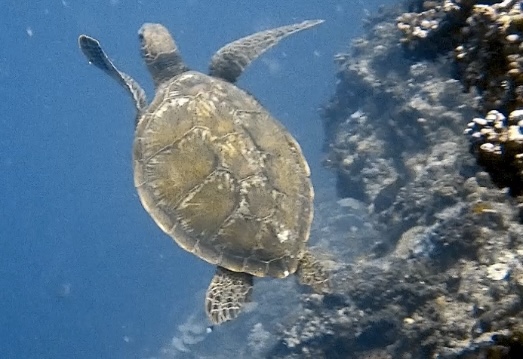
We saw lots of turtles in this area. Also, the largest mass of sea feathers I’ve ever seen, thriving atop an outcropping where two currents met, perfect for their filtering.
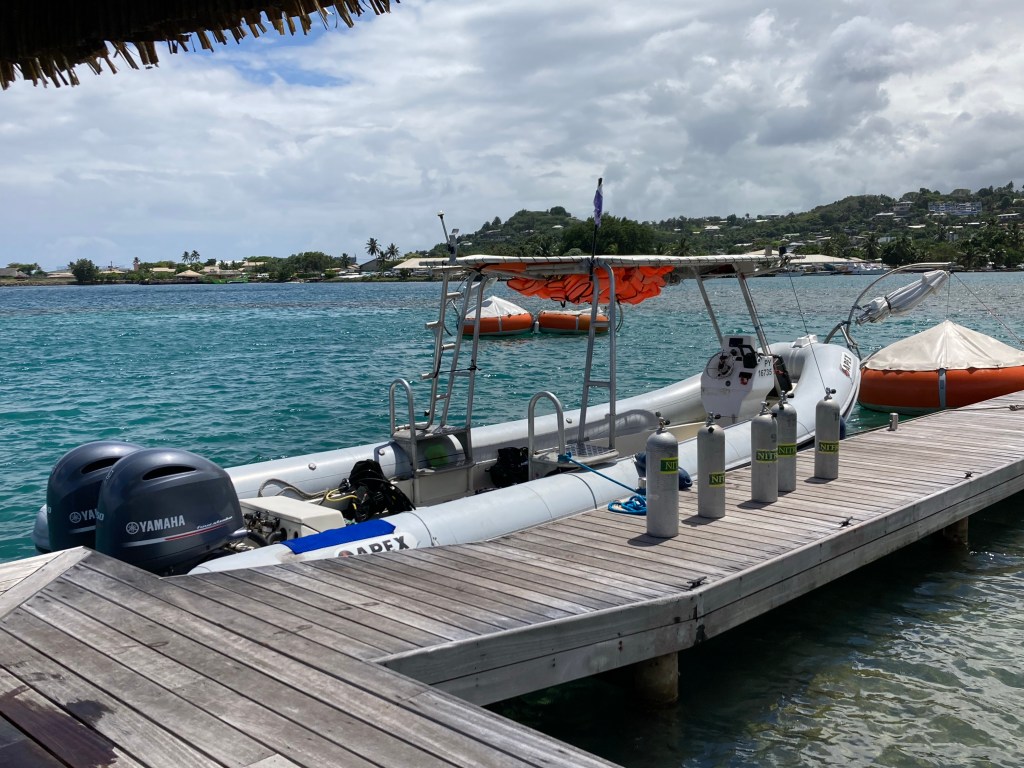
After a sunny surface interval back at the pier, we headed north to our second dive site: The Aquarium.
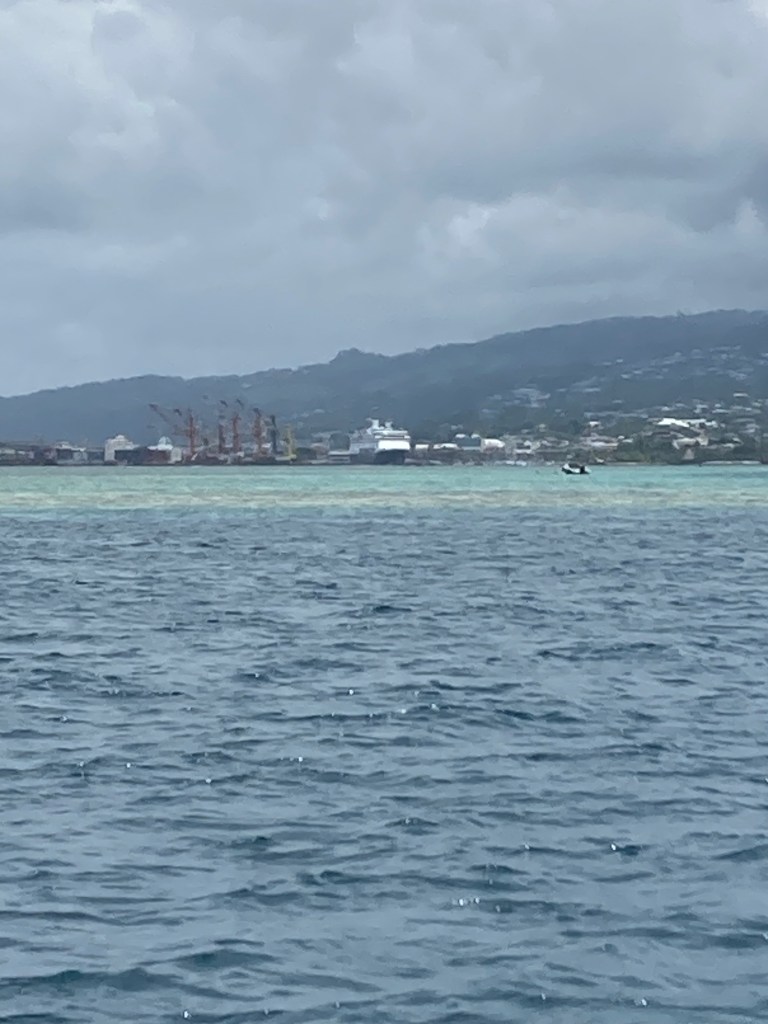
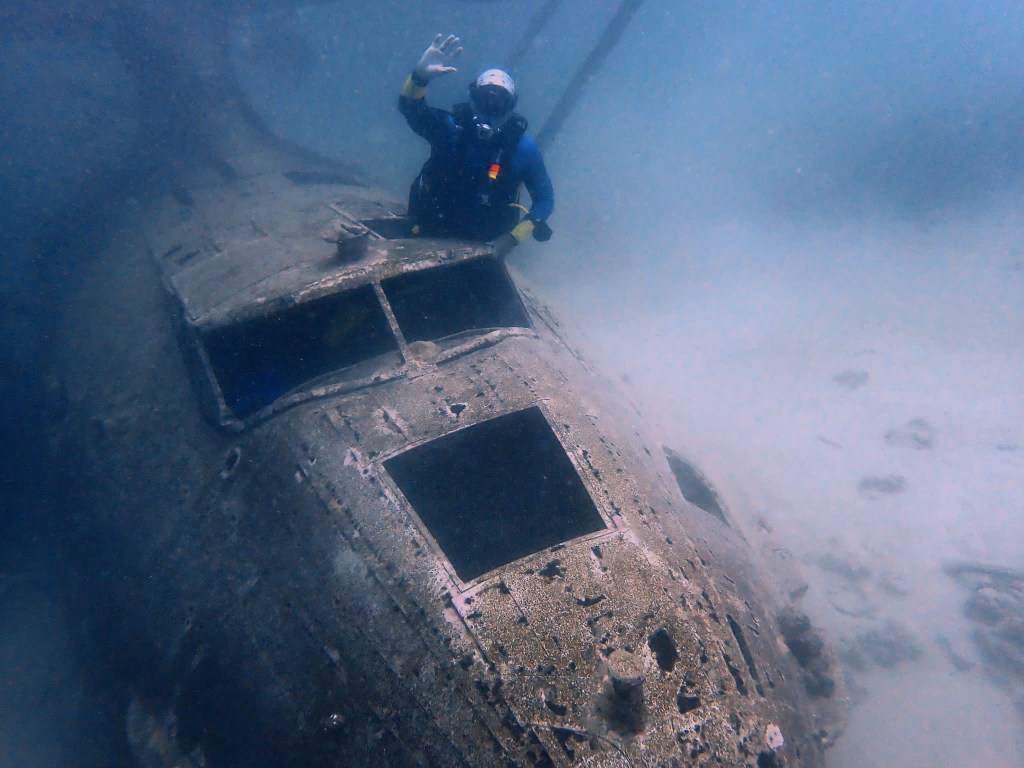
This was a really fun dive with wrecks: one plane and one ship. The plane was sitting 40 feet deep in a sandy patch. There weren’t many fish around it, but there were a lot IN it. Just like the baby sharks back in Moorea, it was hilarious to come upon them peeking out while we were literally peeking in!
Then we headed out around a bend to a sunken wooden cargo ship at 55 feet, resting on its starboard side. The forward section of the port side had frame and hull intact, while the aft section was just the large beams of the frame, arcing upwards like ribs. We each found a spot to “hang out” high along the “ribs” and watched the sea life play out beneath us. How wonderful it is to be down here in this flipside of the landed world, alive with the fishes. What a life! The ocean gives us so much, yet we truly know so little about it. I hope that sometime, probably not in my lifetime, mankind will turn from exploring the heavens toexploring the wonders yet to be discovered in the deep blue sea.
When I got back to the port, an amazing yacht had berthed one pier over: The Andromeda.
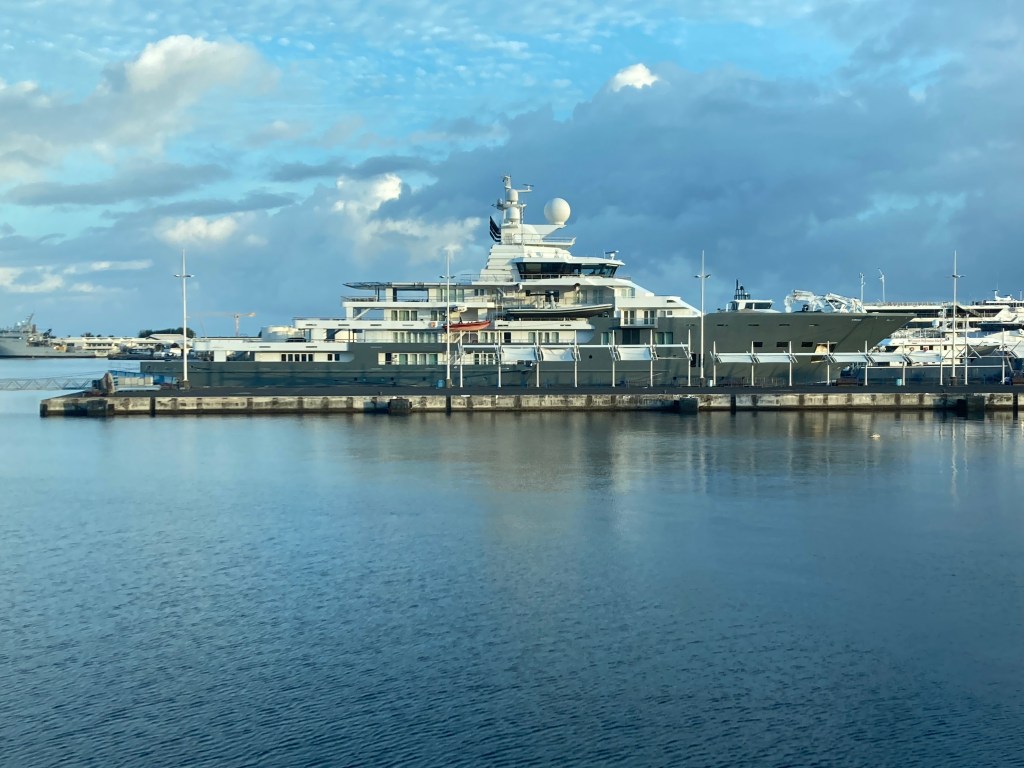
Custom built in 2014 for Graeme Hart, the richest man in New Zealand ($9B+), the Andromeda is an expedition style boat capable of navigating any waters on earth. It cost $250 million to build, and $25 million a year to operate!! It’s not the glitz-and-glamor type of yacht usually seen in south Florida, so I was captivated by it.
Later in the afternoon I managed to find an open pearl shop!!! I had been shopping for Tahitian pearls since our first stop in French Polynesia on Raiatea, but I hadn’t found what I was looking for. I loved the stock in this store: great designs, fine quality, and fair prices. I found several gifts but not the right thing for myself. Two more ports remain, so here’s hoping!
The storm that had been forecast all weekend finally hit as we were pulling in lines to depart. We left Pape’ete behind in a squall that seemed to follow us for hours. There was no sunset on this day for me to share with you.
Tomorrow: Fakarava!
Mahalo and Aloha.
 Will Gibson's South Pacific Journal
Leave a comment