We were at sea three calendar days, but four lived days, enroute to the Cook Islands. The discrepancy being Father Time gave back to us the day he took away earlier during the crossing from American Samoa to Western Samoa. In practical terms, our November 1st had 48 hours!! I assumed the adjustment would have a few wrinkles, and indeed it did. Half the spa appointments on the first November 1st were no shows, but it all worked out well because half the passengers with appointments for the second November 1st showed up a day early!! And vice versa. Or so I heard.
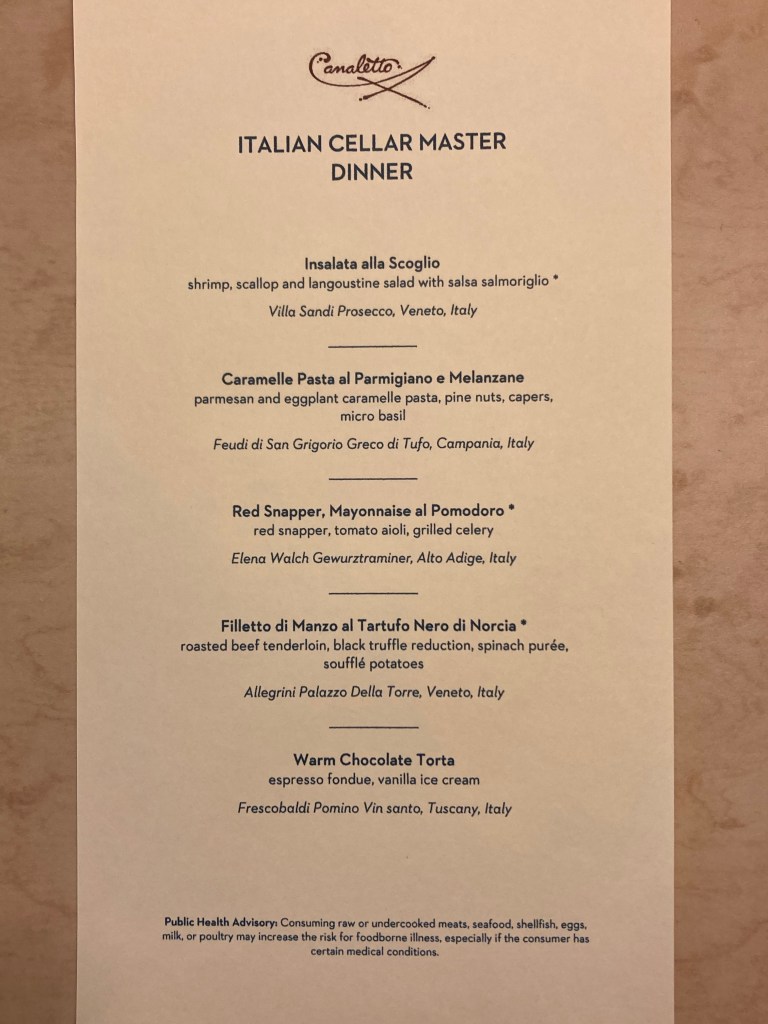
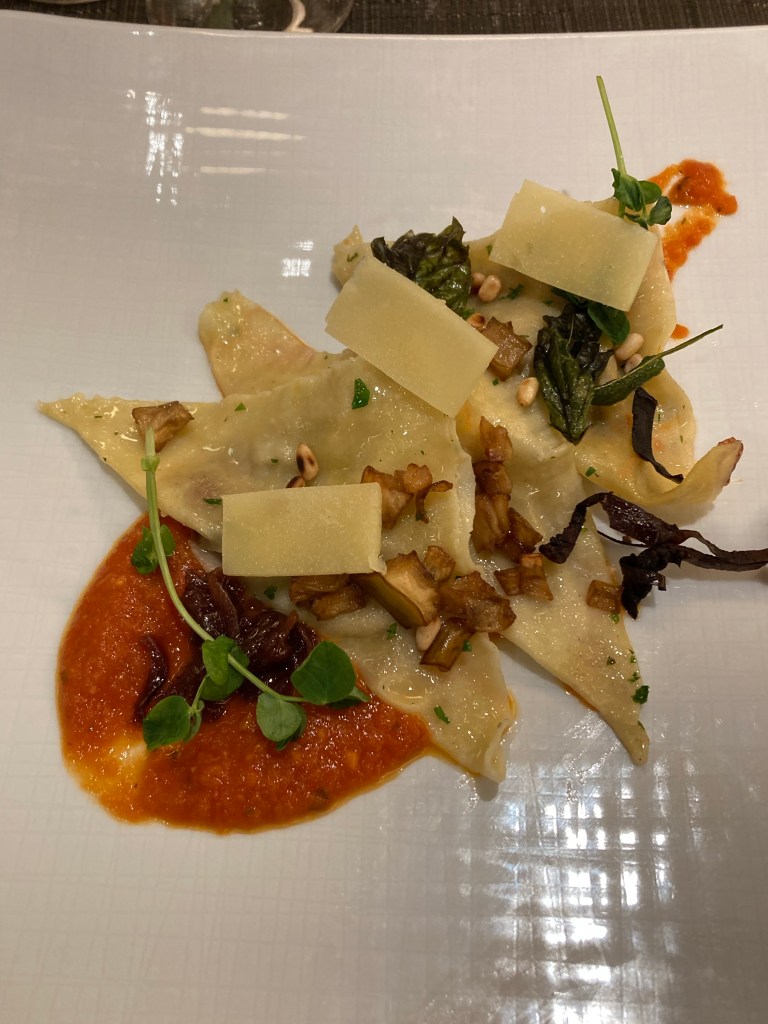
I had one snafu. Weeks earlier, I had made a reservation for a dinner/wine tasting in the Italian restaurant forNovember 1. On the first day of November 1, a written confirmation card was delivered to my cabin reminding me of the November 1 reservation. Later in the day, my cell phone buzzed with a notification from the Navigator App reminding me of the same. When I arrived at the restaurant at 7:00, along with my fellow would be attendees, we were informed that we were a day EARLY! LOL But on the second November 1, the dinner and the wine pairings were exceptional. The best meal I’ve had onboard the entire cruise as I type this now on November 14!!
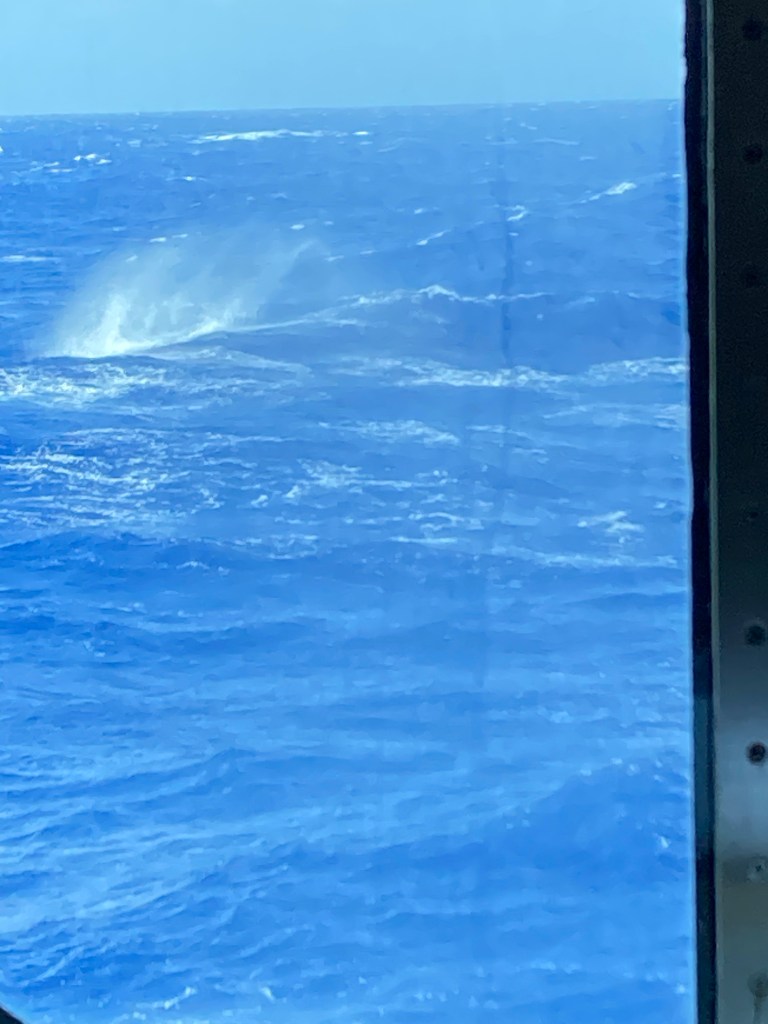
I’ve been taking meclizine once per day since the cruise began, and my preparations really paid off overnight from the second November 1st into November 2nd. When we left Tonga, the captain alerted us to a storm he was keeping his eye on off the southern tip of South America. In the early hours of November 2nd, we met the winds and swell the high-pressure system was generating. I was jolted awake many times as the Volendam cut a swath through the FIFTEEN foot swells smacking us at 45 degrees starboard. (We were headed due east and the swells were headed north-west.) I, like everyone else onboard, was sleep deprived and a little grumpy the next day, but I’m happy to say I had no sea sickness.
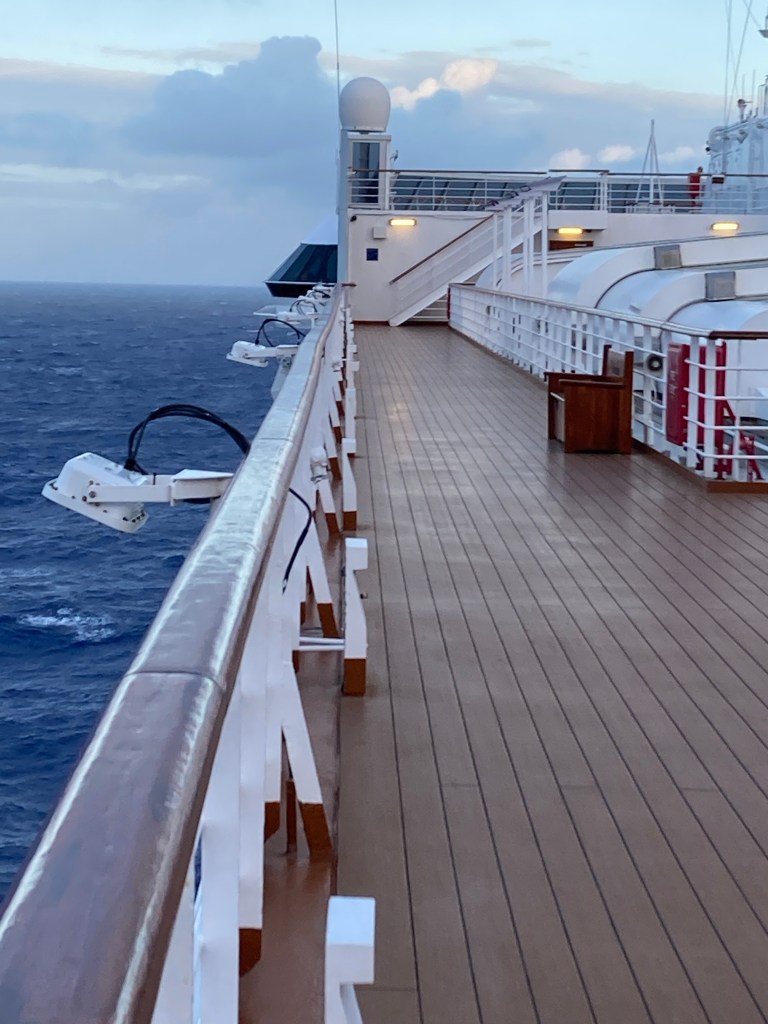
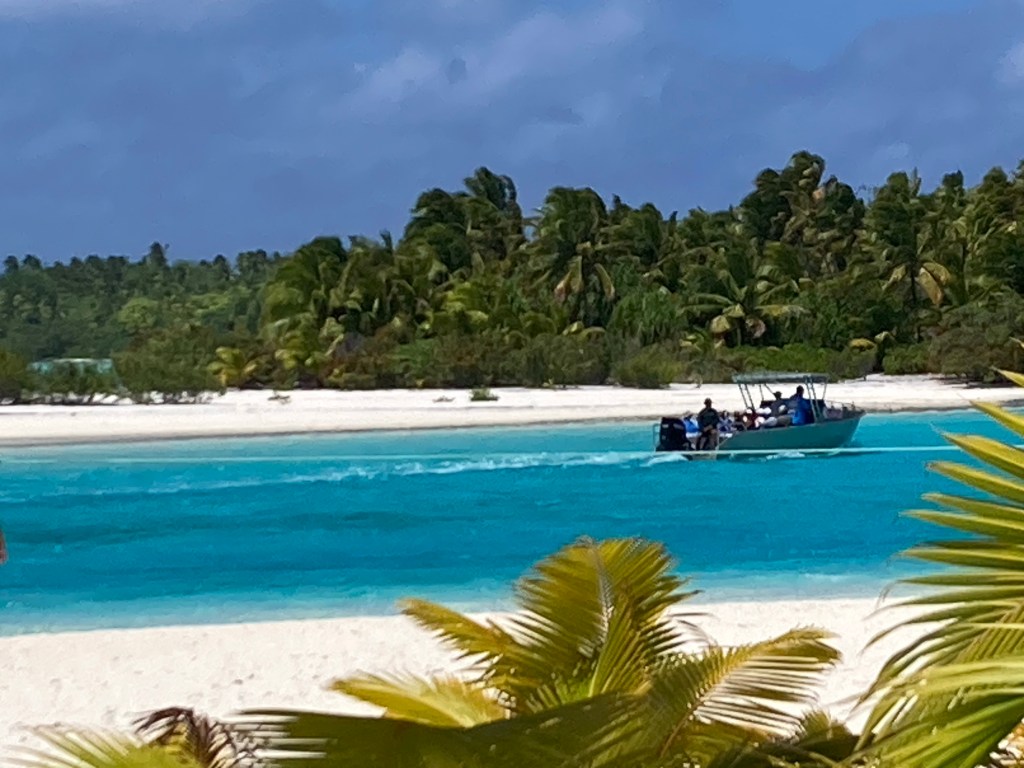
The fifteen foot swells continued throughout the day and into the morning of the 3rd, then they began tapering off, and by mid-day were down to 9-12 feet. By the time we got to Aitutaki, the sea was calm and we had no trouble anchoring and tendering into the meager port of Arutanga on the island’s leeward, or western, side.
THANK GOD!!!
Because this is the most beautiful body of water I’ve ever seen!
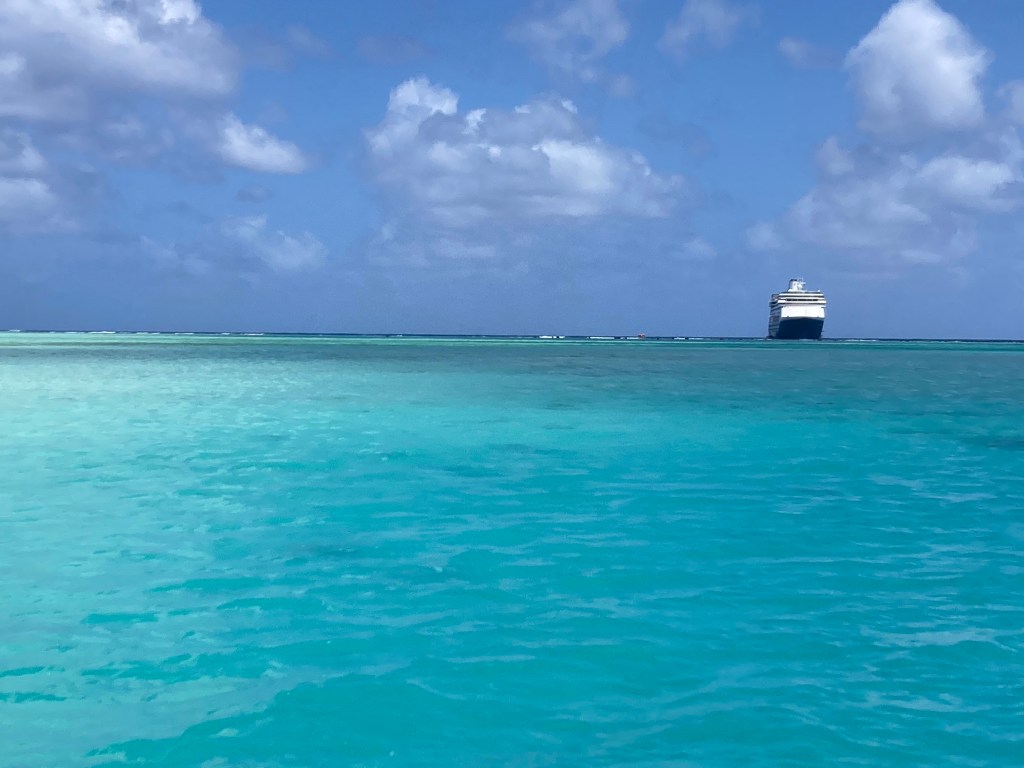
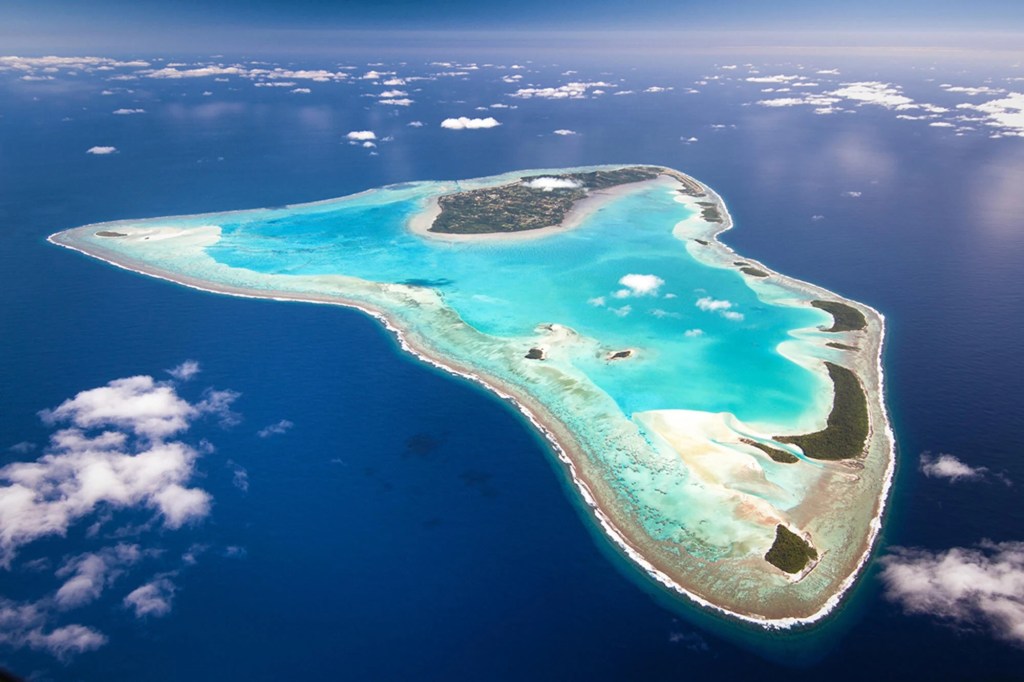
Aitutaki literally translates as “little paradise,” and it sure delivers. Only after having been there did I discover that it is regularly referred to as “the world’s most beautiful lagoon.” It was a late addition to our itinerary, so I knew nothing about it as I boarded the tender for the ride into the miniscule port.
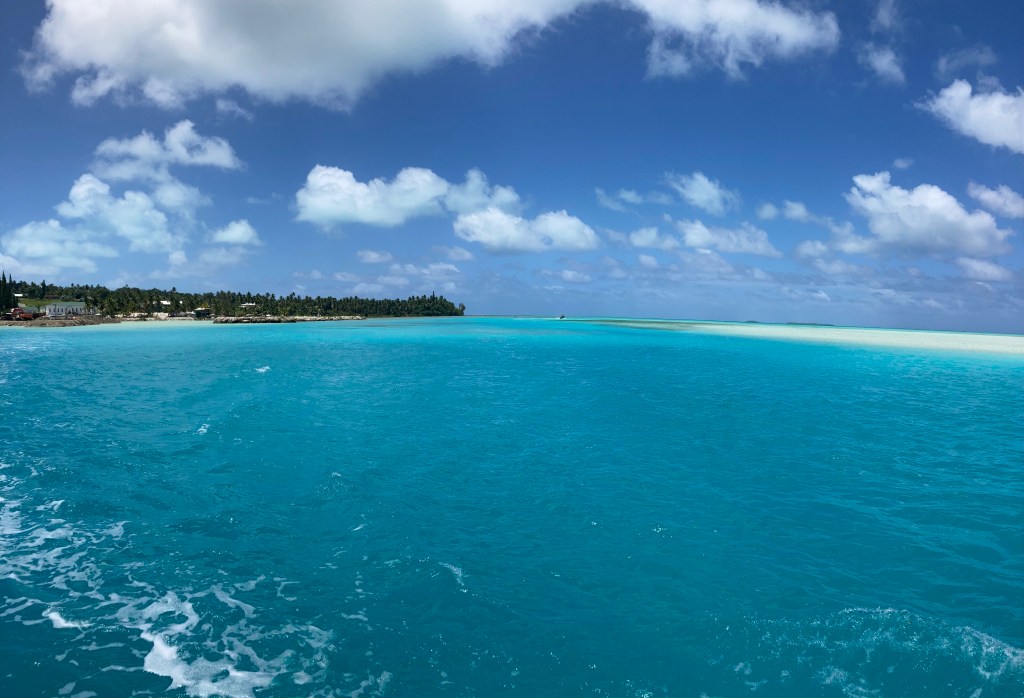
I suppose this ignorance only added to the WOW factor. To me, Aitutaki was one big, delightful surprise, one so vast, so vivid, so pristine and pure, that it approached sensory overload. It would be appropriate to depose Naples and simply state “See Aitutaki and Die” but I won’t because I’d definitely like to go back!!
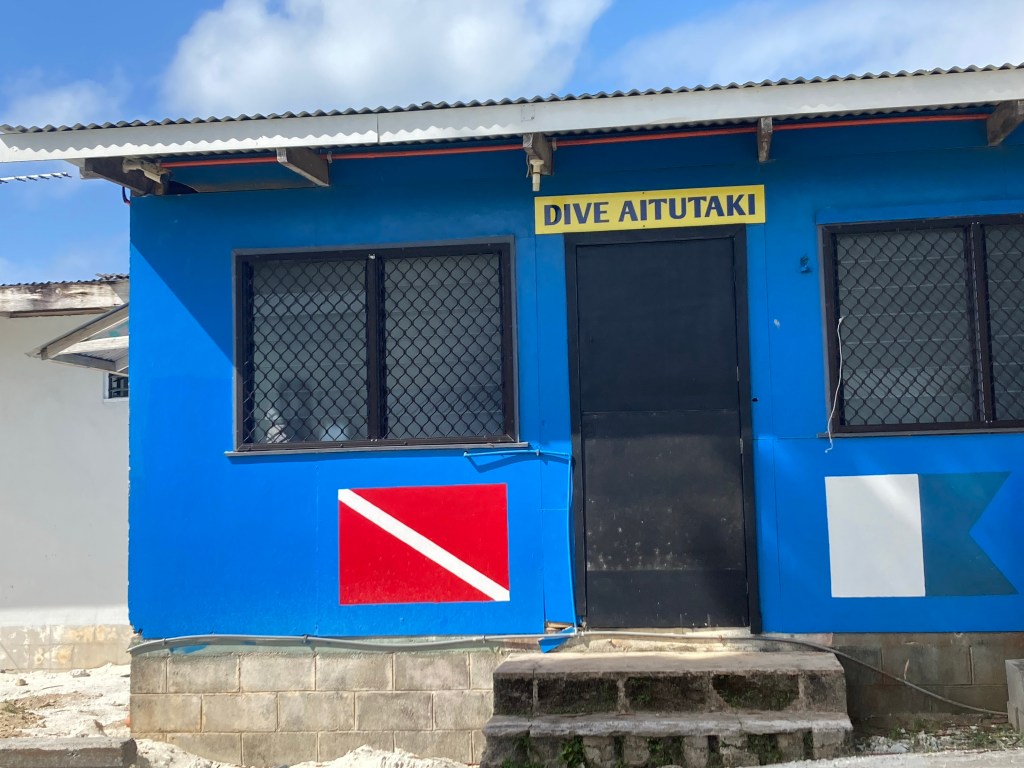
Aitutaki is so small and remote that there were no shore excursions offered for the port. There is a dive shop on the pier that I had been reaching out to for weeks with no response, and it was locked up tight. So I wandered like a lost puppy around the intersection and public green that comprises the town of Arutanga. It was Saturday, and pretty much everything was shuttered.
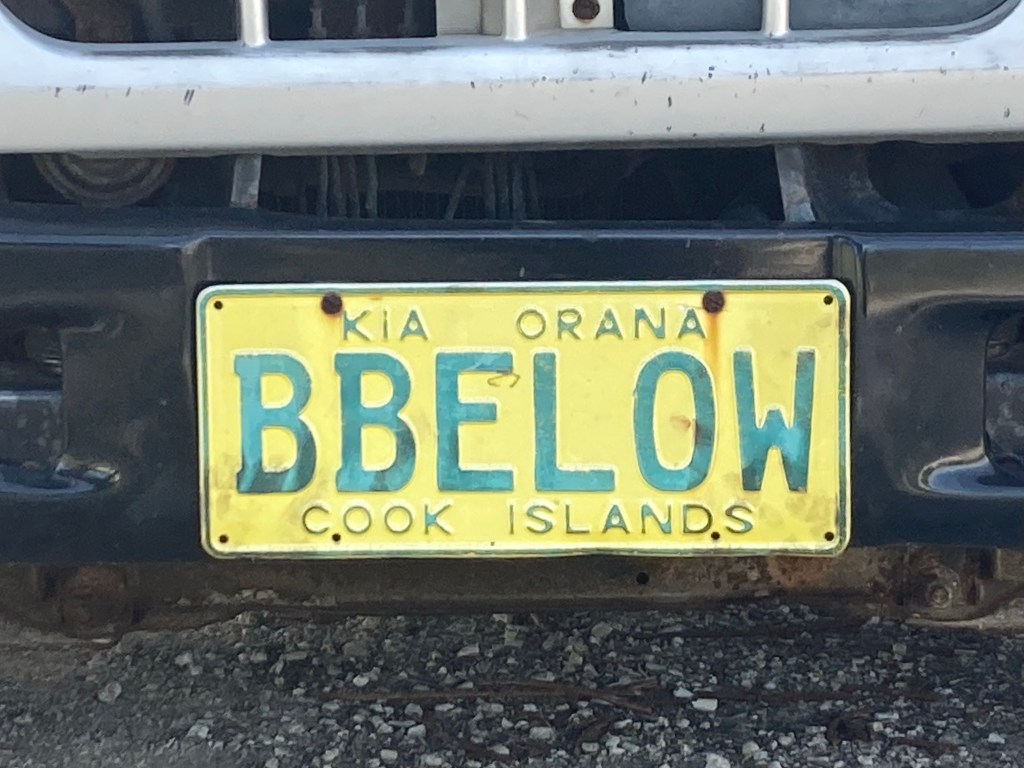
Finally, a pick-up truck emblazoned with “Bubbles Dive Shop” appeared. I trotted over as the driver fished something out of the truck bed and caught up with him as he started for the pier. No, they were not diving that day; they were snorkeling. And yes, they had space for me to join. A ticket to paradise!
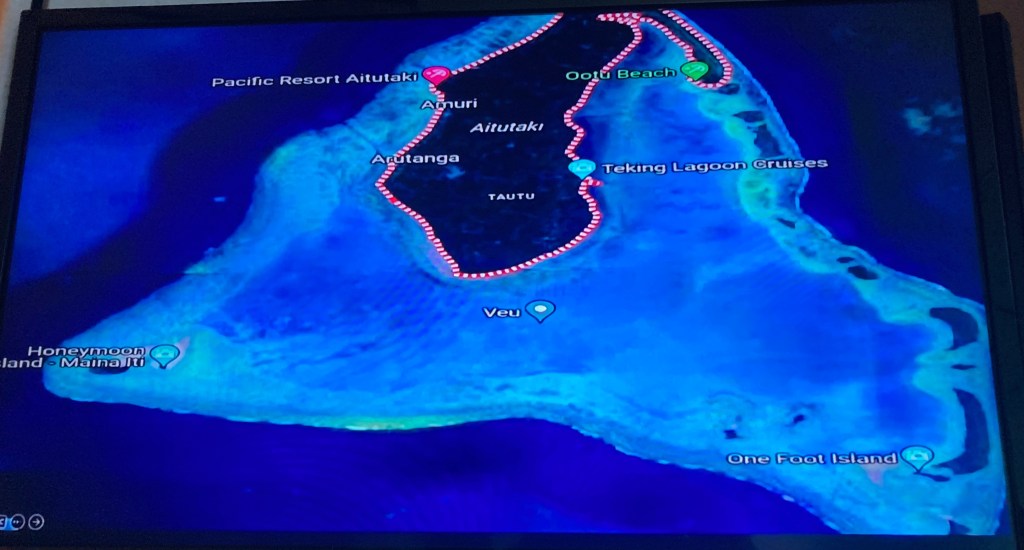
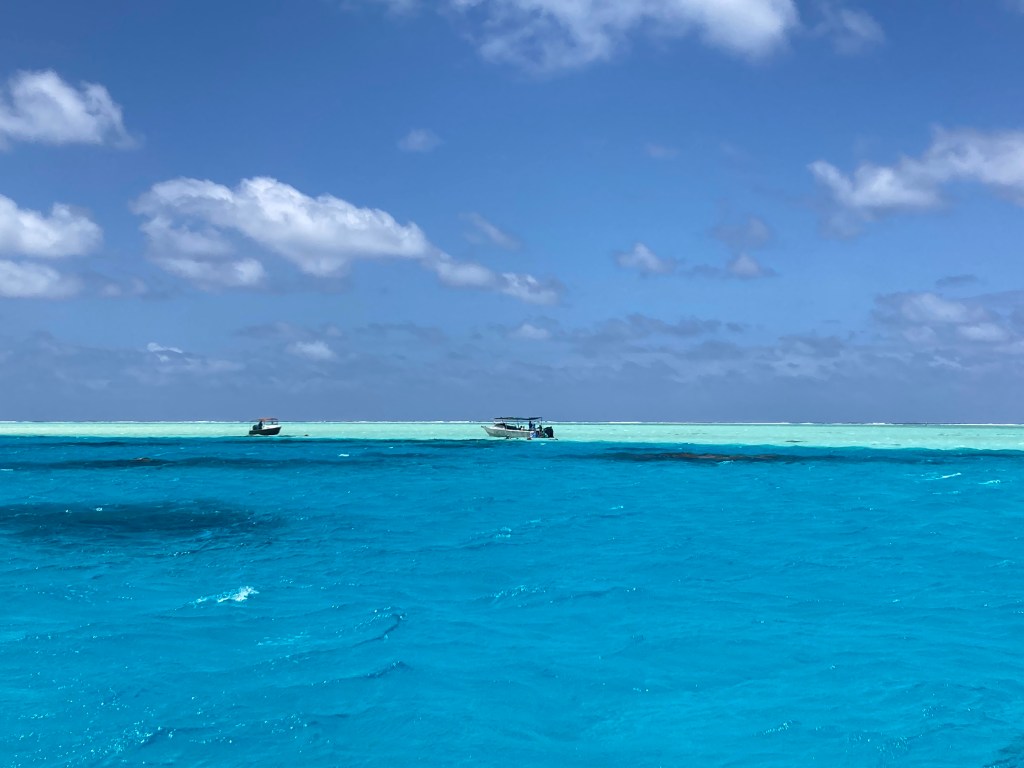
The barrier reef that forms Aitutaki is triangular with each of the sides being approximately 8 miles long. It took about 20 minutes to get from the dock to our first snorkel spot, Honeymoon Island, in the lower left-hand corner of the photo above. Due to its almost constant Tradewinds, Honeymoon Island is very popular with kite-surfers. There were several out zooming across the water on their hydrofoil boards, so the captain dropped anchor at a respectful distance.
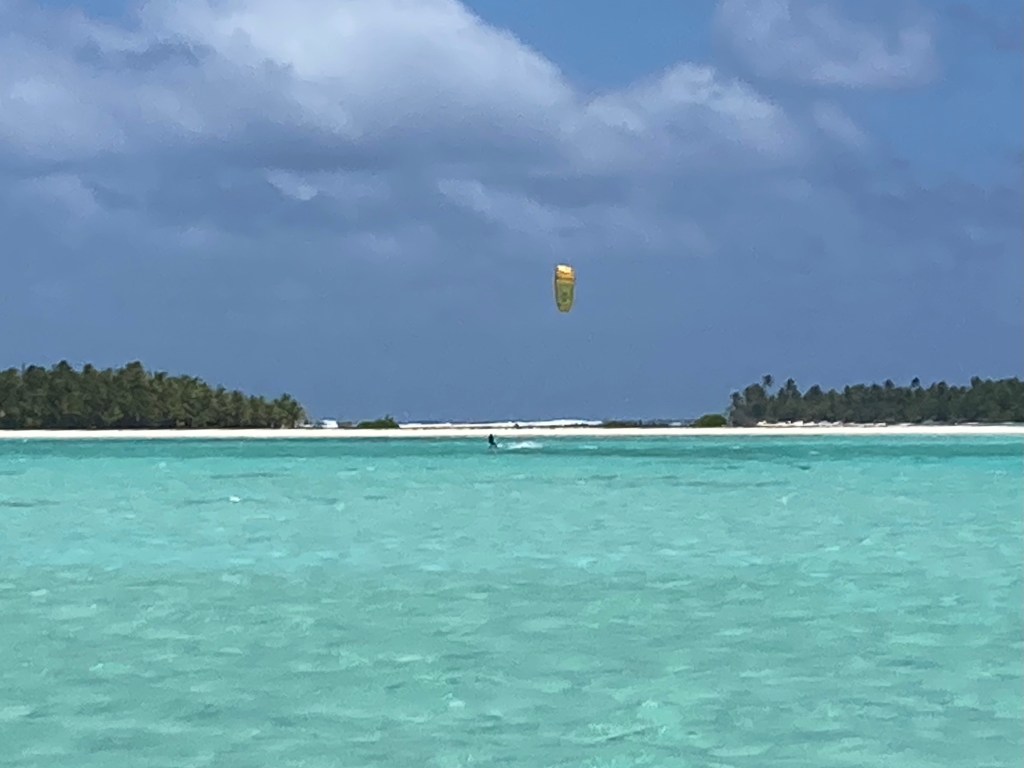
The lagoon is filled with underwater ridges of sugar white sand that undulate from 3 to 30 feet deep.
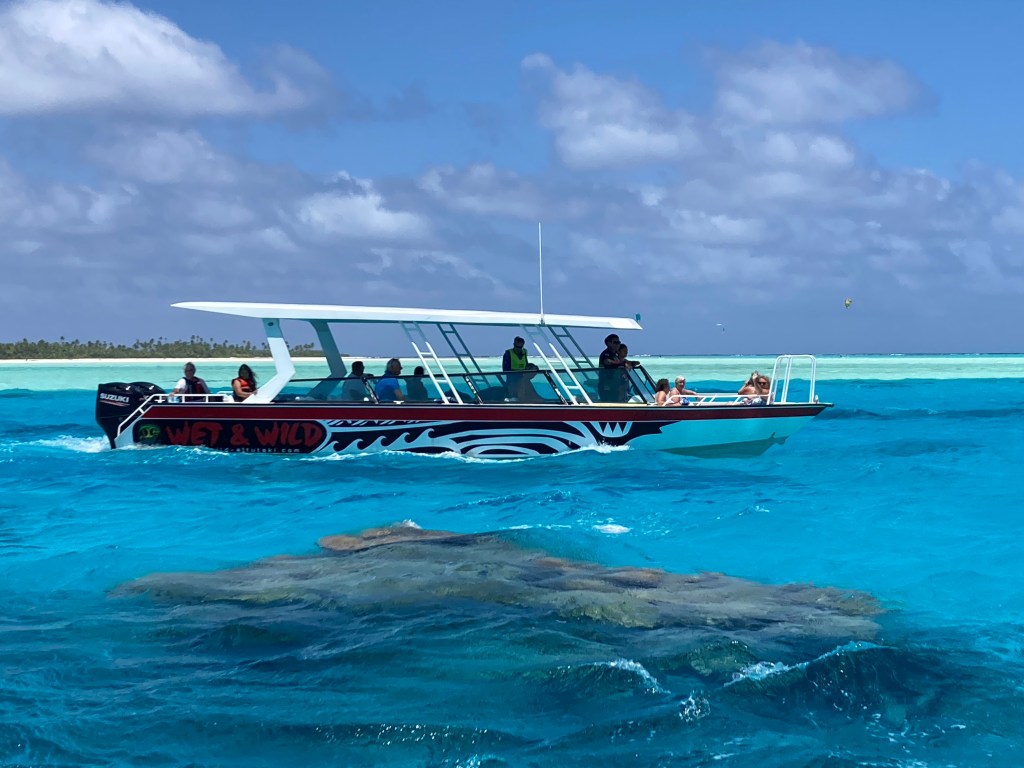
They are the backdrop to innumerable towers of corral which rise from the depths to just below sea level.

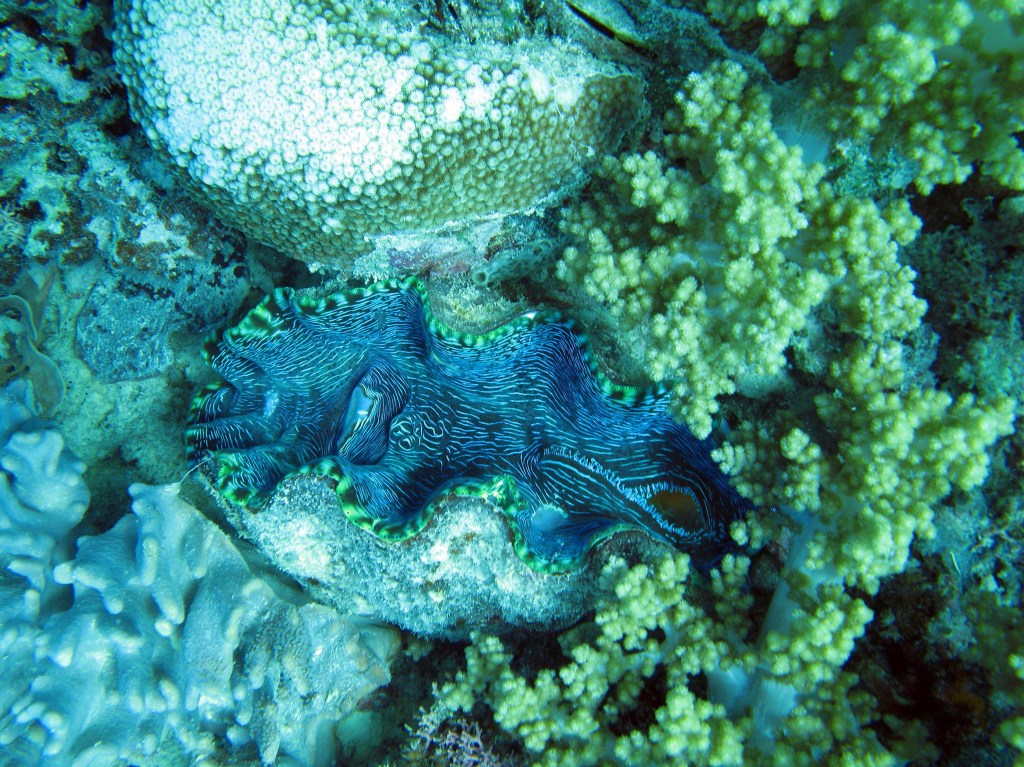
The flat sandy bottoms are also the ideal home for the endangered Tridacna gigas, the giant clam. With their thick, dark purple mantles outlining their zig-zag shells, they are easy to spot. Most of the ones I saw had their shells open and were busy filtering.
While we were out snorkeling, the crew was preparing fresh coconuts for our return. They were also feeding fresh coconut meat to a Giant Trevally who seems to have adopted them. This fish was at least 4 feet long and about as tall and easily over 100 pounds. It was a true laugh riot watching it weave its way between our legs as we assembled to get back on the boat.
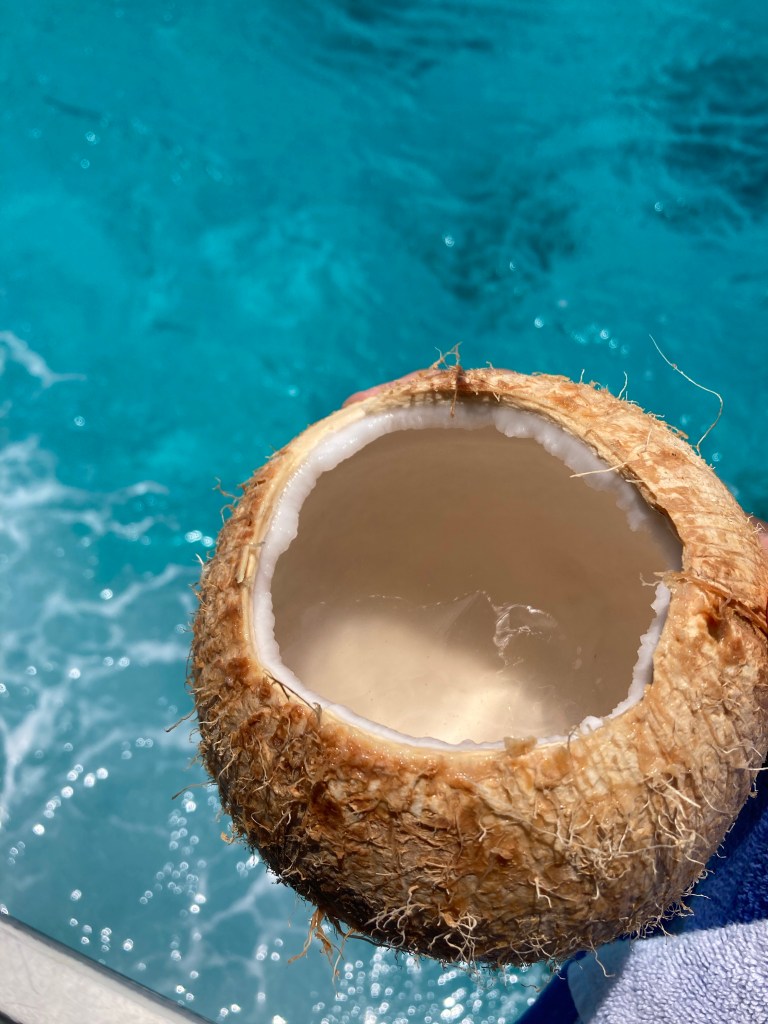
One aboard, we enjoyed coconuts unlike any I’d ever seen. The inner nuts were large and light brown with thin shells. The crew would score a circle around the top using the edge of a dive weight as a chisel. Inside, there was only a thin layer of gelatinous meat but a copious amount of coco water, easily a pint!! Delicious and refreshing. A real treat.
Our next destination was One Foot Island, a 35-minute jaunt across the lagoon that took us to the lower right corner of the photo above.
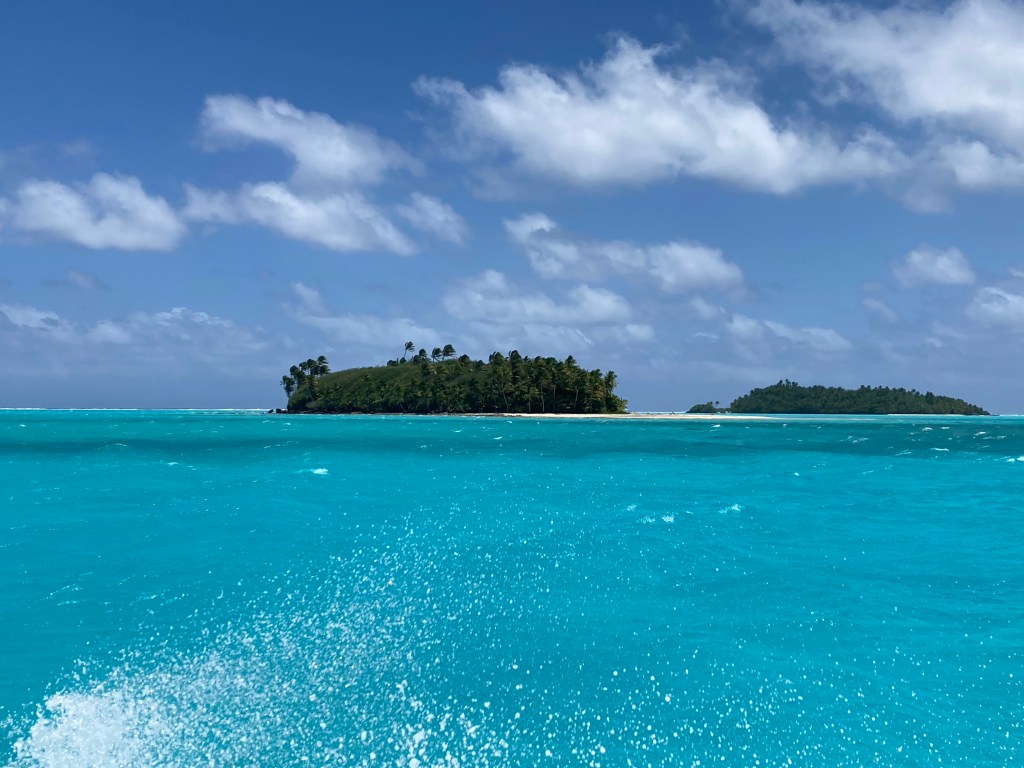
Along the way, we passed several small uninhabited islands, including the one where Survivor: Cook Islands was filmed.
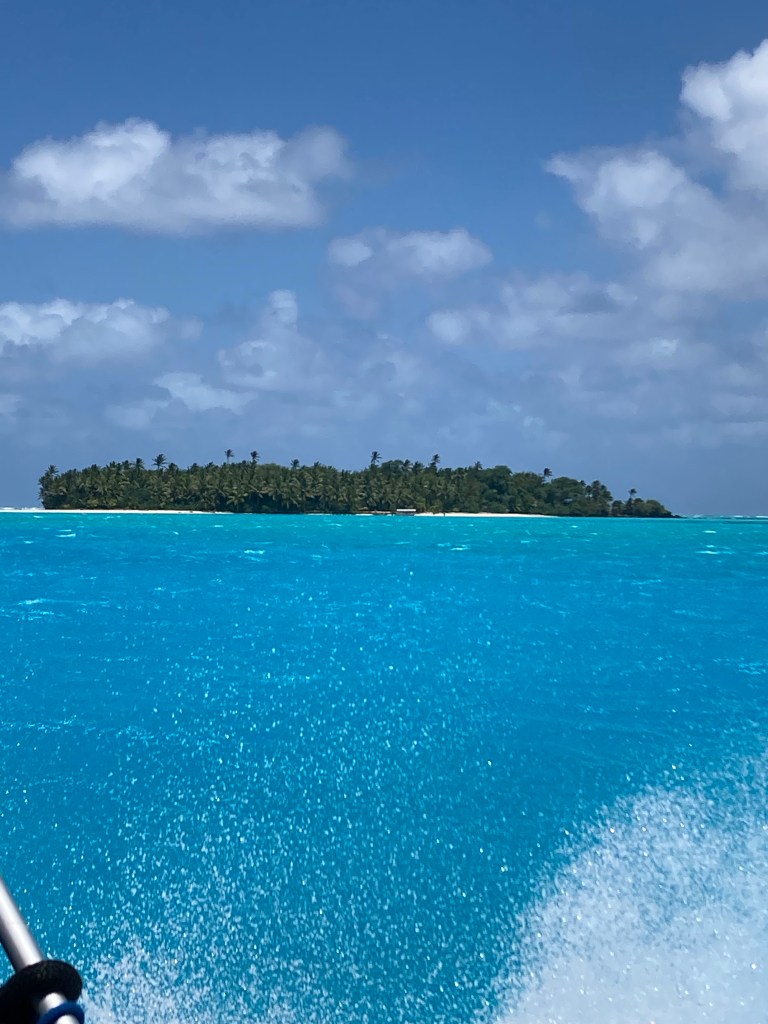
In the distance, waves broke along the barrier reef, delineating for us the atoll’s wide boundaries.
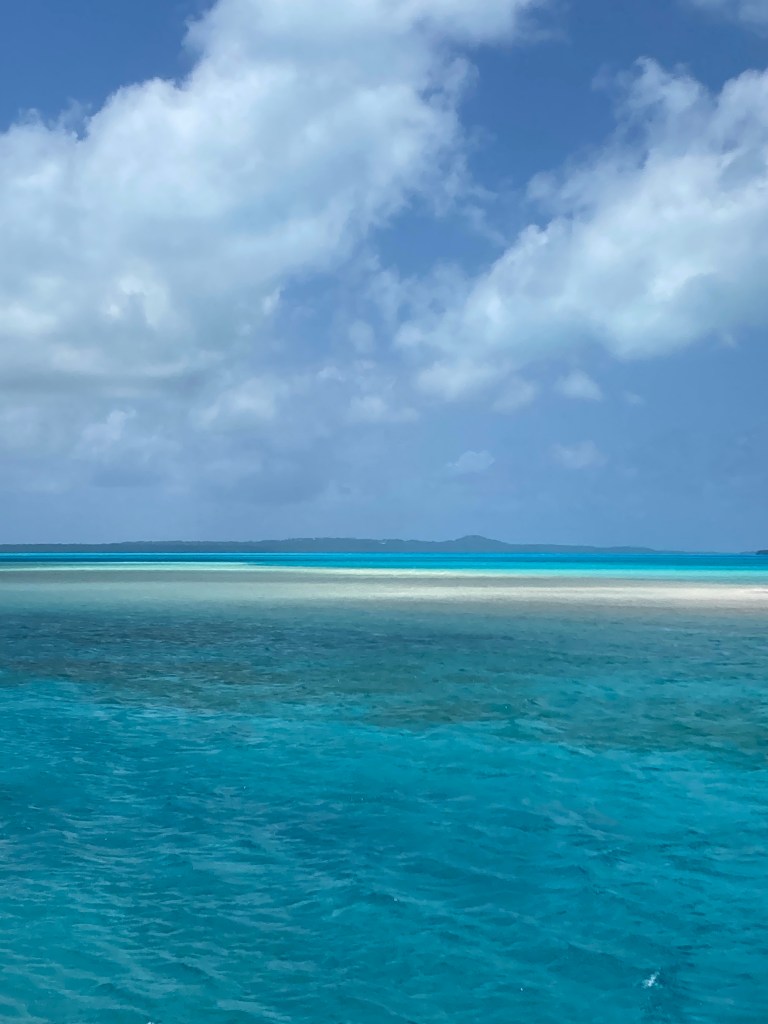
Inside, a phantasm of blues beckoned: every hue, every saturation, every tone. As soon as the boat was beached on One Foot Island, we all jumped off and ran into the water, scampering away like kids on recess.
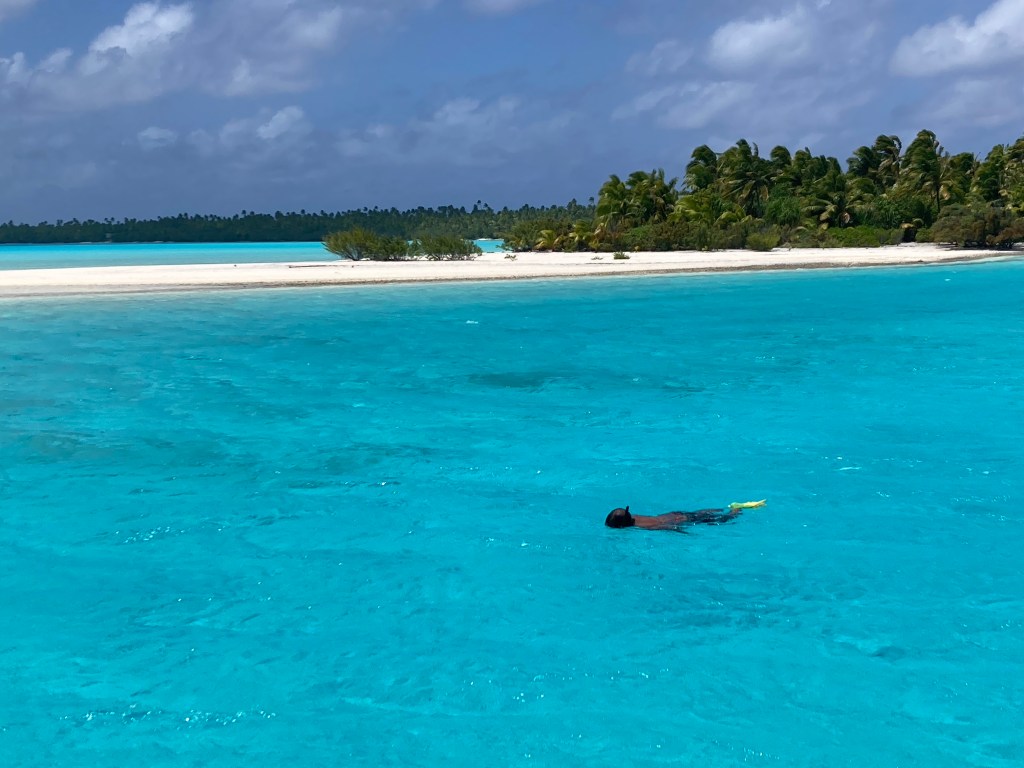
We had 1 ½ hours to enjoy and commune with the stunning setting.
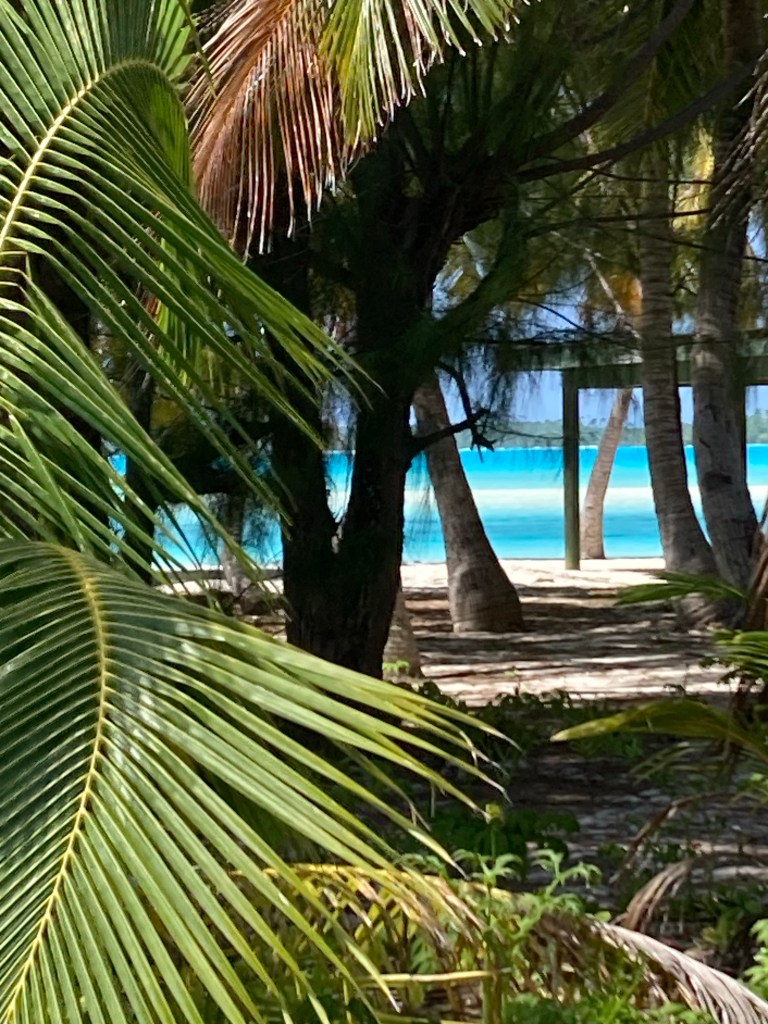
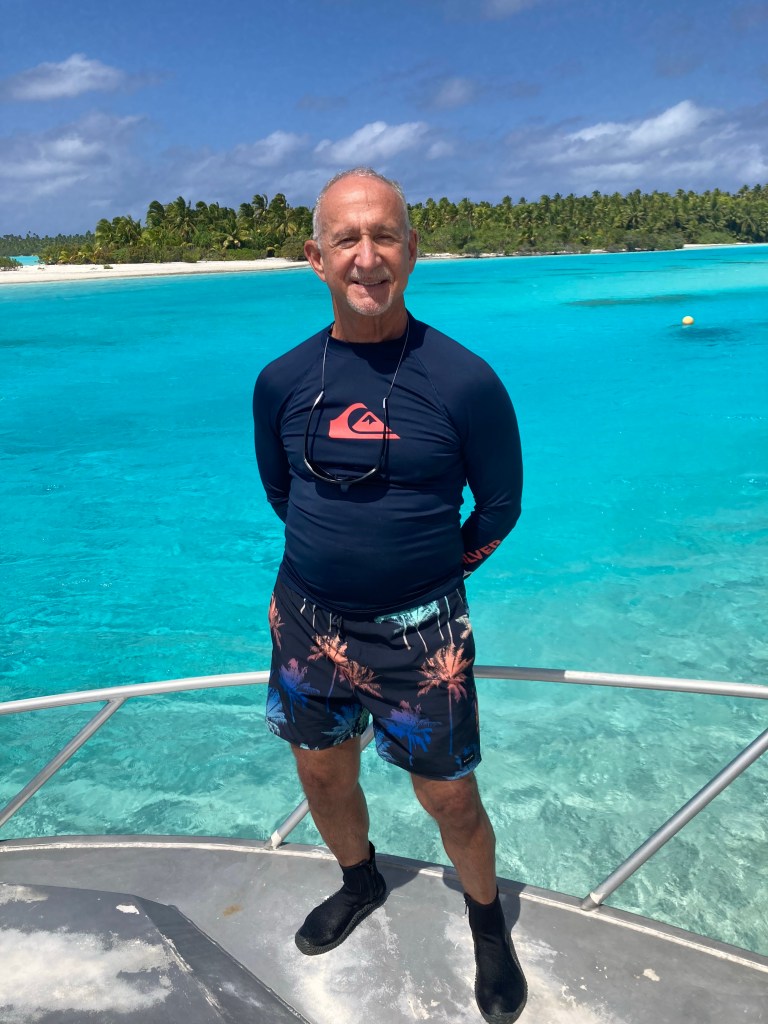
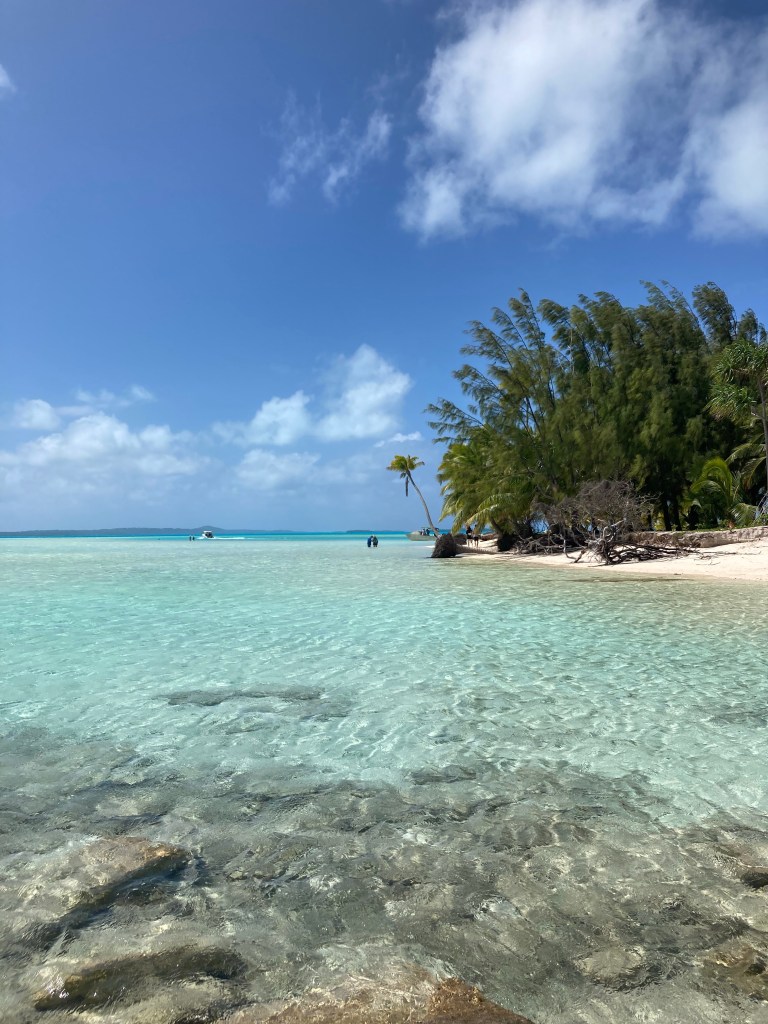
At 2:15 we started back to the tender port, arriving there at 3:00.
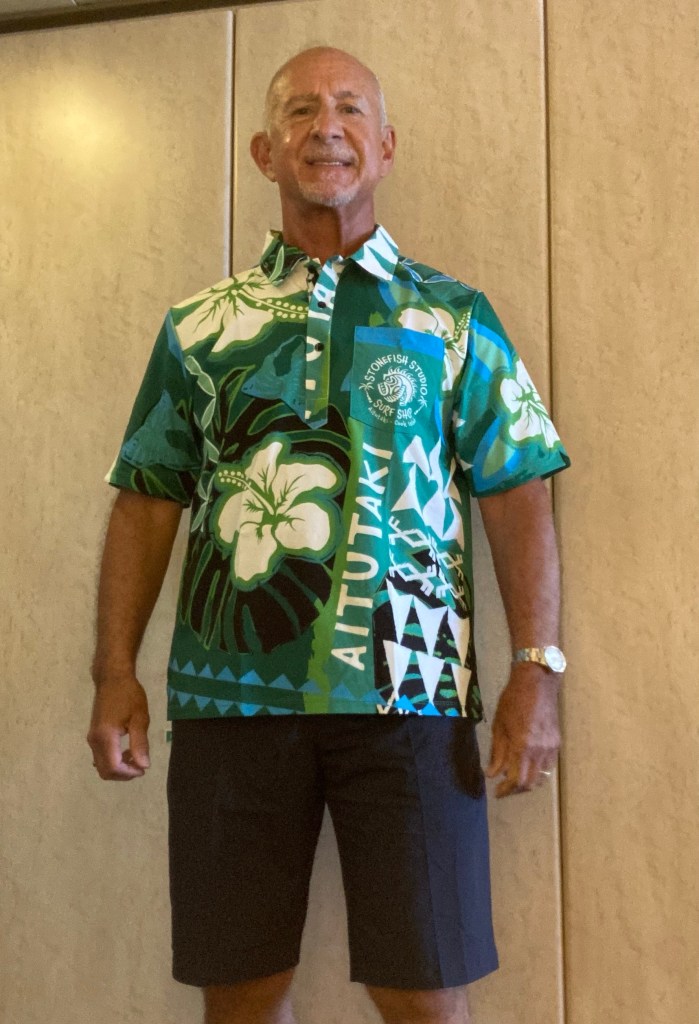
The Stonefish Surf Shop had erected a literal pop-up shop under an awning while we were out on the water. Their merchandise is vintage patterns produced using custom made fabrics with their own bold, modern graphics. We descended upon them like locusts, and they got happily picked clean!
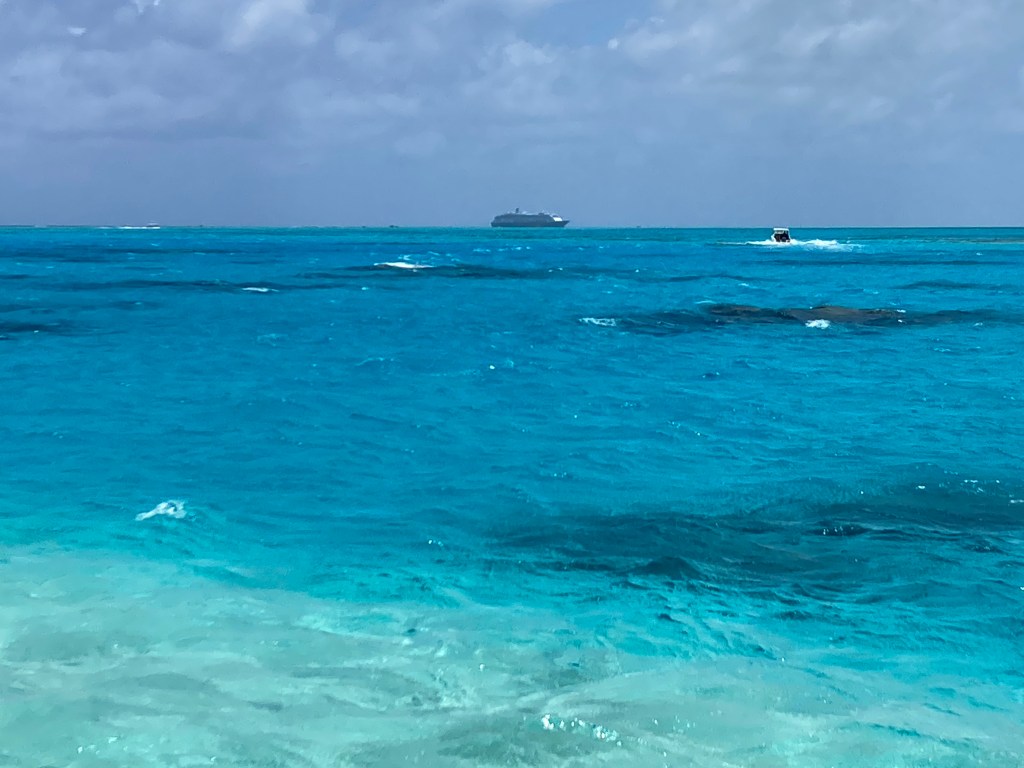
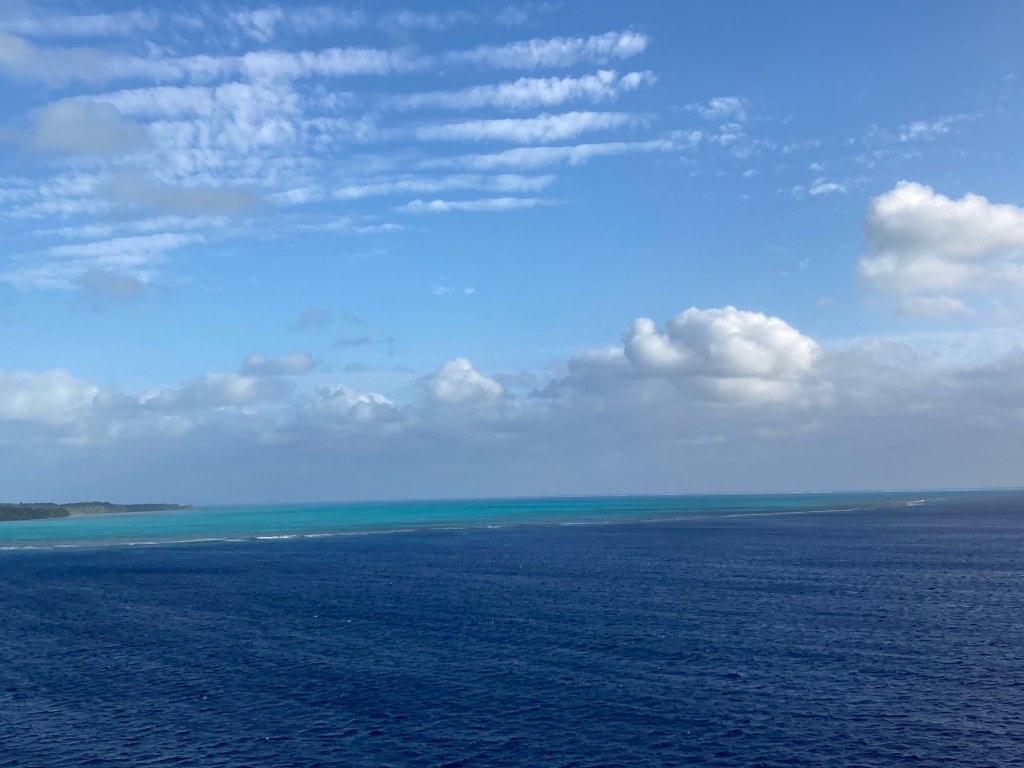
Sail away was crystal clear at sea level with a few high puffy clouds, perfect for getting some perspective as we cruised south-west out beyond the reefs of Honeymoon Island and then south to Raratonga.
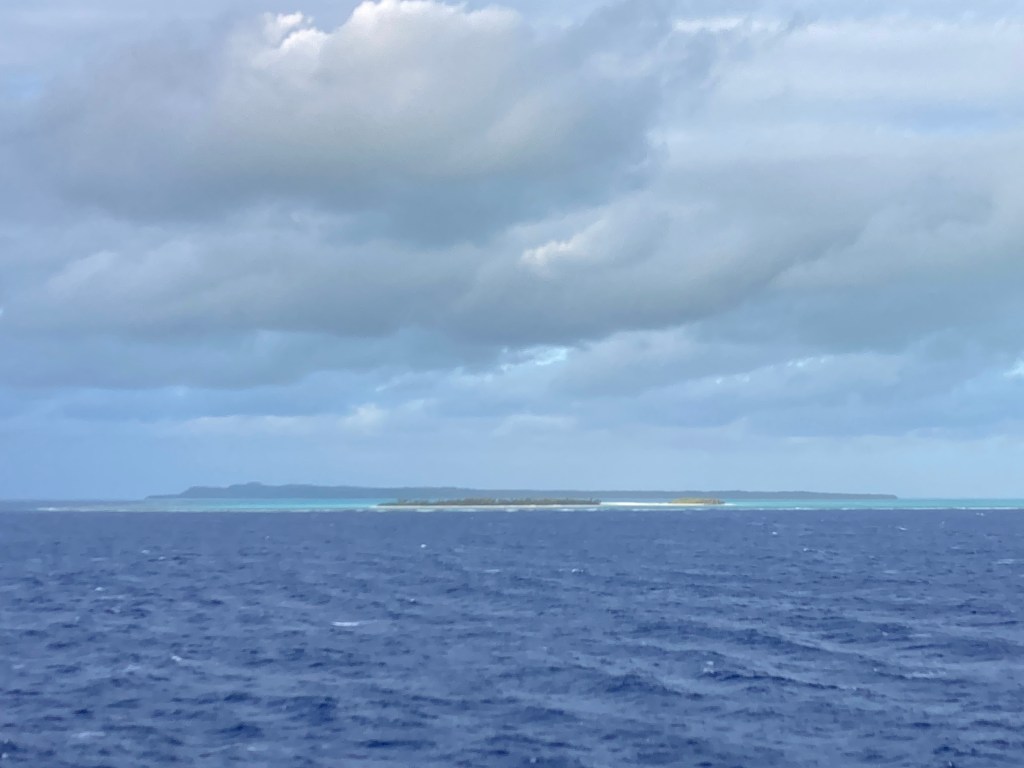
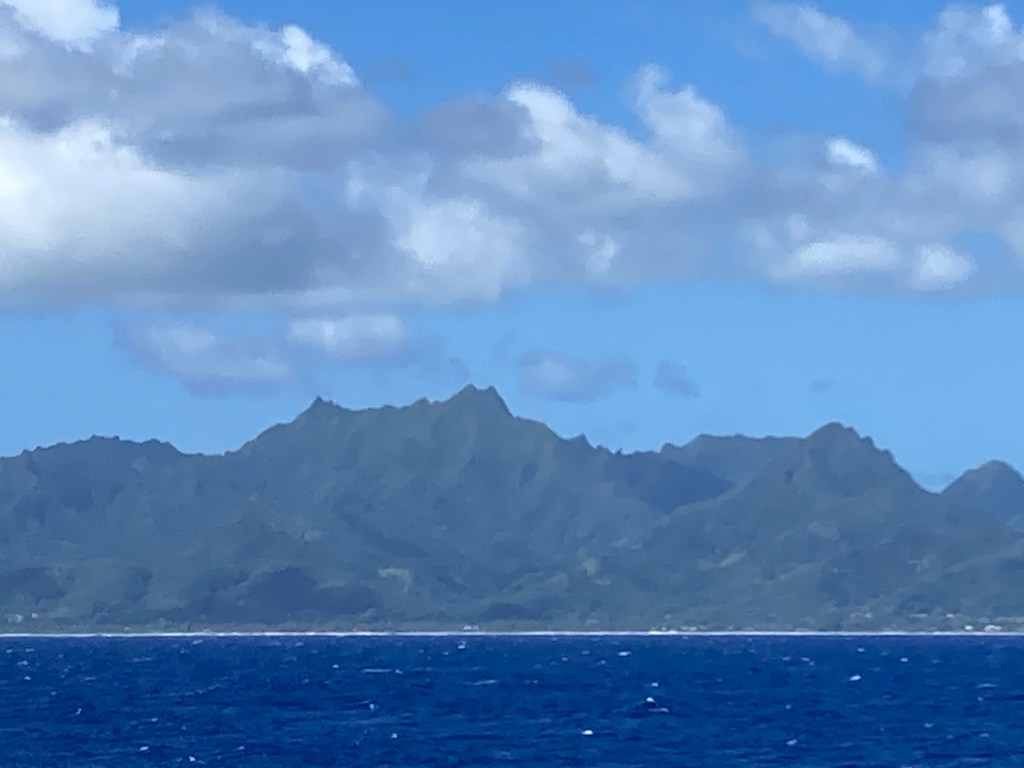
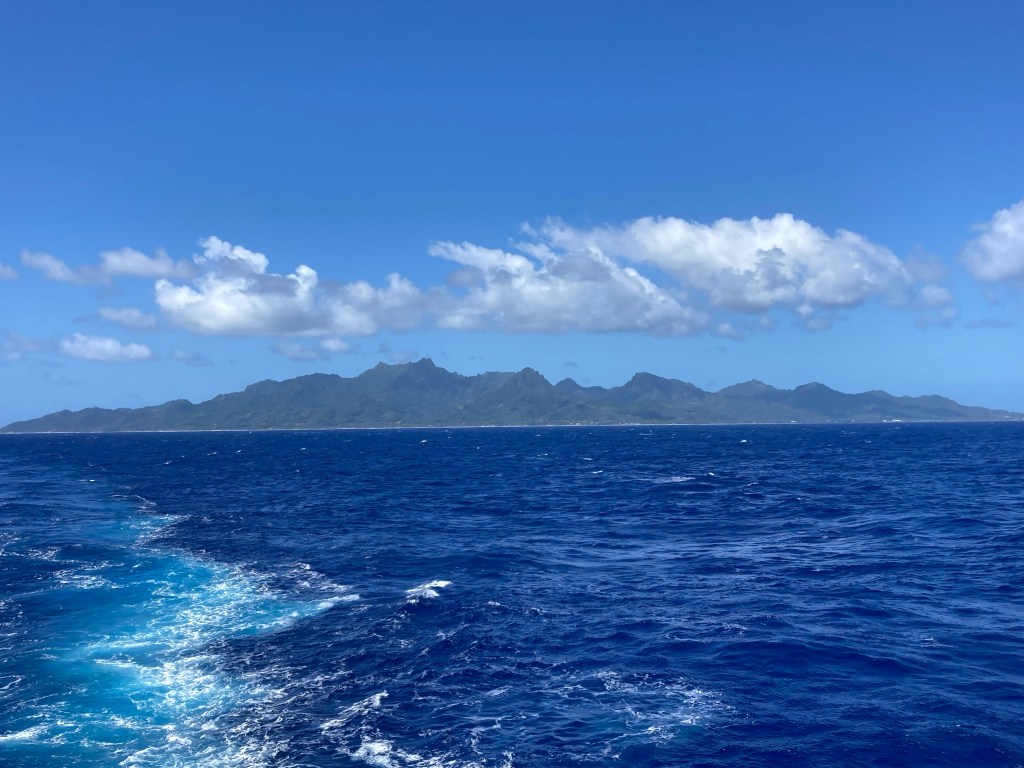
Raratonga is the geological inverse of Aututaki: a solid island of huge volcanic mountains vs. a volcano disappeared into the sea. I was looking forward to seeing it on November 5. Alas, seeing it was all I got. The ocean swells were too high for the Volendam to drop anchor and safely operate the fold-out tender dock, so our visit was scratched.
The captain set a course east to French Polynesia. The extra day would allow him to reduce our speed, all the better to ply the swells now once again slapping our starboard side.
Mahalo and Aloha


 Will Gibson's South Pacific Journal
Leave a reply to calawilli Cancel reply