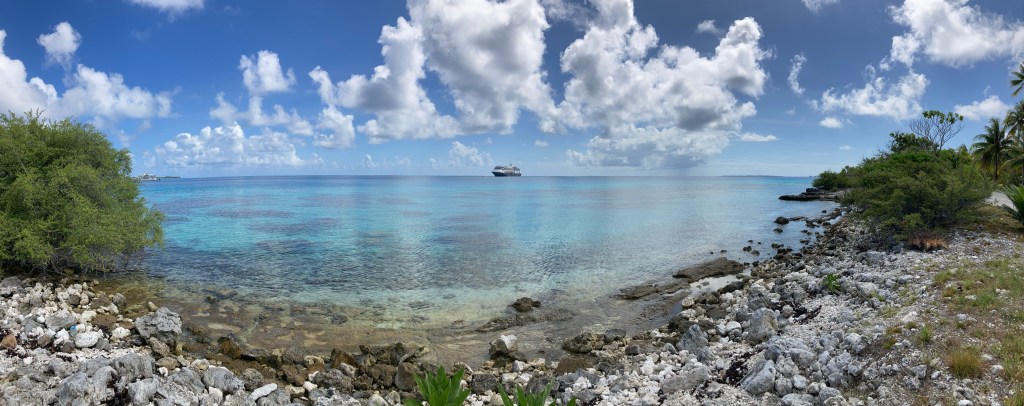
Spread Northwest to Southeast for 900 miles across the South Pacific lie the Tuamoto Atolls. They are the world’s largest chain of atolls and cover 1.2 million square miles of the South Pacific. There are 76 atolls, each a remnant of a once active volcanic island, now submerged and eroded back into the sea.
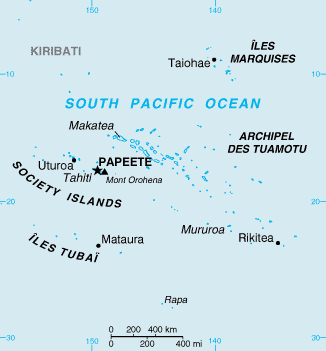
Study their geography and you will discover a palimpsest of a an ancient lost world. Unlike the constancy of the continental plates that have surfed our planet since Pangea, the Tuamoto Island chain came and went. All that remains today are the reefs that once fringed the islands when they were at their maximum width. As we wended our way through them south to north, we could see only the coral reef footprints and occasional stretches of sandy shores a few feet above sea level.
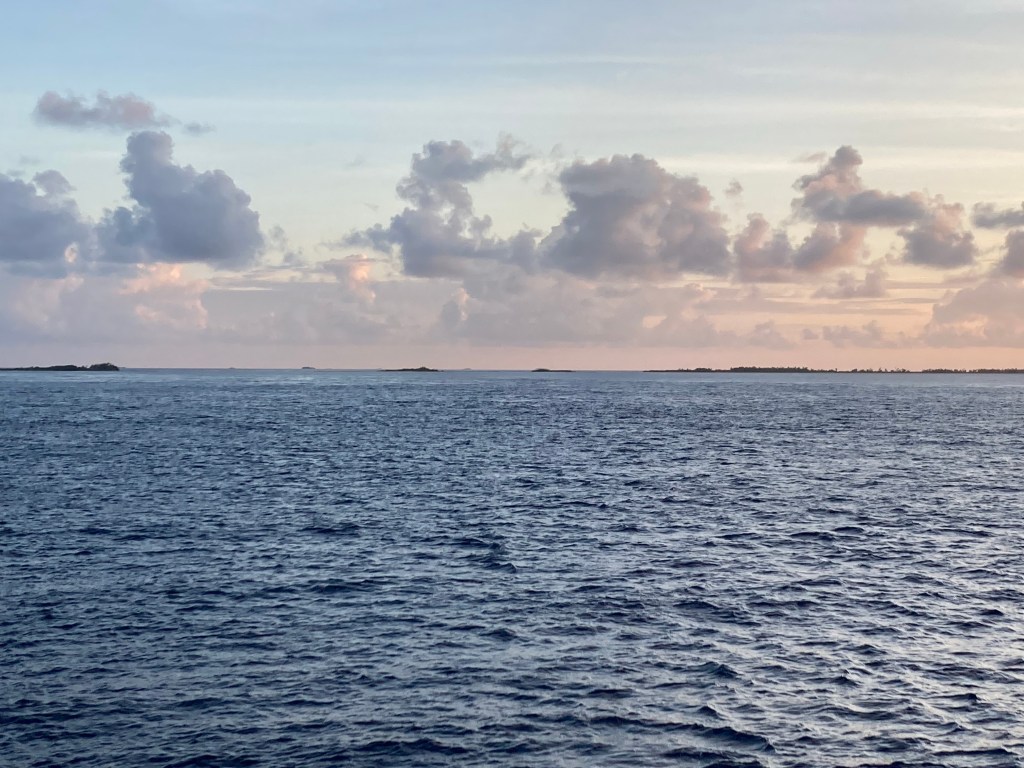
Some of these accretions are large enough to provide a few plants with sanctuary, but only ones that can survive in the poor soil of salt, silica and calcium carbonate.
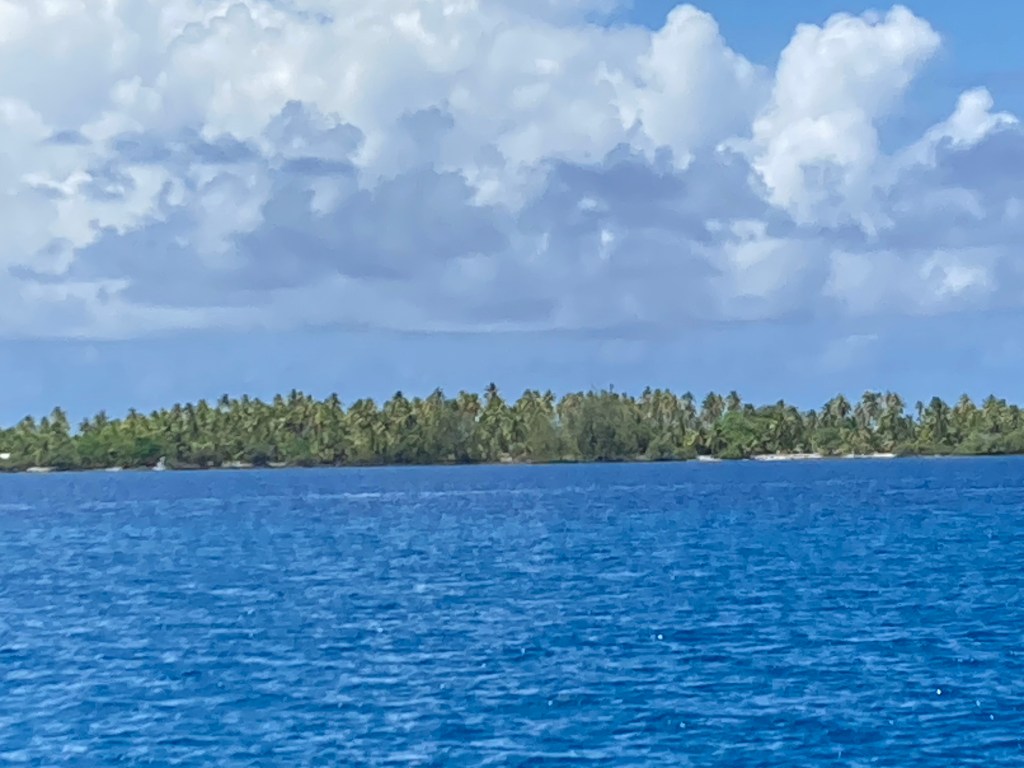
Why the Polynesians did not deify the coconut is a mystery. The coconut must have saved the lives of every soul in Polynesia at some point – most certainly here in the Tuamotos where rain water is the only source of freshwater.
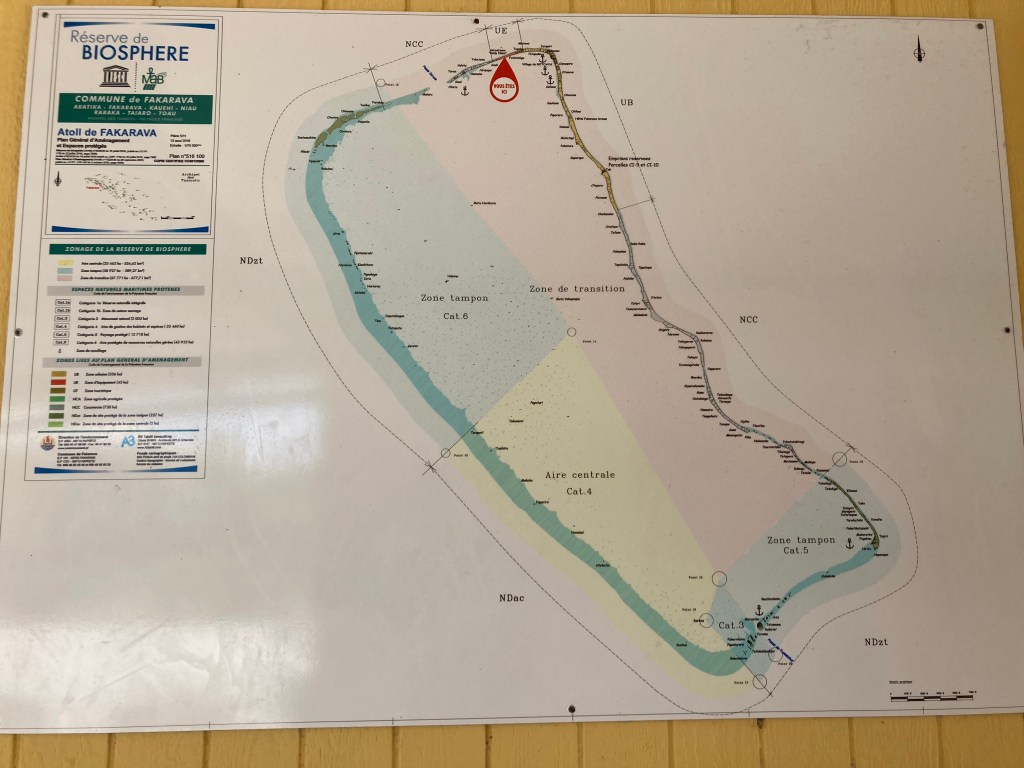
Fakarava is the second largest of the Tuamoto atolls. Its lagoon covers 429 sq miles and is rectangular in shape, long sides running north and south: 37 miles long and 13 miles wide. Draw an “L” then draw an upside down “L” to its right. Place them very closely together, but don’t let them touch. The tiny space at the upper left is where the north channel enters the lagoon; the tiny space at the lower right is where the south channel, much smaller, finds a way in. The upside down “L” is above sea level: a thin ribbon of sand atop the coral out croppings; the other “L” is mostly at, or below, sea level with a few dots of dunes visible as it disappears into the horizon. The total land mass area surrounding the lagoon is only 9 square miles.
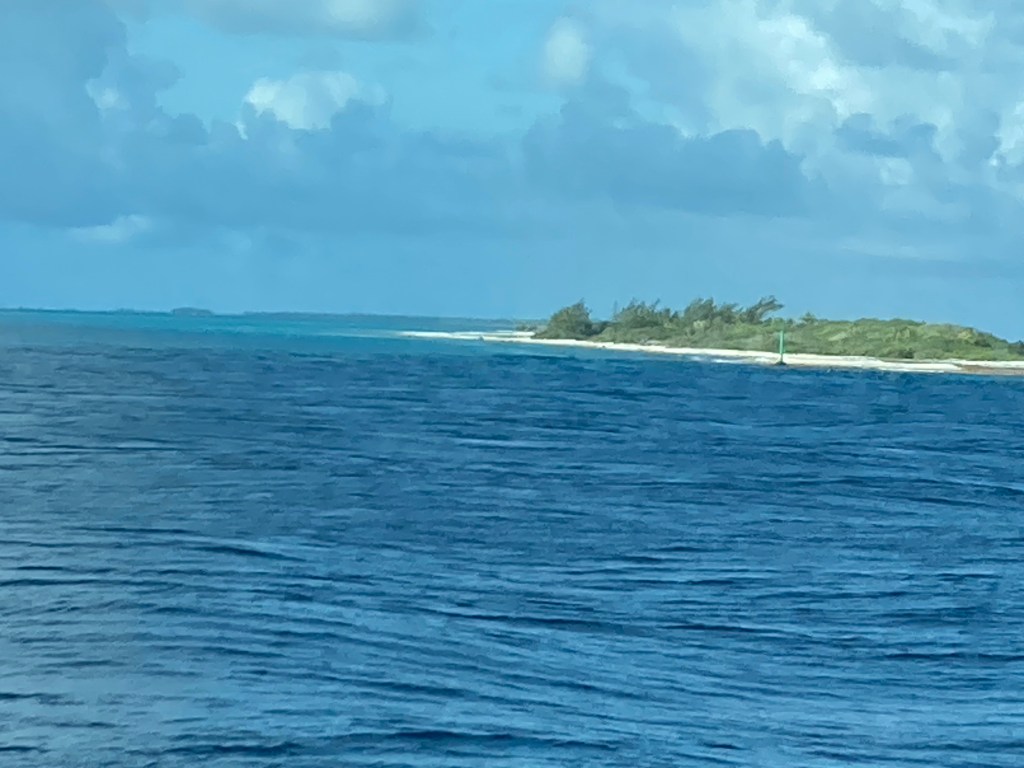
After entering the lagoon via the north channel, we dropped anchor near the upper right corner of the two “L’s” at the village of Rotoava. I was a bit beat from diving the day before., so I didn’t participate in the morning race for a tender, choosing to go ashore after an early lunch. There were no shore excursions offered on the island so we are all left to our own devising: many, including myself, thought we might have a boat and captain picking us up at the pier at some vaguely agreed to time and price to go snorkeling. A few actually made a connection and zipped off to distant spots within the lagoon for snorkeling.
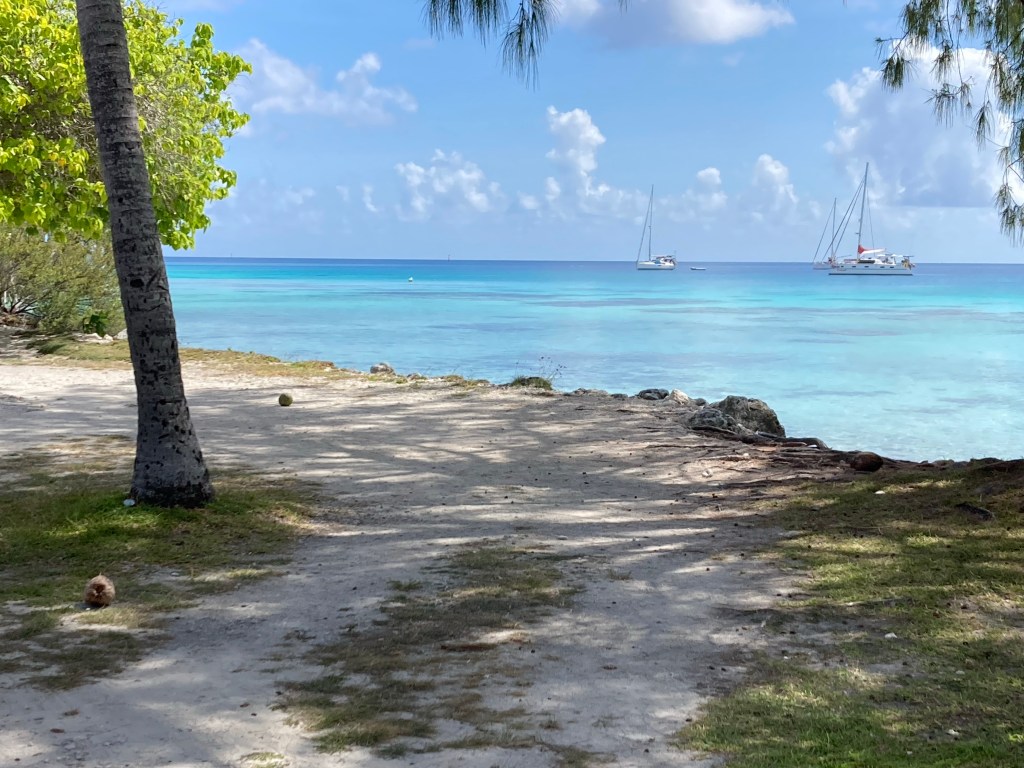
I ended up renting a bike for exploring via the road – the ONE road – that runs along the spine of the upside down “L.” You can literally get off your bike and have a very nice snorkel at any point along the road — on the lagoon side, not the ocean!
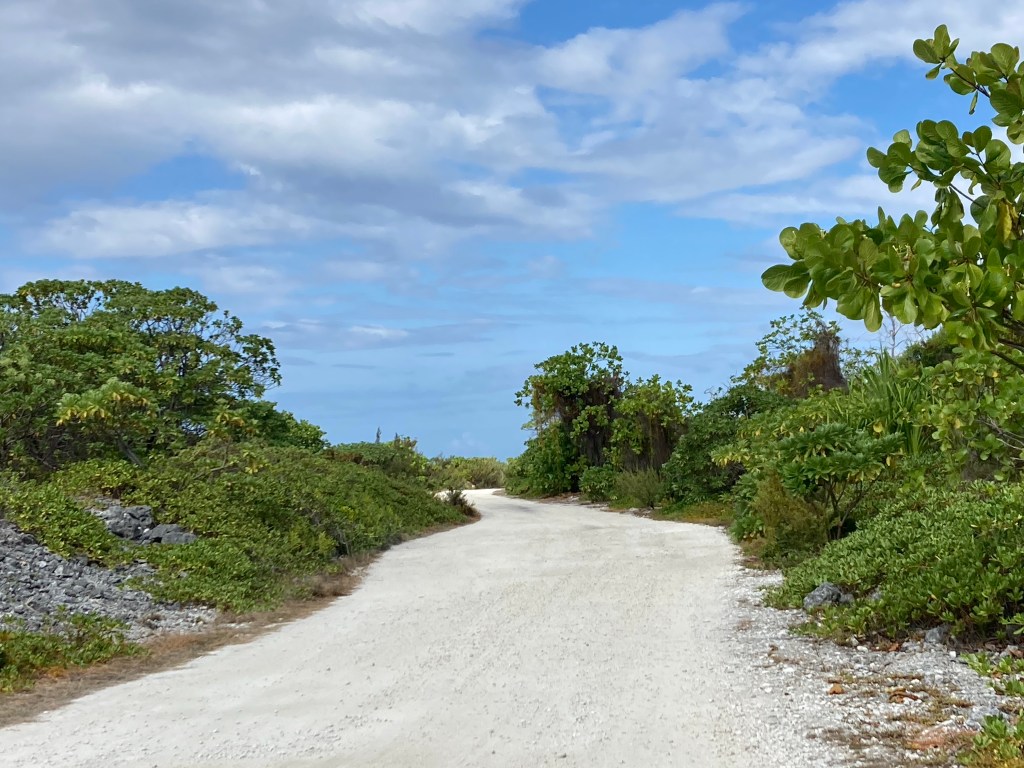
I pedaled out beyond the airport – which required pedaling all the way through the airfield – until a came to a home-made sign reading “Attention: Bad Dog Ahead.”
I’ve attached a short video clip made at the far end of the runway. It pans from the ocean to the lagoon so you can see how narrow the island is.
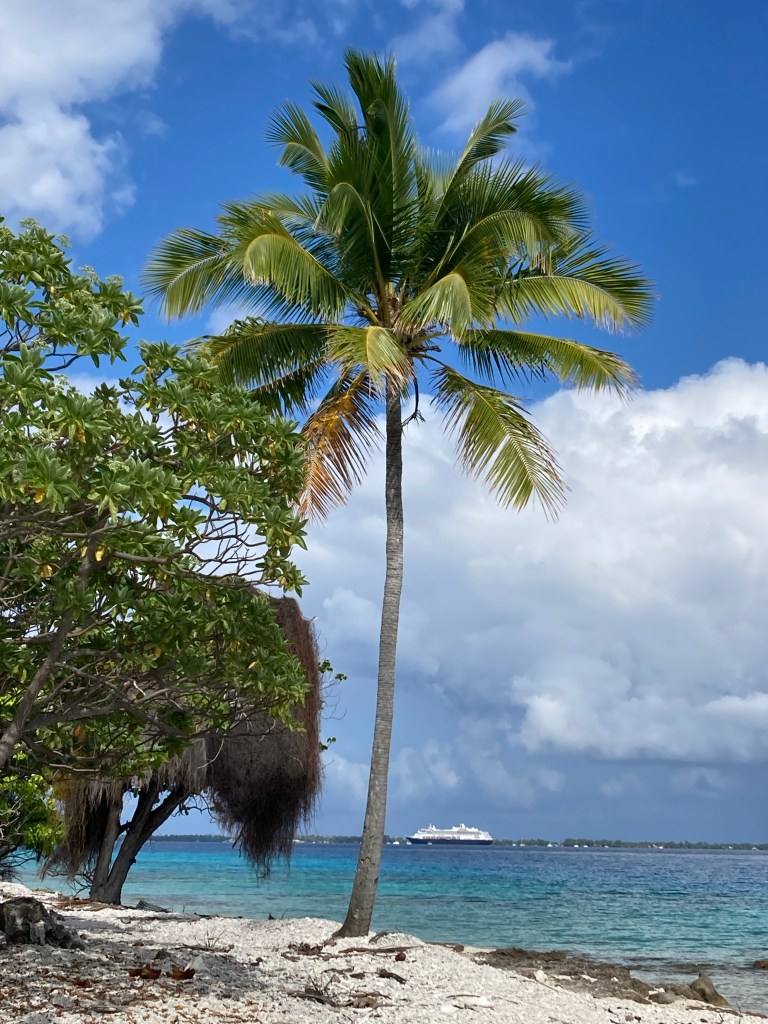
If you are a snorkeler or scuba diver, you would like Fakarava, and might possibly find it entertaining for a week. Or, if you’re totally burned out on the world and want to escape it for a while, Fakarava would certainly work and give you bragging rights. But if you aren’t either of those, do not beat a path here, because you will not know what to do with yourself once the plane drops you off.
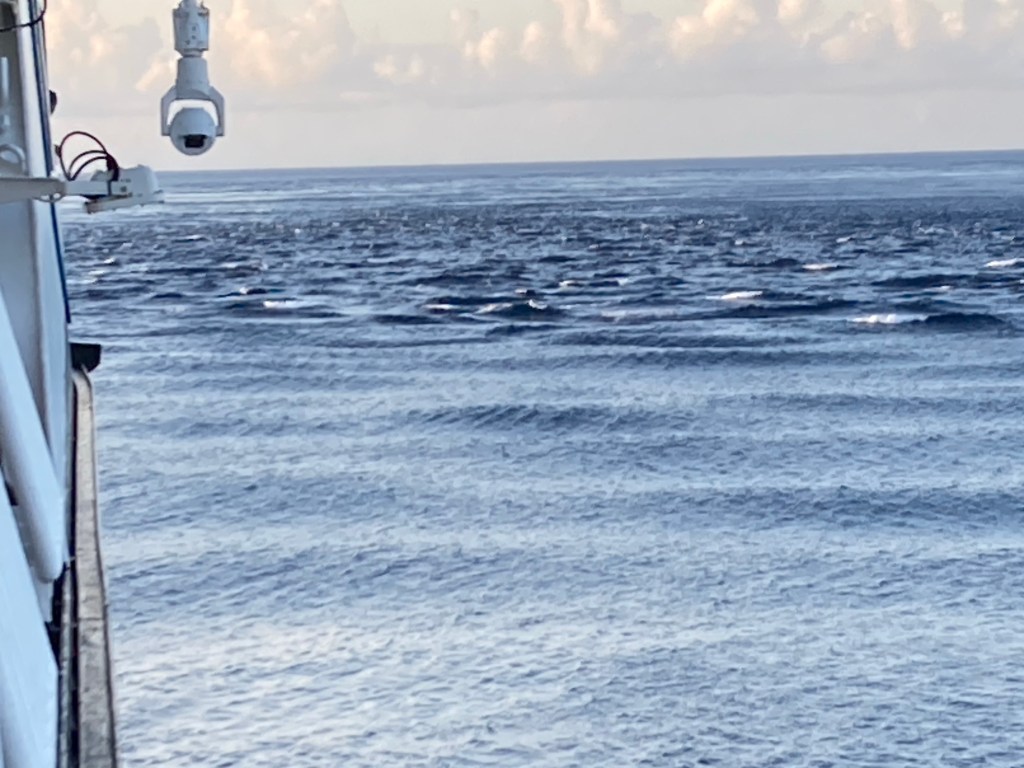
At sail away, we were heading out the north channel while the tide was barreling in. The sea ahead appeared to boil in a maelstrom of eddies and whirlpools. The entire ship literally shuddered as we passed though the channel’s narrow neck and sighed as we slid into the calm open ocean. We would spend a full day at sea sailing through the Tuamotos before arriving in the Marquessa Island chain and our last stop: the island of Nuka Hiva.
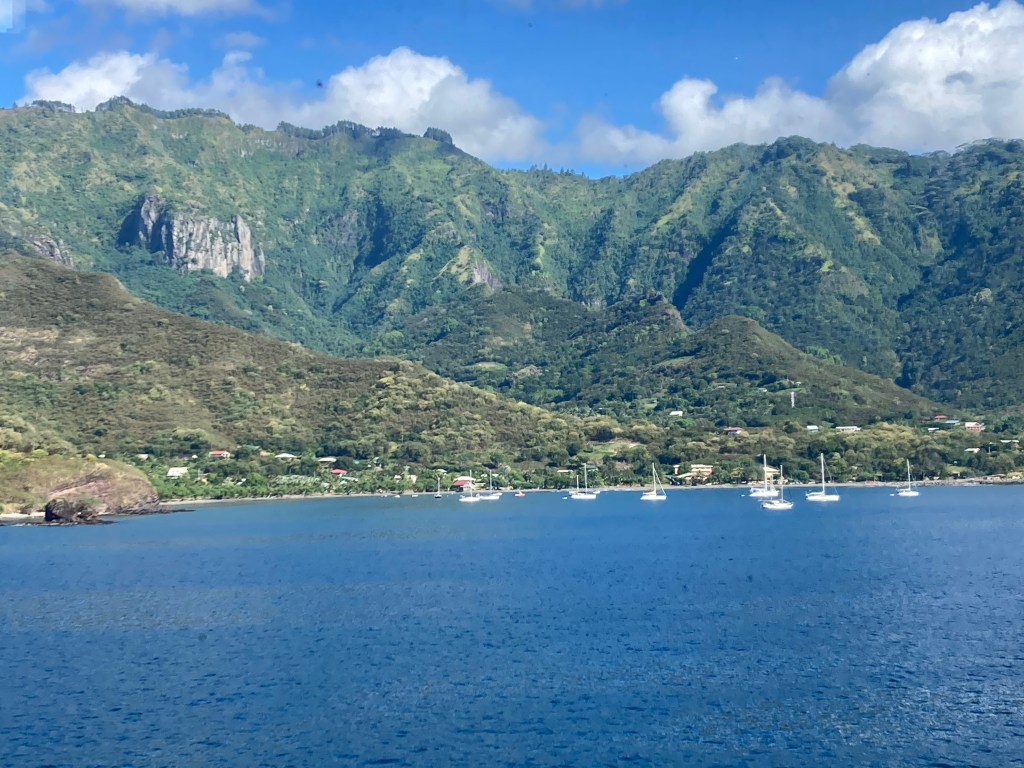
Marquesa Islands, Nuka Hiva: November 15
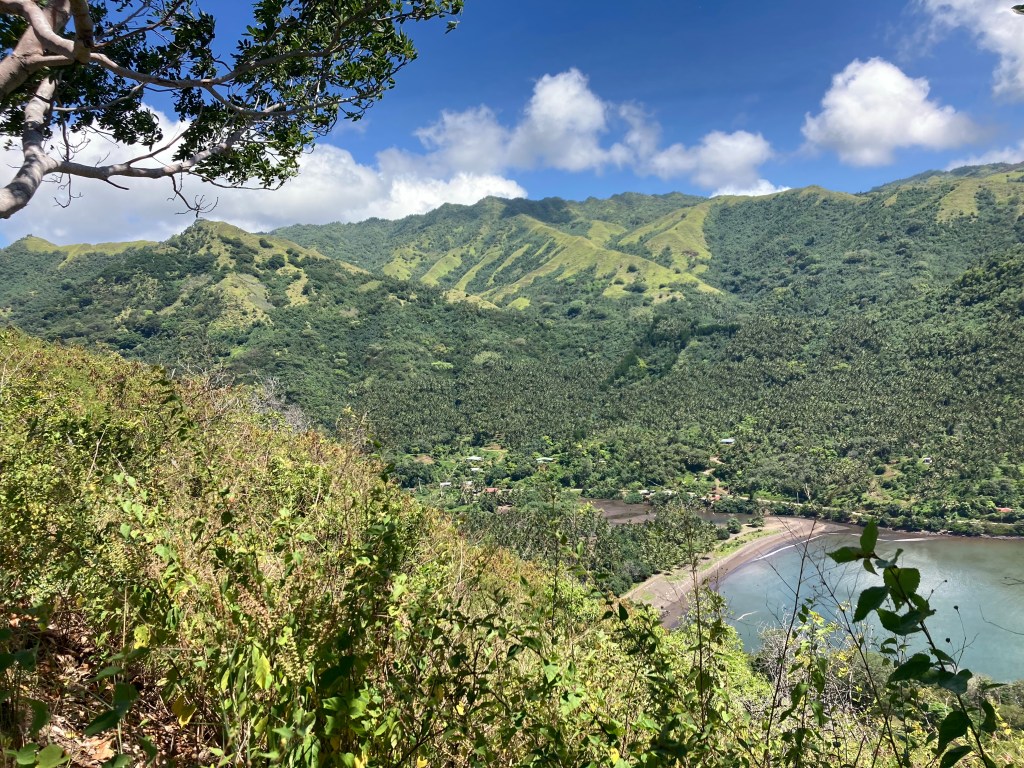
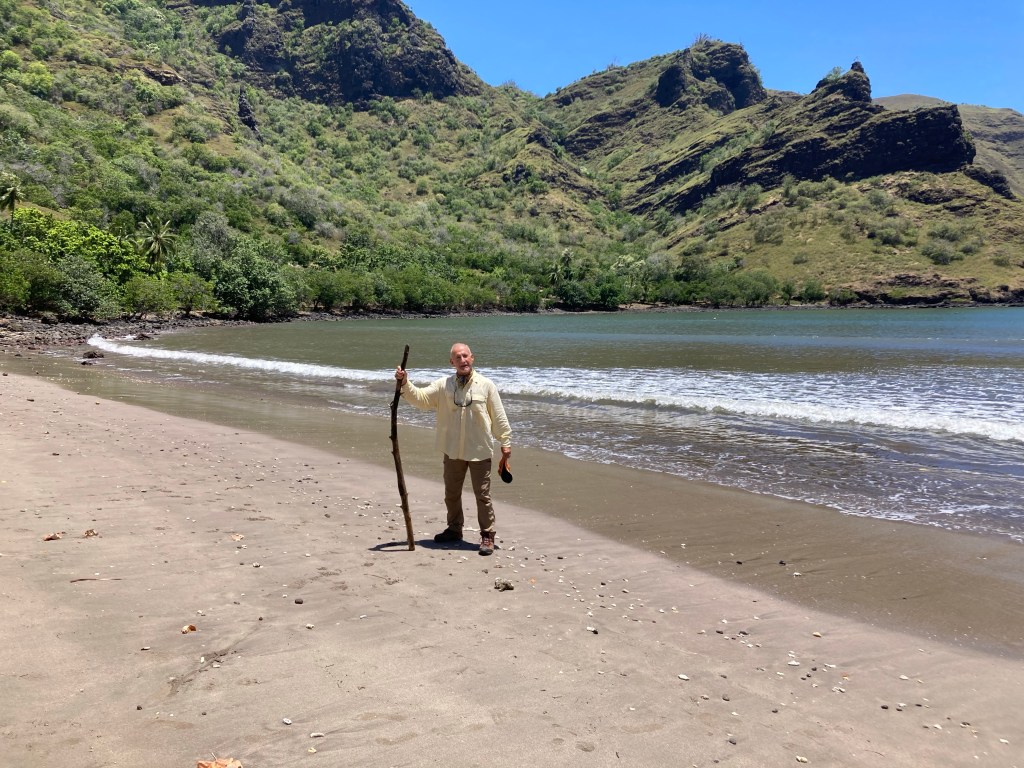
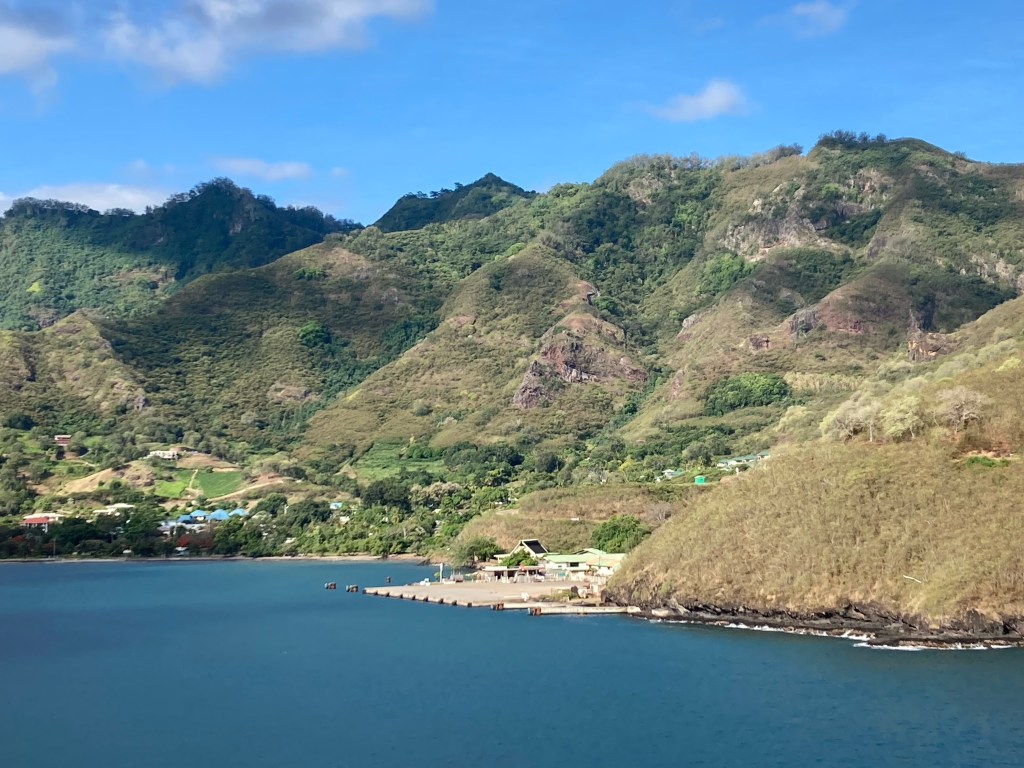
BOTTOM LINE: If Nuka Hiva ever develops an infrastructure to support large scale tourism, it could rival the Hawaiian Islands. It is massive, with a mostly rugged coastline which hides secluded idyllic beaches on its north side: the beaches currently take 3 hours to get to – and over harrowing roads. The interior has high volcanic mountains and deep lush valleys with rushing rivers. The sacred freshwater eels of Polynesia are alive and well here too. Imagine arriving in Hawaii at the beginning of the 20th Century – but with cars, some paved roads and a few hours of electricity each day. That’s Nuka Hiva. A supply boat comes once per month with anything and everything available until the following month. But that’s OK, because the island is fertile, and you will always have coconut, bananas, guava, papaya, and mango (in season). If you have a patch of land for a garden, anything will grow quickly and produce abundantly here.
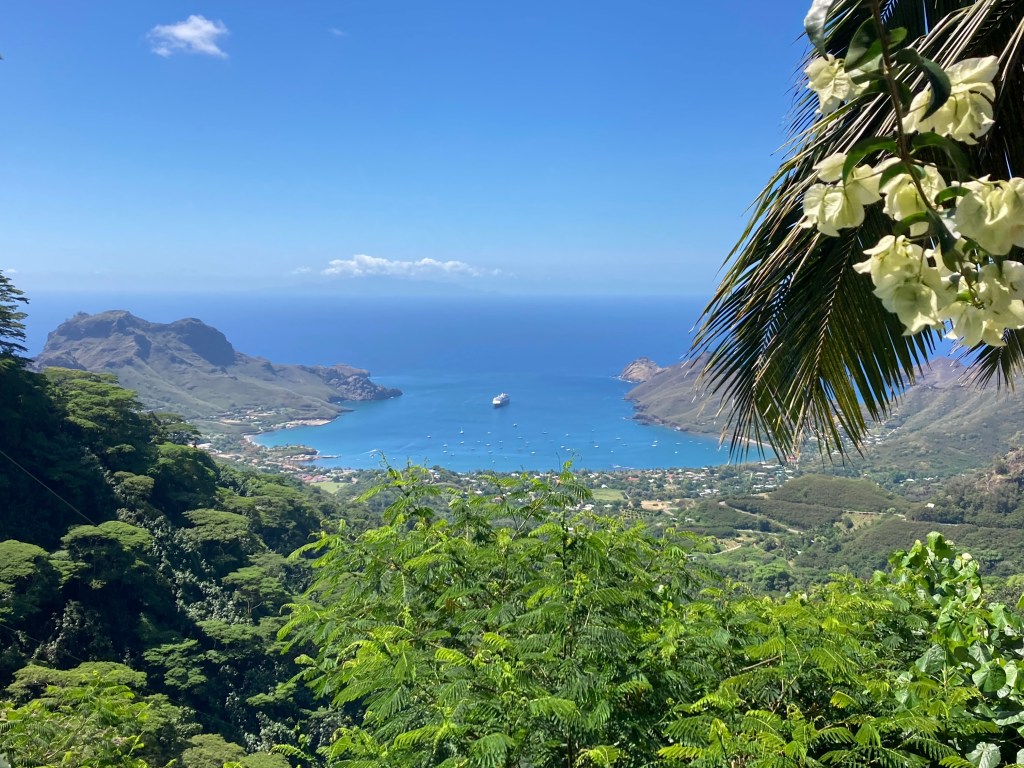
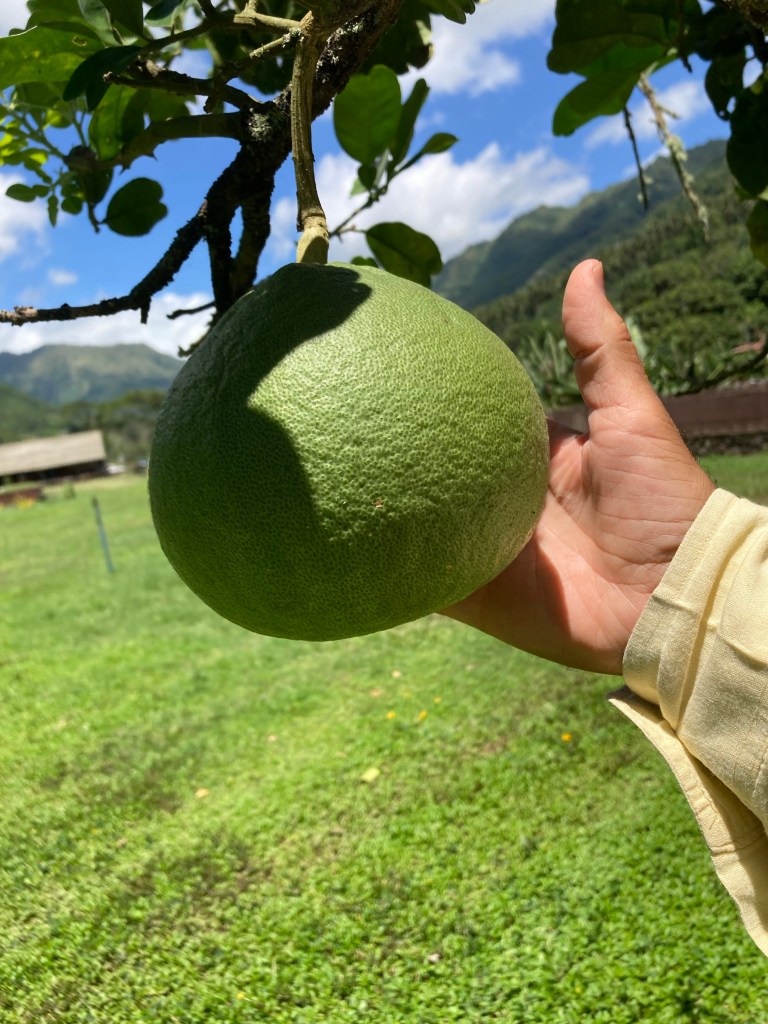
I scored a ticket to the day’s only shore excursion: a caravan of privately owned trucks tricked out with bench seats in their beds like the ones in Moorea. Breathtaking scenery at every turn – and there were lots of turns as we switch backed up and over the high mountains, then descended deep into fertile valleys thriving with exceptionally large citrus, banana, and mango trees and exceptionally numerous coconut trees – in some cases cultivated 2/3 the way up the interior slopes the mountain.
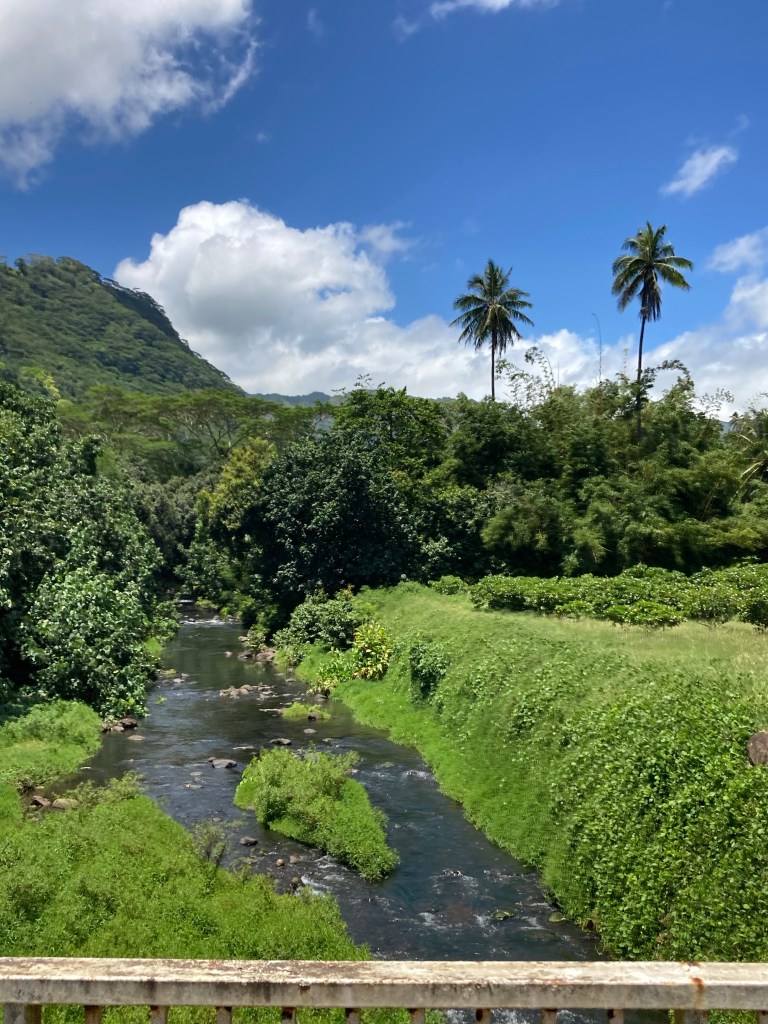
Then we followed a swiftly flowing river from the valley out to the coastline where it spilled its fertile sediments into the sea, undeniable evidence of yet another paradise disappearing. But it wasn’t troubling to see my newly found paradise dissolving. This cruise had taught me that it was just a pattern of the earth’s Order, plain and simple, an understanding given to me. As it is and always shall be.
May PEACE be with you and yours during this season of light. Please make your home festive by lighting a candle or two or more and holding not onto thoughts of a disappearing world, but onto the perils confronting our ability to live peacefully with one another. I’d like the planet to be here for many others to follow in my footsteps, or wake if you must, to discover the beauty, awe and wonders that the South Pacific so resoundingly reveals.
Mahalo and Aloha.
Alleluias and Hosannahs.
Peace on Earth, Goodwill to All.

 Will Gibson's South Pacific Journal
Leave a reply to calawilli Cancel reply